
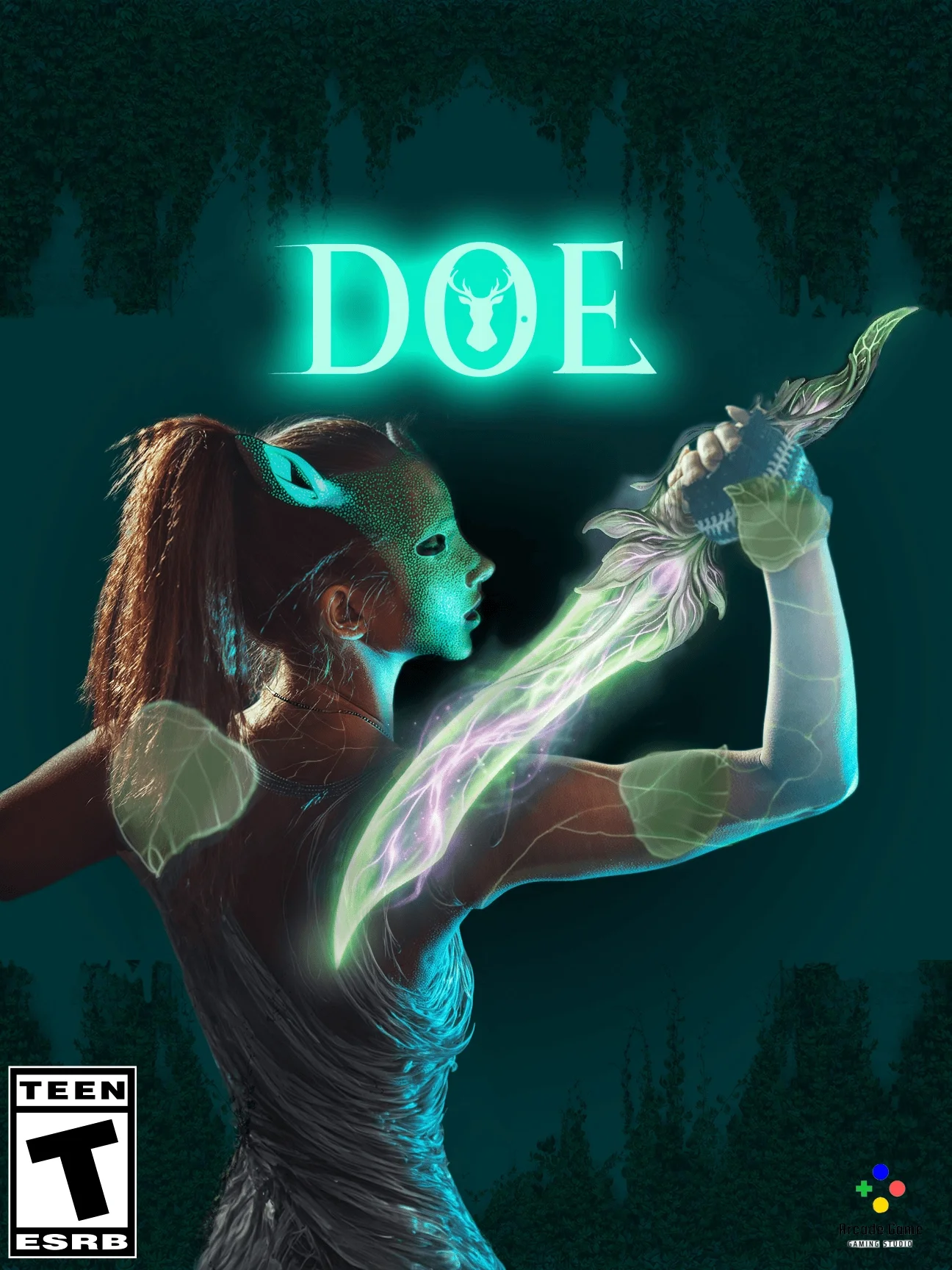
Videogame Promotional Poster
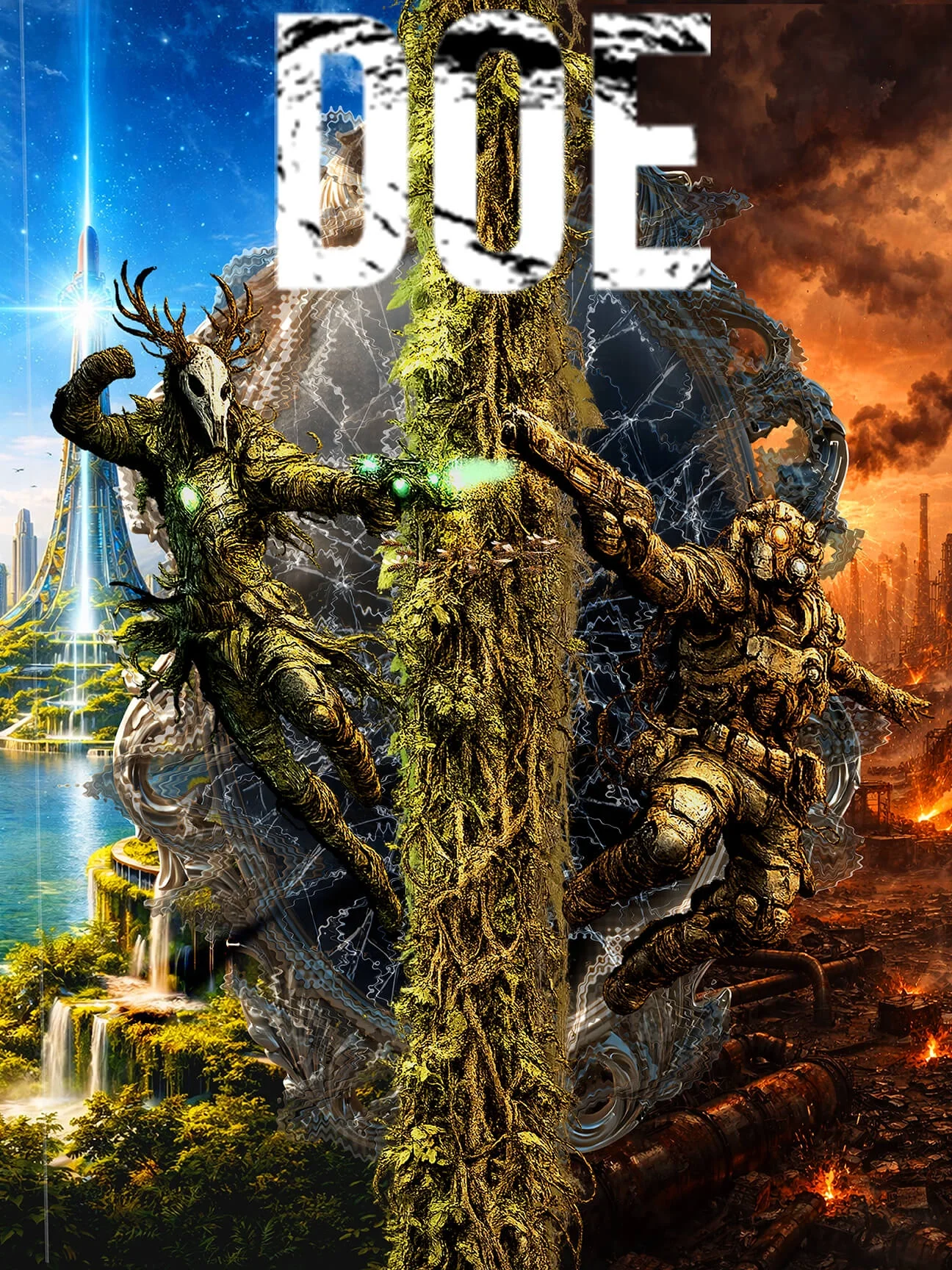
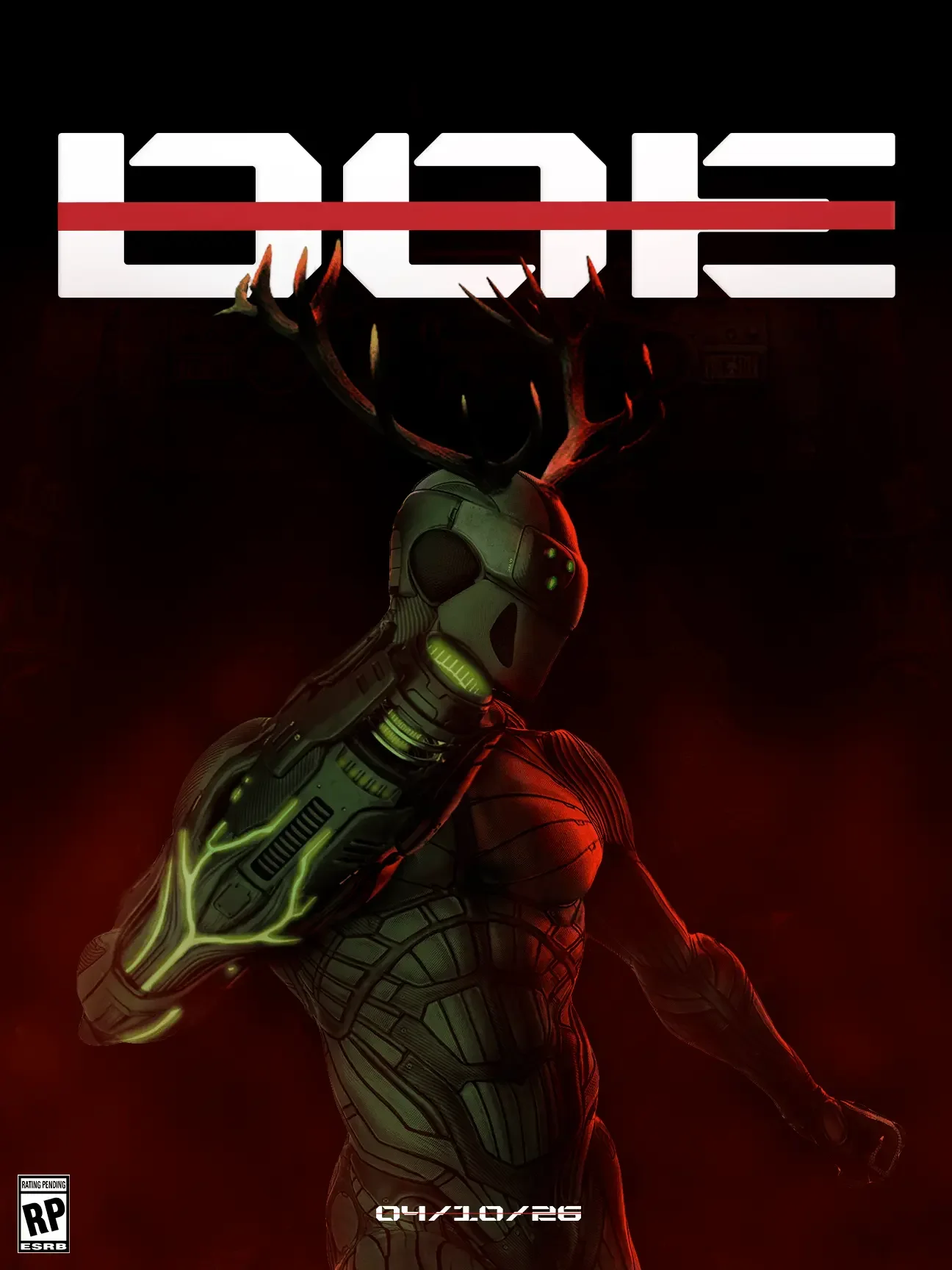
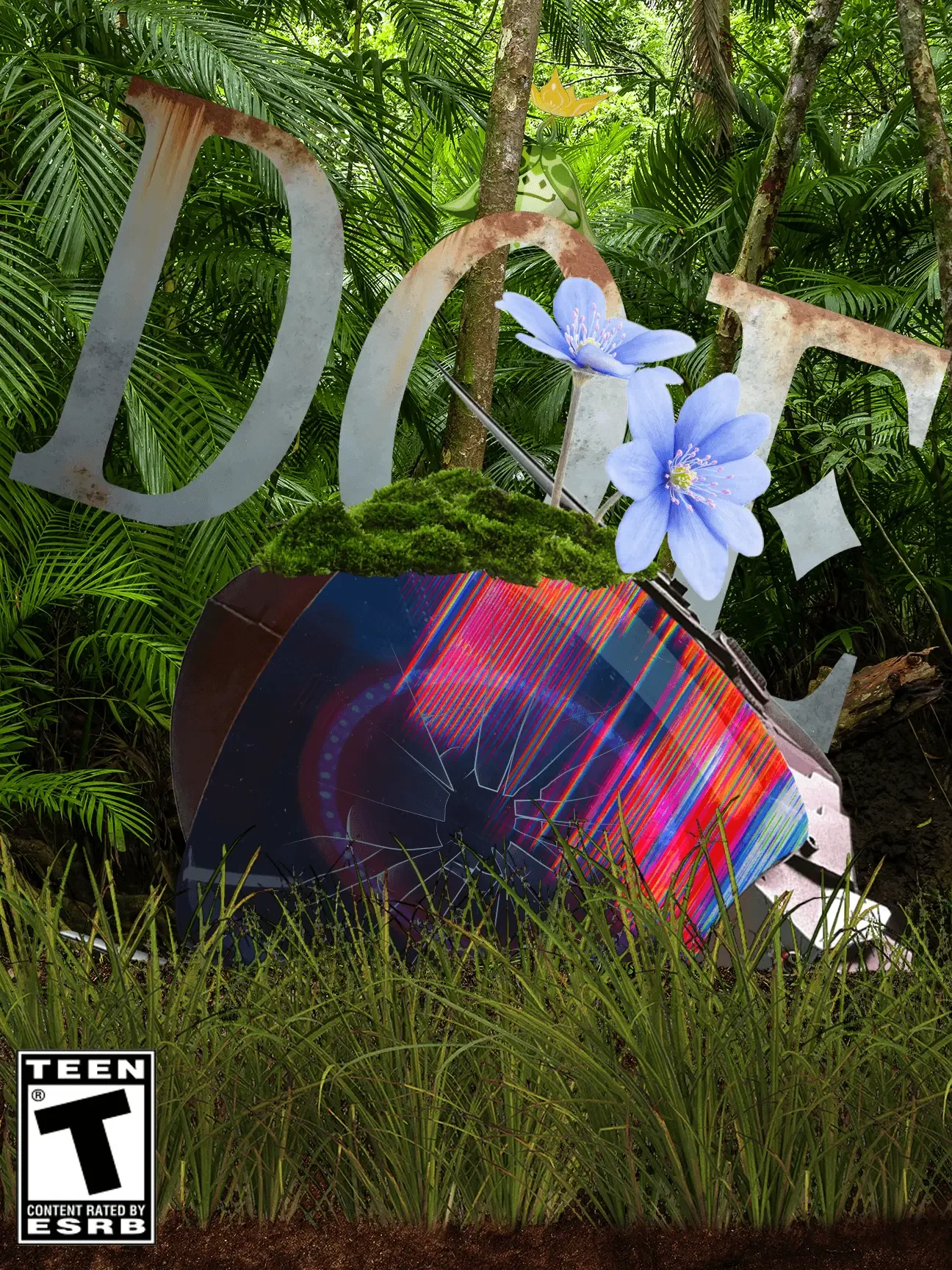
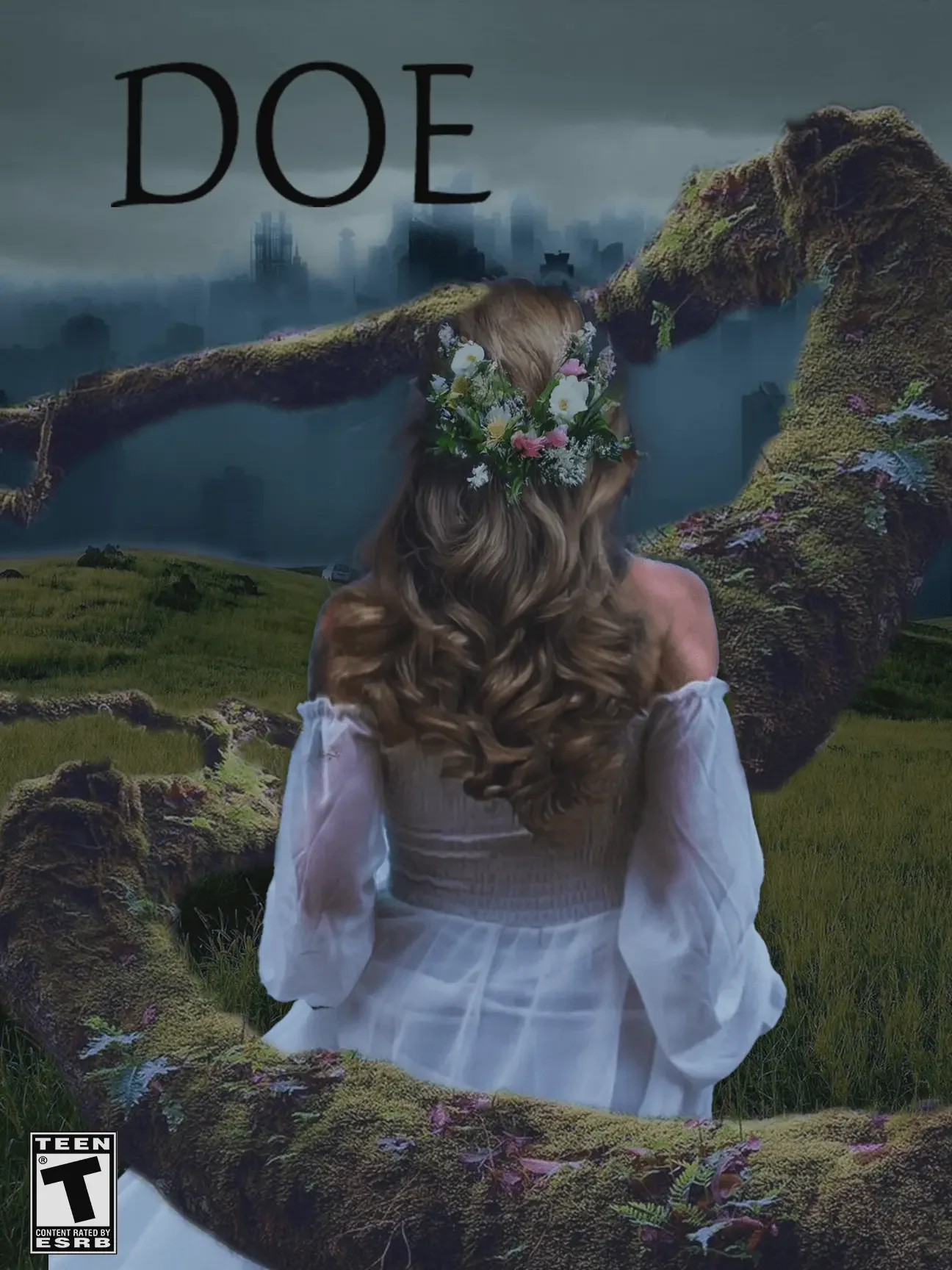
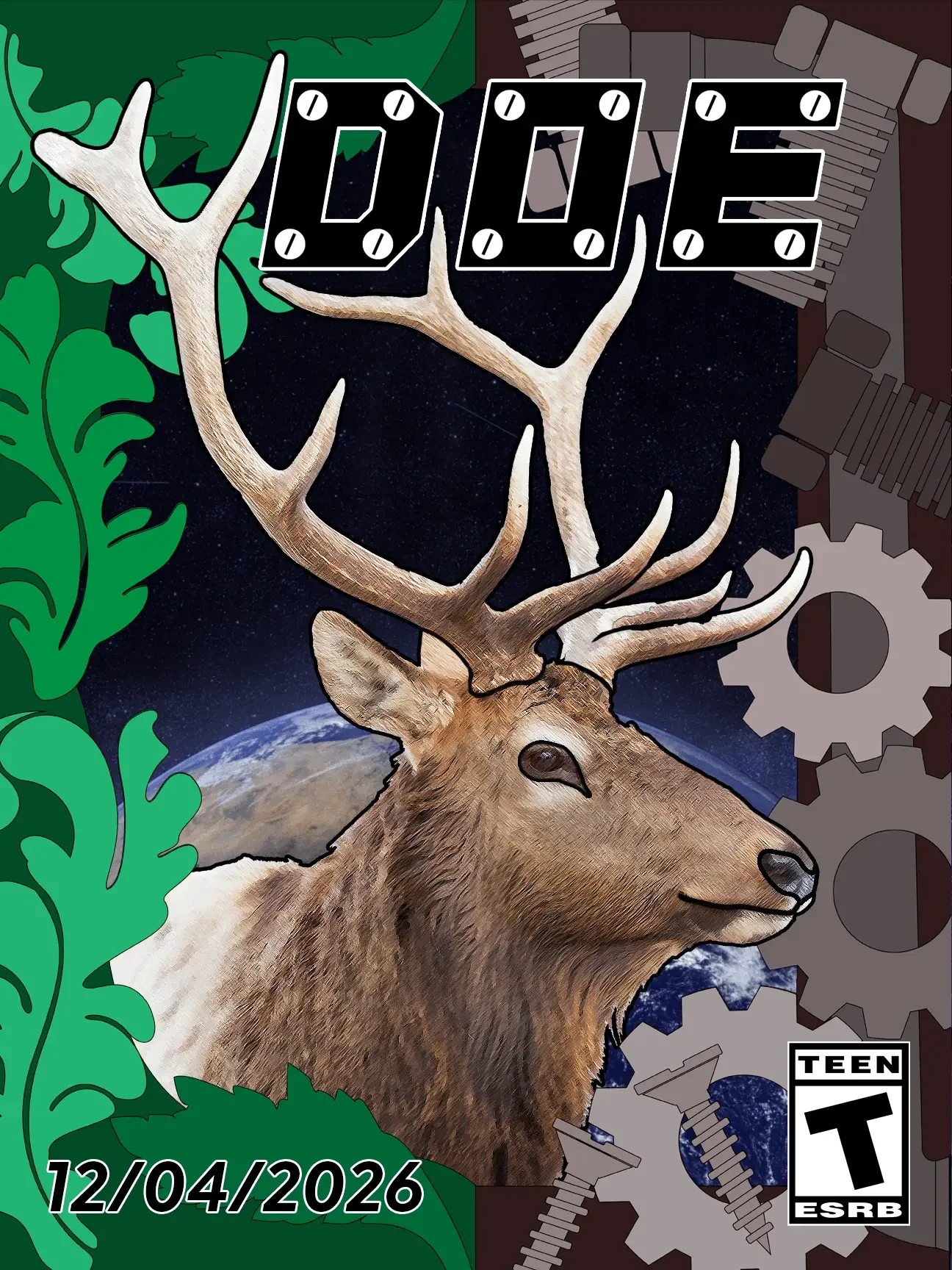
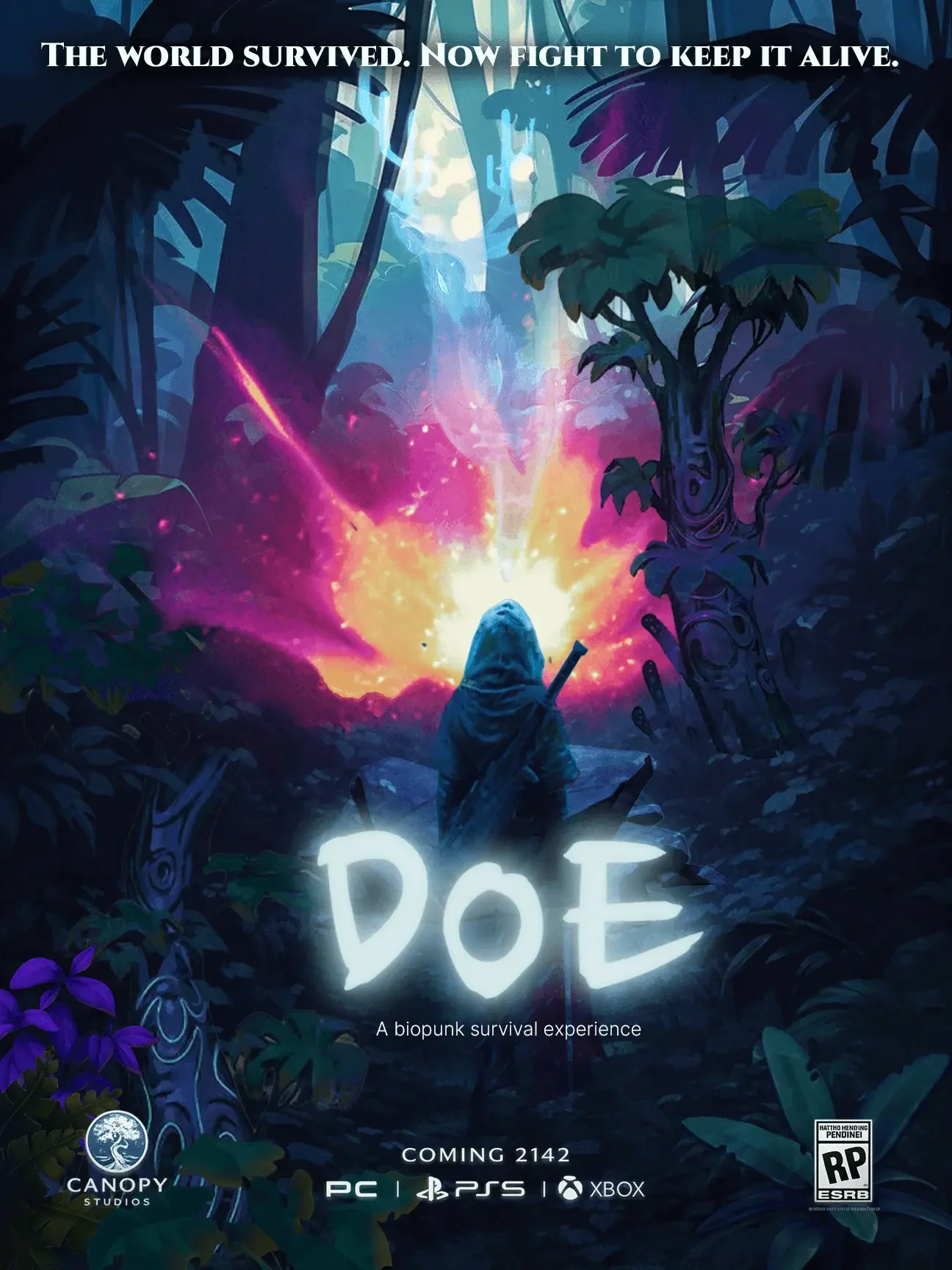
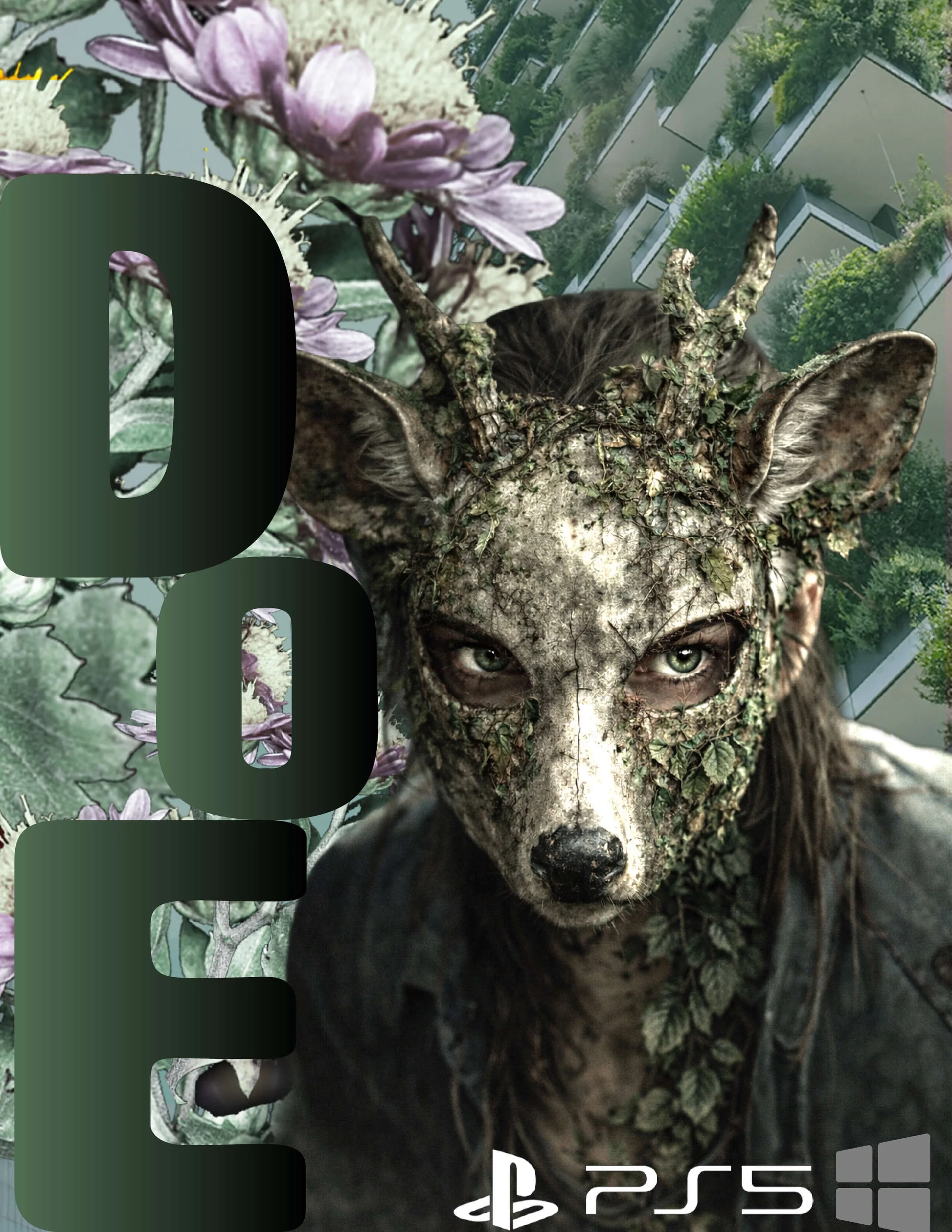
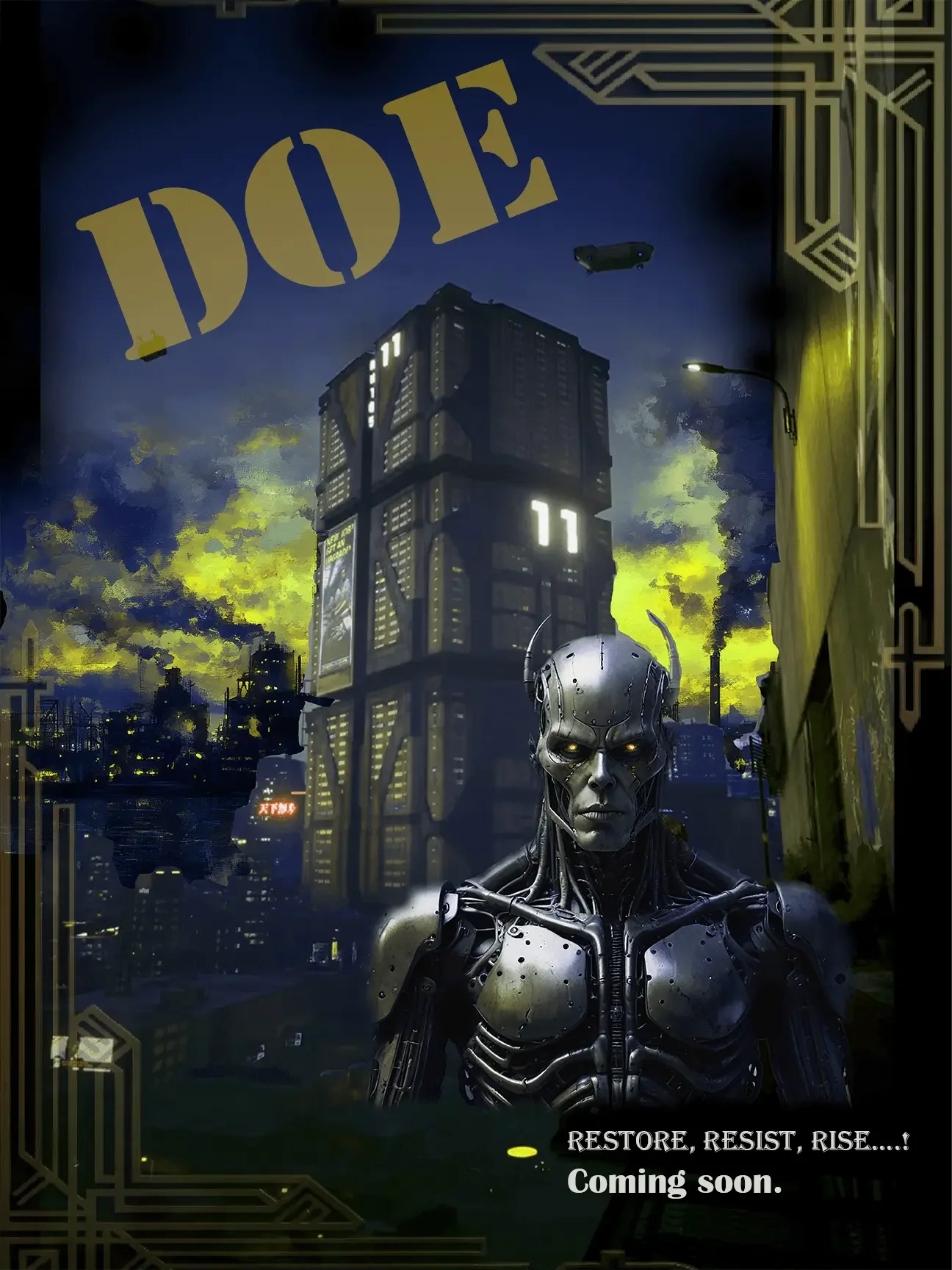
What could happen when a bunch of creative minds learn to use creative image manipulation tools? To find out, the students in the DGMD program at Langara College were presented with a challenge as their final project for the Vector & Raster toolkit class.
In the final project for Vector & Raster toolkit class, the students at the DGMD program had to work with a provided story line, and from there, create a poster to promote the videogame “Doe” by using vector and image manipulation tools (aka Illustrator and Photoshop). Important to notice, such video game story was created by Google Gemini according to the following prompt: “Develop the storyline for a first-person shooter video game called "Doe." It should happen in a solar-punk future. Give me the year and a detailed description of the main world. Also provide a detailed description of the main character and his/her main weapon of choice. The players must be able to pick their "Doe" character pronoun. Him/Her/They. There should be an antagonistic force and a main mission to accomplish. Approach to it as an open-world game.”*
*Google DeepMind. (2025). Gemini 3 Pro [Large language model].https://gemini.google.com.
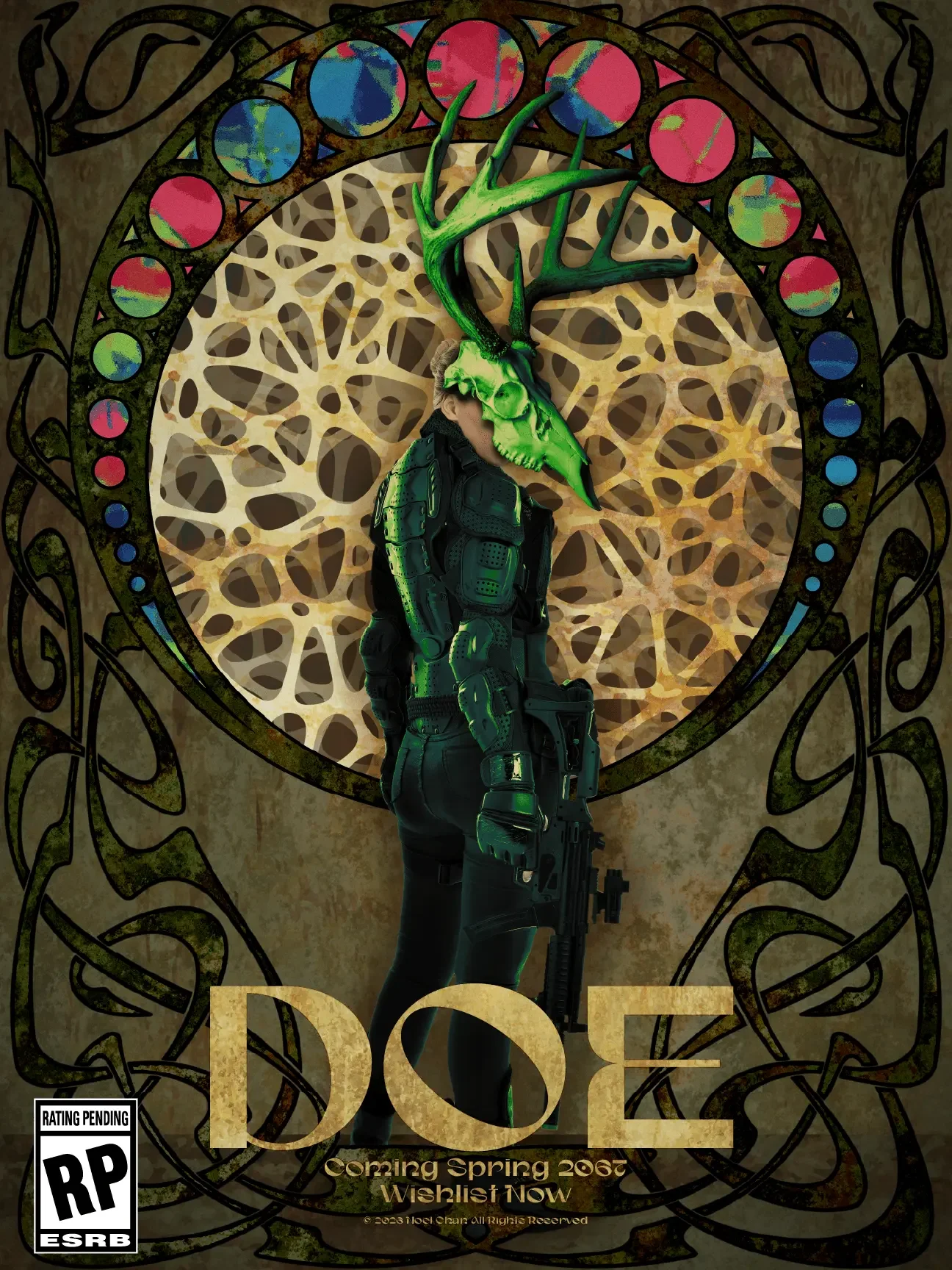
Design Tools in Practice
The whole lore and details were later catered and developed to provide the students with enough, and until some point broader information for them to complete an image that was both compelling and professionally structured.
The main idea for this project was not to come up with the best character design nor to develop the whole lore through an image, but to utilize the design tools learned during the course. They had access to stock images, the entire internet at their disposition, and to top it all, the use of AI for asset creation was allowed.
“Did you allow and encourage the use of AI generated images! Outrageous!” some of you may think, and – yes, I did... to a certain extent. A few rules were laid on the table before the very first prompt was written. The students were allowed to generate parts of the final image – assets – as we put it. Pieces of a whole, that they would still be needing to integrate to make them look as one with the final piece. After all, myself as the instructor relied on AI to help me come up with a videogame storyline – I must confess I’m not the best creative writer and such a task could’ve taken me longer than the term itself.
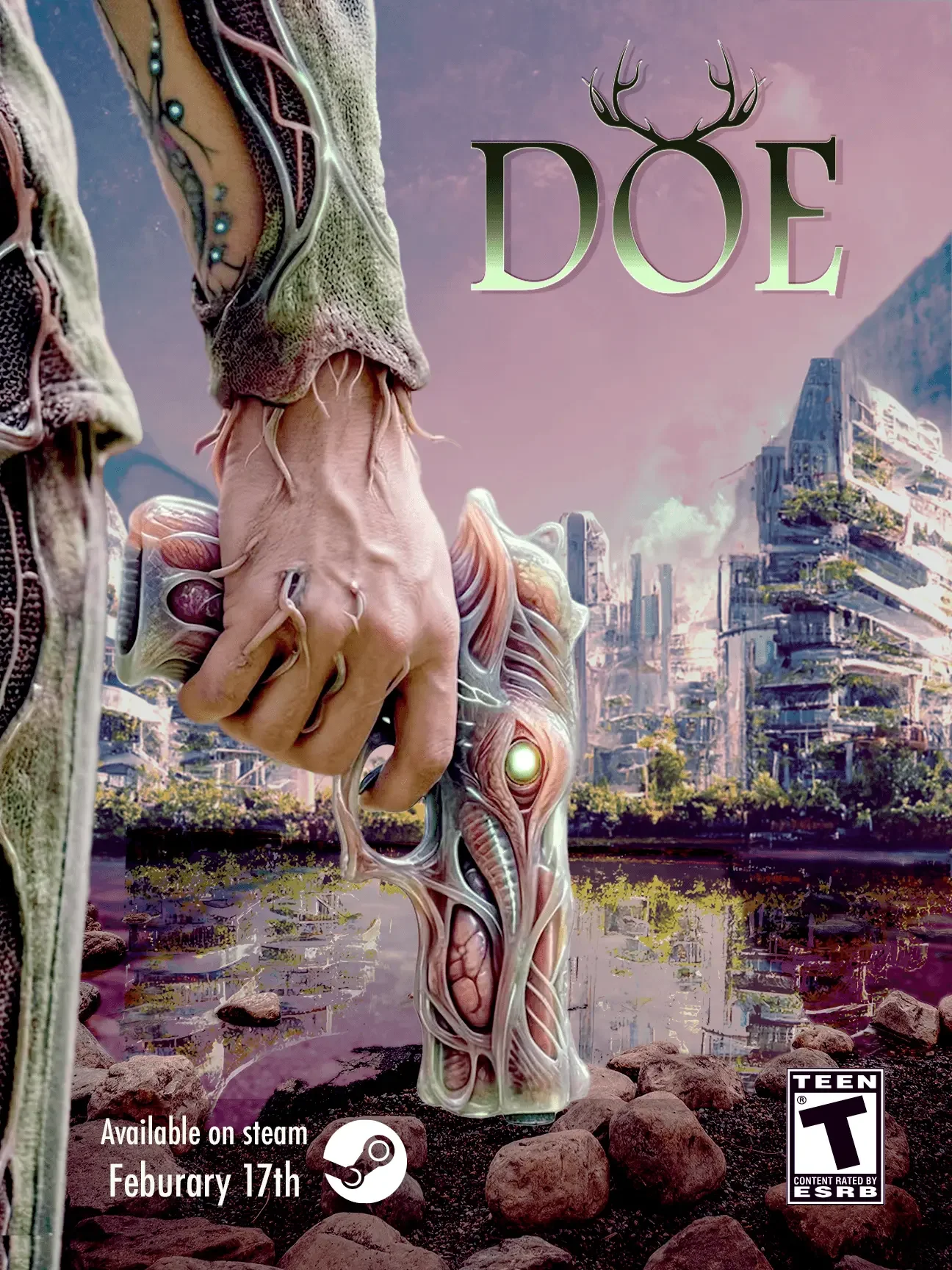
The Story of “Doe”
I would like you to have a little pick into the storyline the students were given.
The videogame’s name “Doe” was given a broader meaning allowing the students to play around with it. The original idea was to use it as an anonymous agent, a “John/Jane Doe” from some sort of black-op corps. With a green motif to the story, it also referred to the Deer and Doe in the animal realm. And finally, the “Designation: Organic Enforcement” acronym added another playful layer while defining the main character. They were presented as a First Person shooter, giving the students the option to keep the character as an incognito and without the required to present it in the final piece.
Along with the “Hero” the story line introduced a peculiar weapon. Being a first shooter game proposal, the weapon was an important part of the narrative. A bio-printed, symbiotic firearm that functions as a living organism, the Rhizome Platform. A live, breathing organism that draws energy from its user and generates its own ammunition.
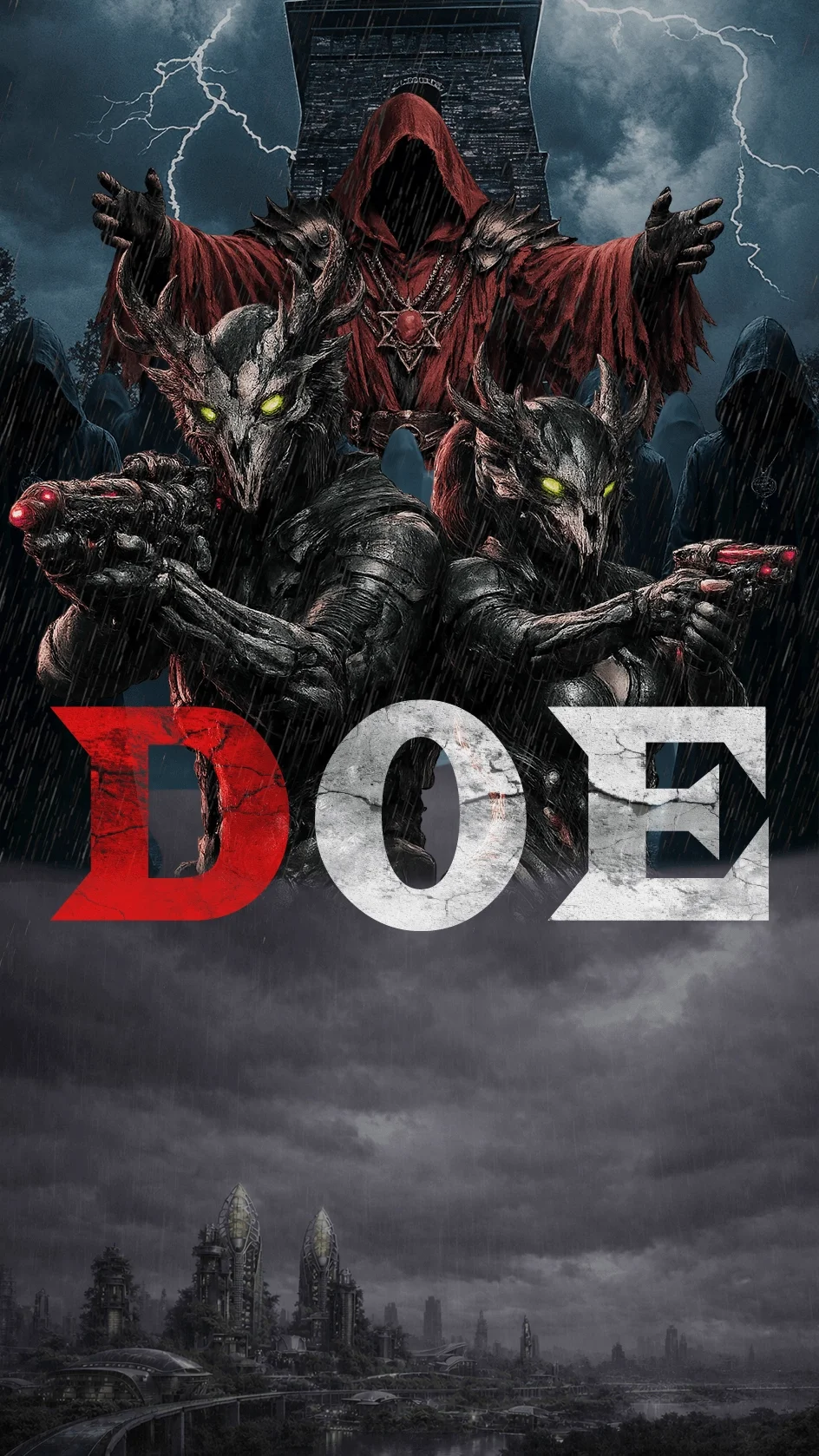
Finally, the antagonistic force. The “Chrome Syndicate”, fanatics that worship the industrial era the rest of this world left behind. Their plan, to scorch the skies pushing the new solar-punk society into starvation. In short – they just want to watch the world burn to ashes.
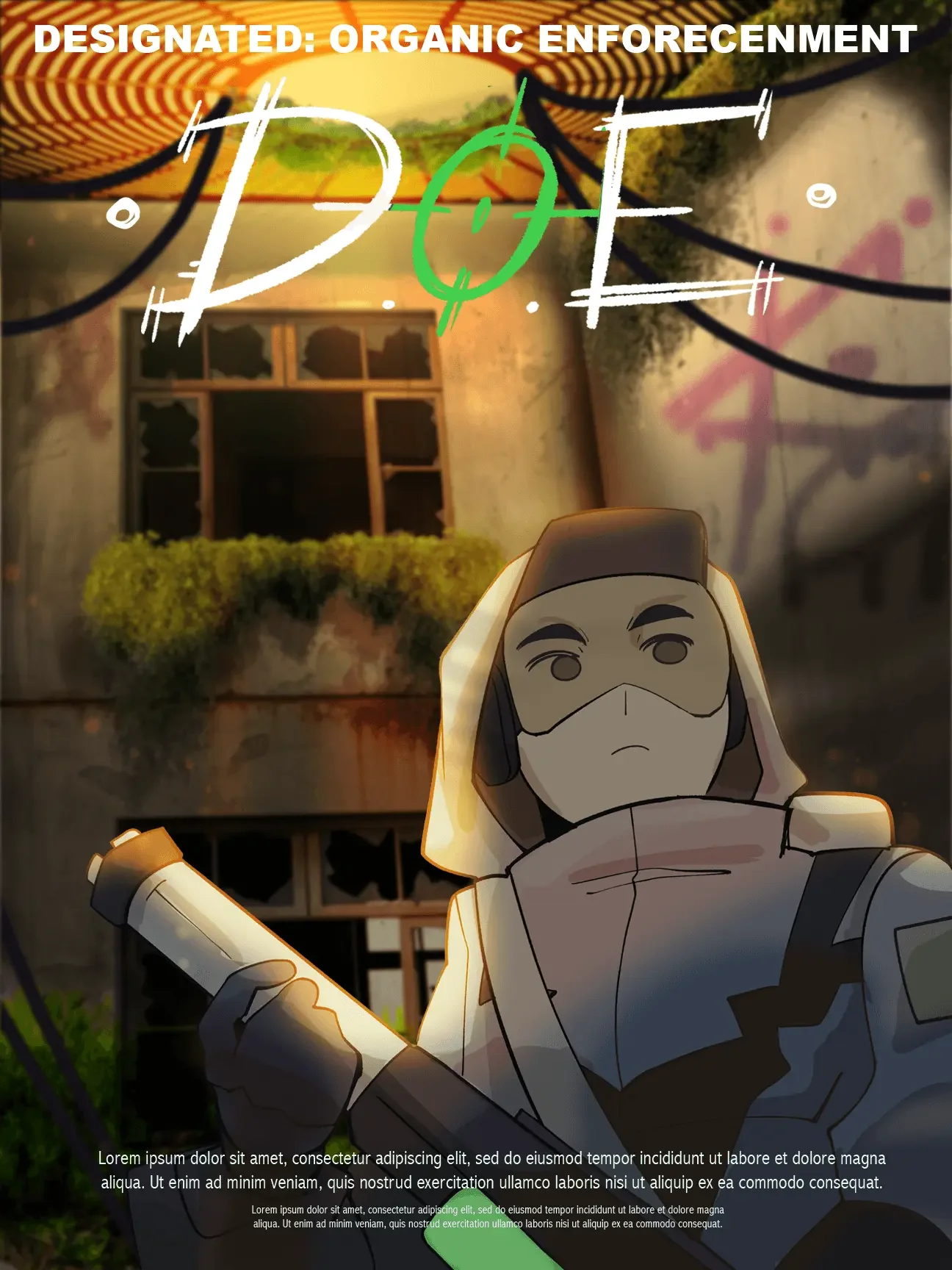
From Moodboards to Masterpieces
And so, it began. The design process was carefully overwatched. First, they were tasked with researching videogame posters. Some of them were further into researching animation and extended on the lore around the storyline provided. Conversations came alive about if the character should be present – quite a lot of them ended up adding them to their design. And what about the “Chrome Syndicate” the rust of this green world, how could they represent their presence in the game. Should they add mecha suits, or just the burned environment as a reminder of their presence? Would they be adding a character to the picture? Was it necessary for the narrative?
Once the research was done, students had time to put together a moodboard with their own vision. Look up reference pictures, put together color palettes, and get a proposal for their typefonts. Right after, sketching. The sketching process had a focus on the layout and the composition with volumes, keeping rhythm, and managing positive and negative space.
After the sketching process, everything was about images compilation and integrating them into the right composition using the tools and techniques learned during the course.
So, what happened with the polemic AI usage? Now is the moment when the students were allowed to approach generative AI tools to create “hard to find” assets. Based on their designs and creative ideas some of the images they were trying to convey were – well, pretty much impossible to find in the time they were given, so intervening images or creating them via artificial intelligence tools made the difference for some of them. These tools were used in different amounts, that went from every single asset created to no use at all.
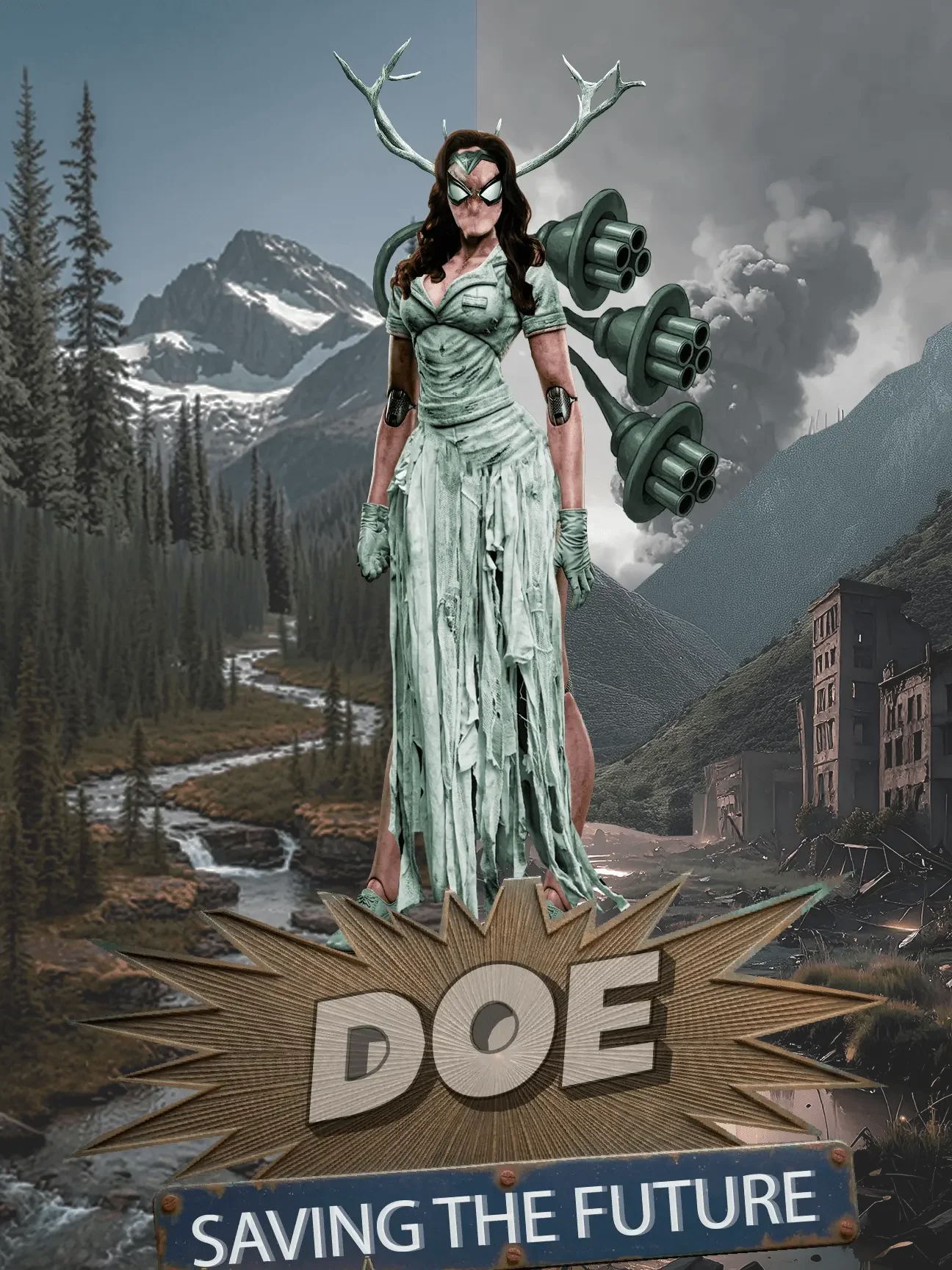
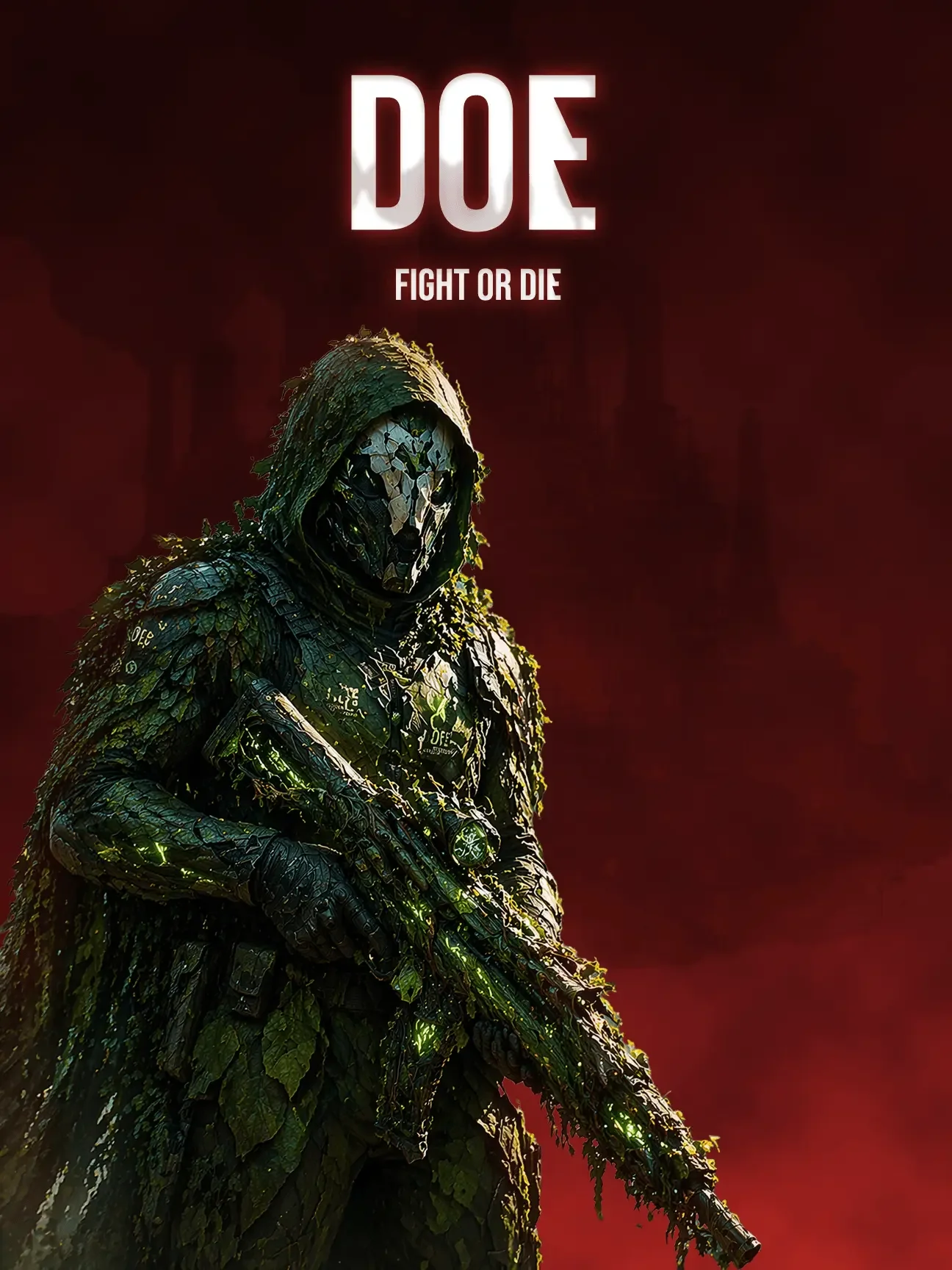
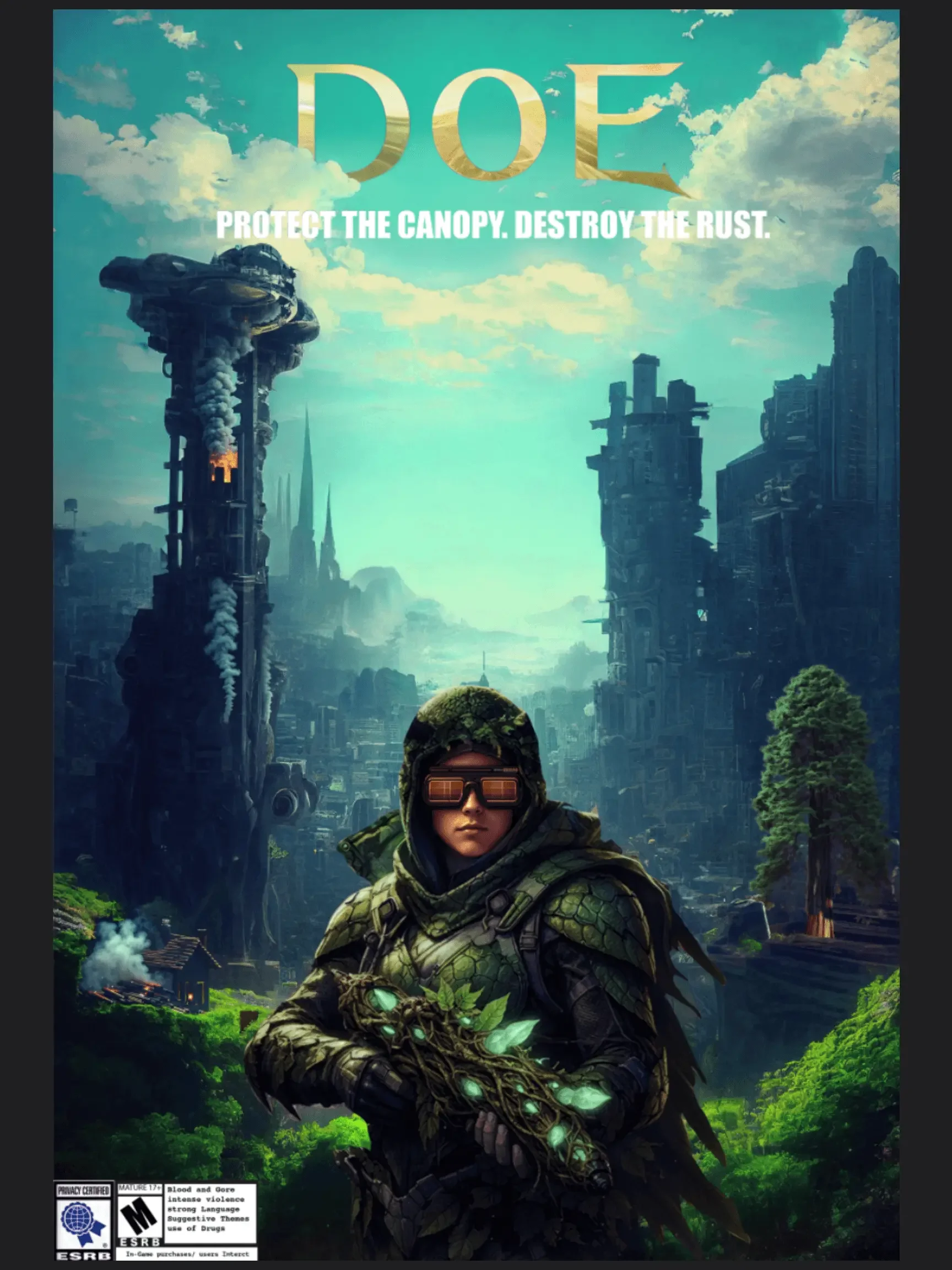
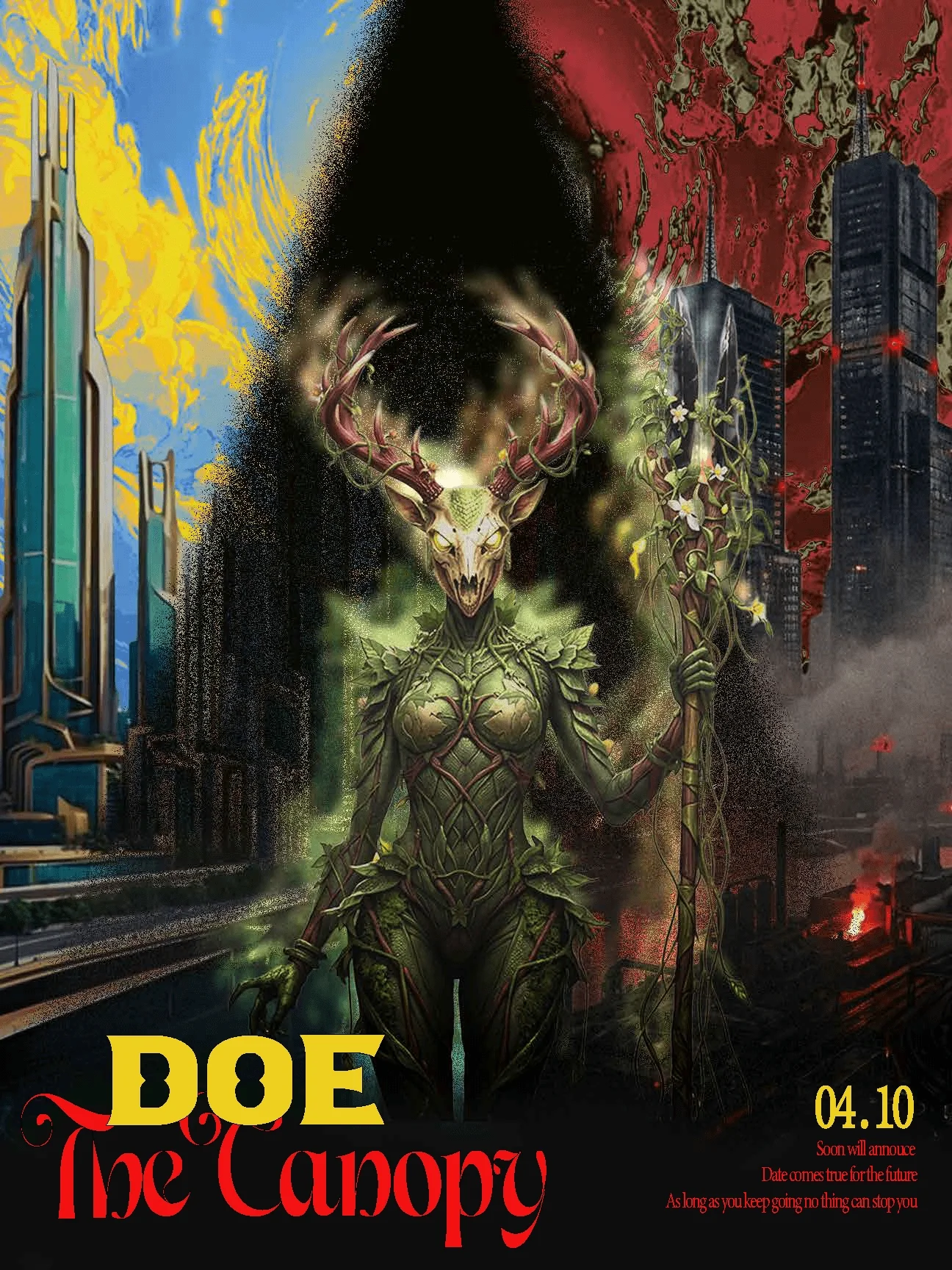
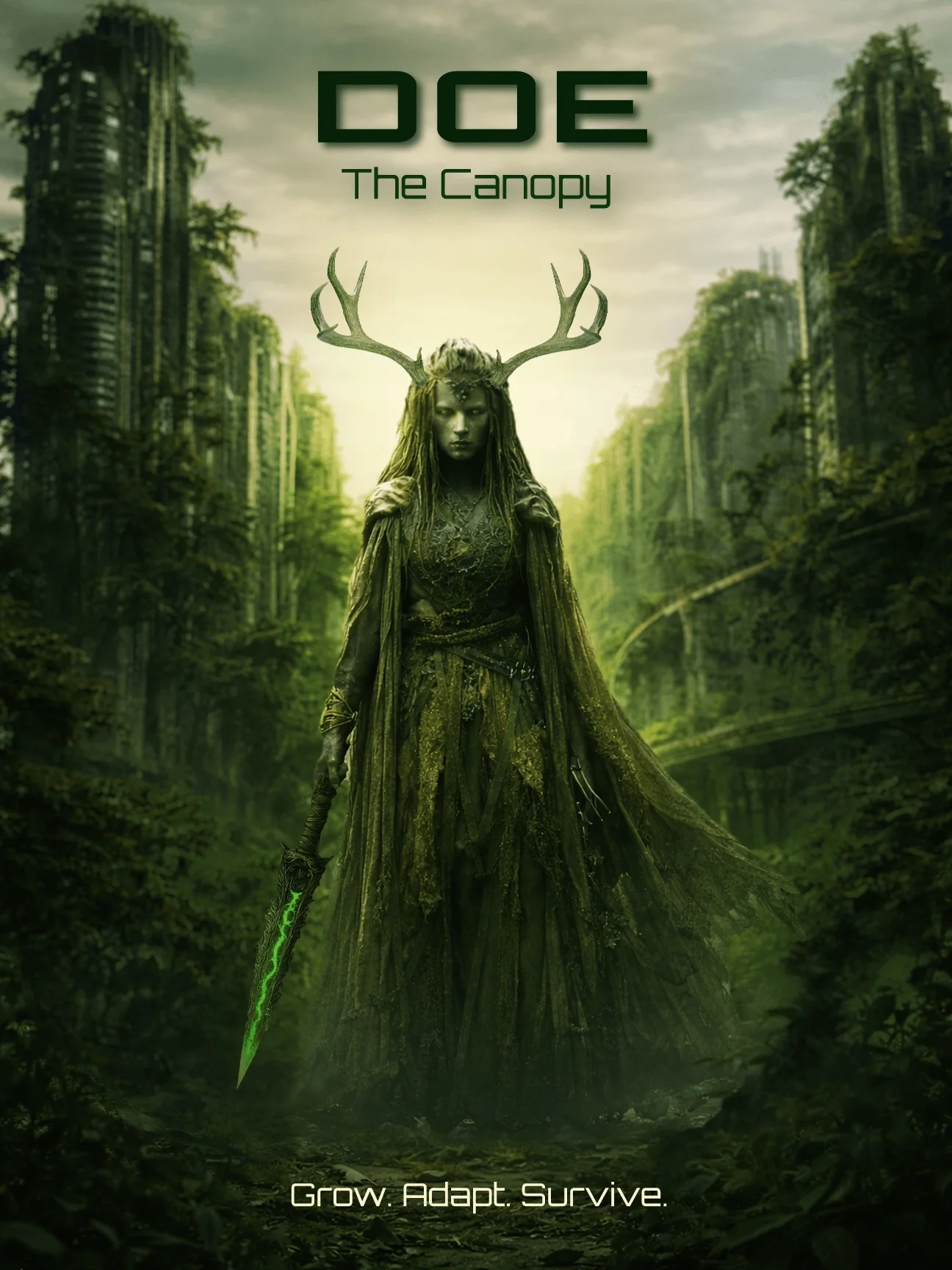
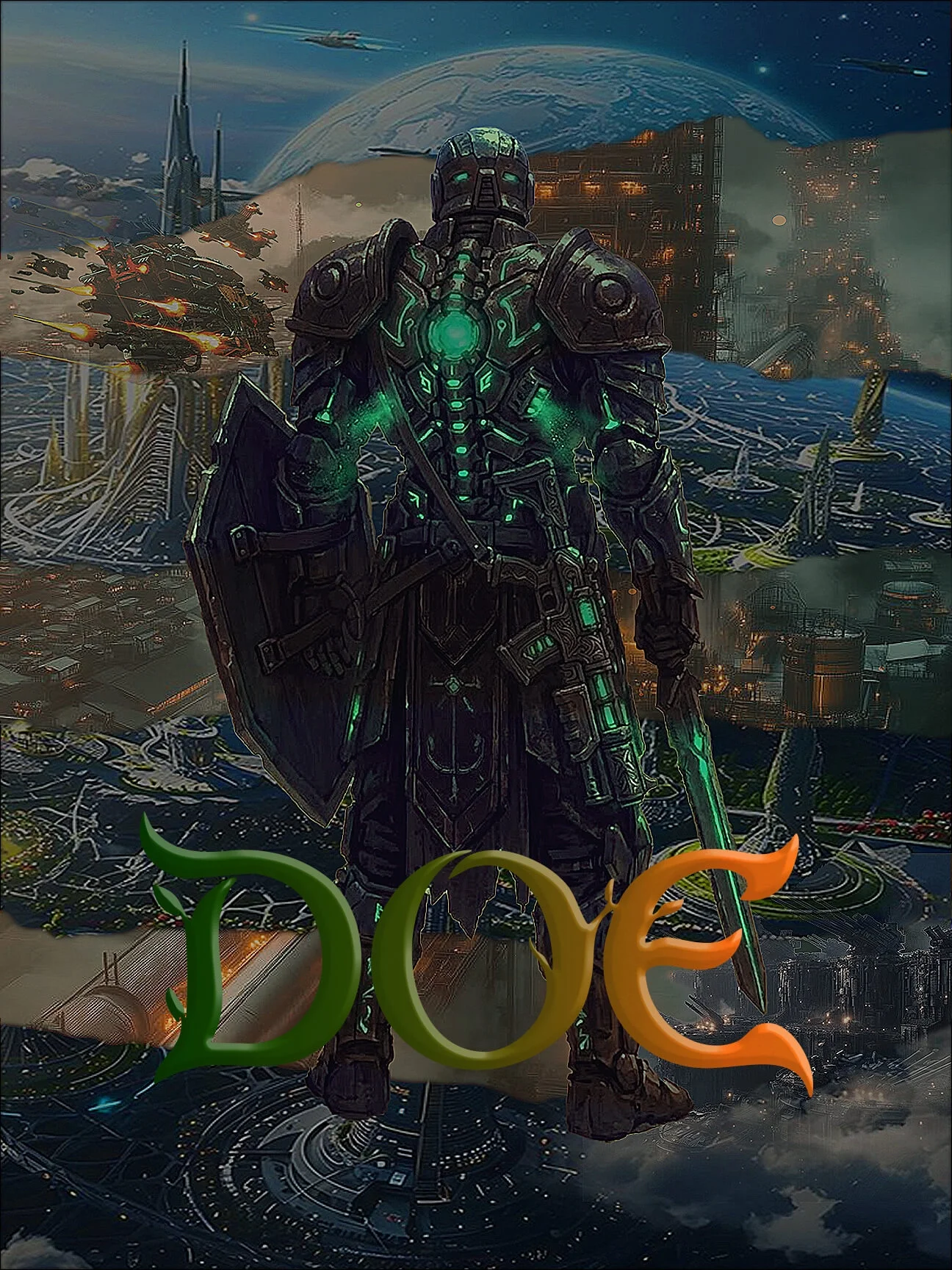
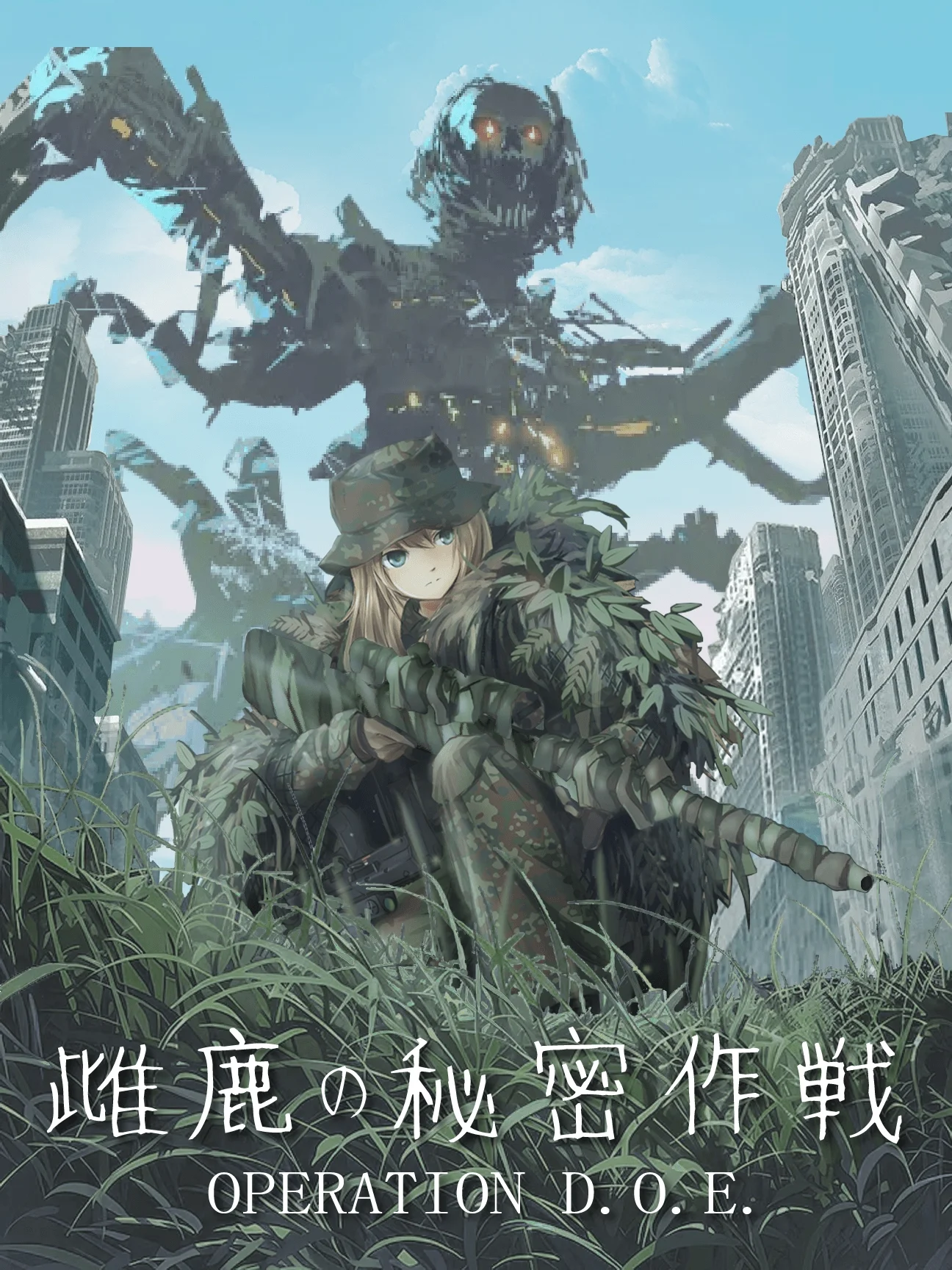
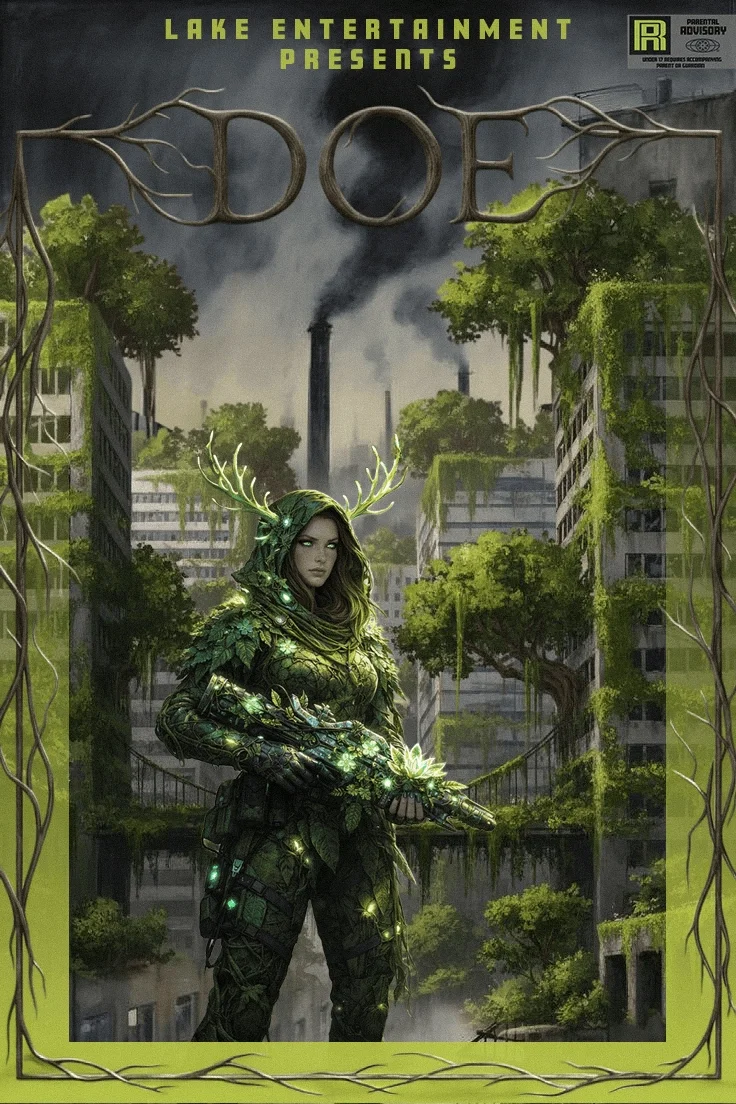
Here you can find all the submissions done by the students during this course. Try to find out which one was done with and which one without the use of AI tools. I promise you it will not be an easy task. Great job from the first cohort at the new DGMD program at Langara College.
By Andres Lara Seedorf, Instructor & Industrial Designer