Delphina Ho
Multidisciplinary Designer

Sophisticated | Entropic | Dynamic
Creating thoughtful, human centric experiences through dynamic imagination.

Donut Shop
Architecture | Interior
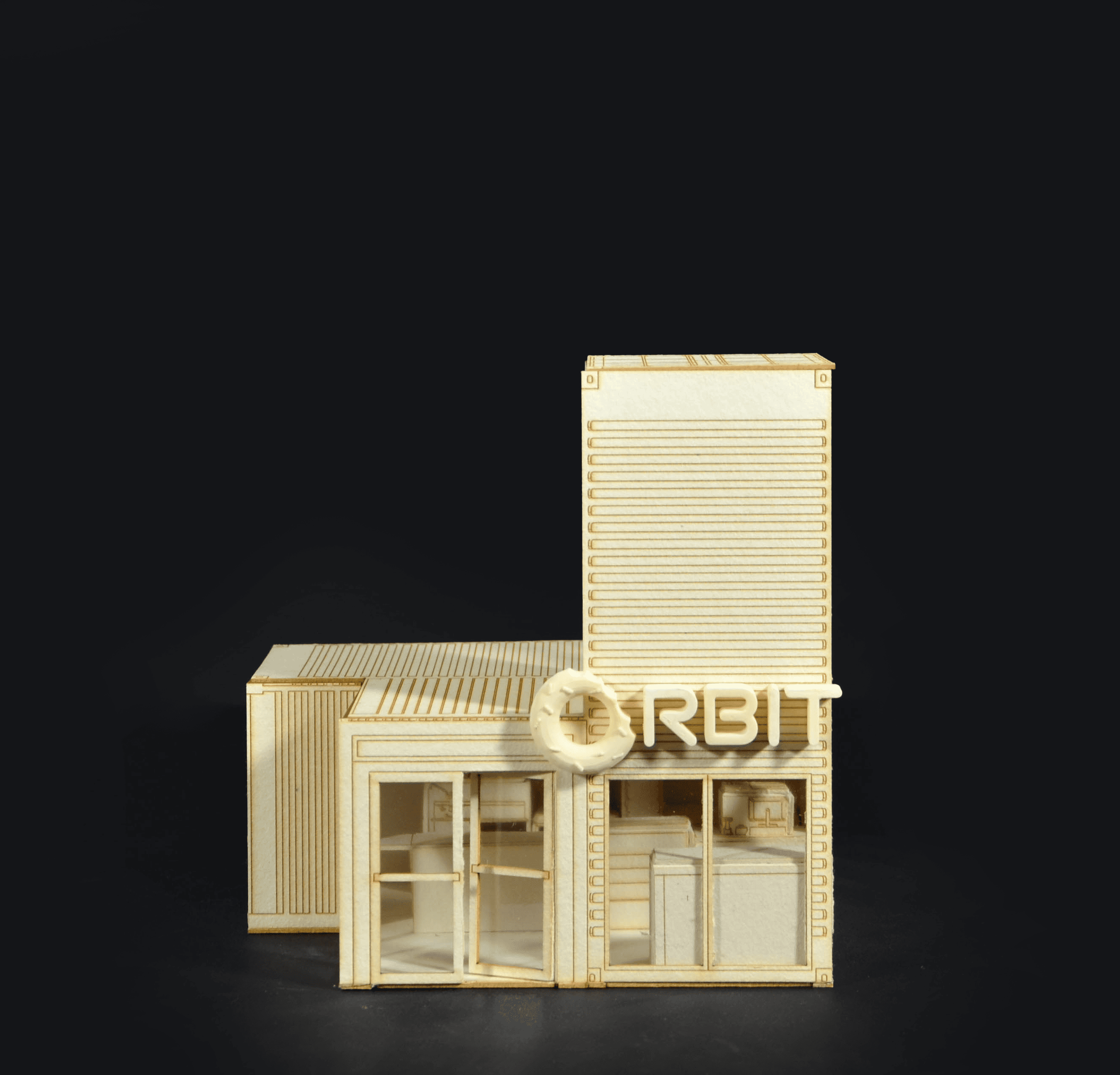
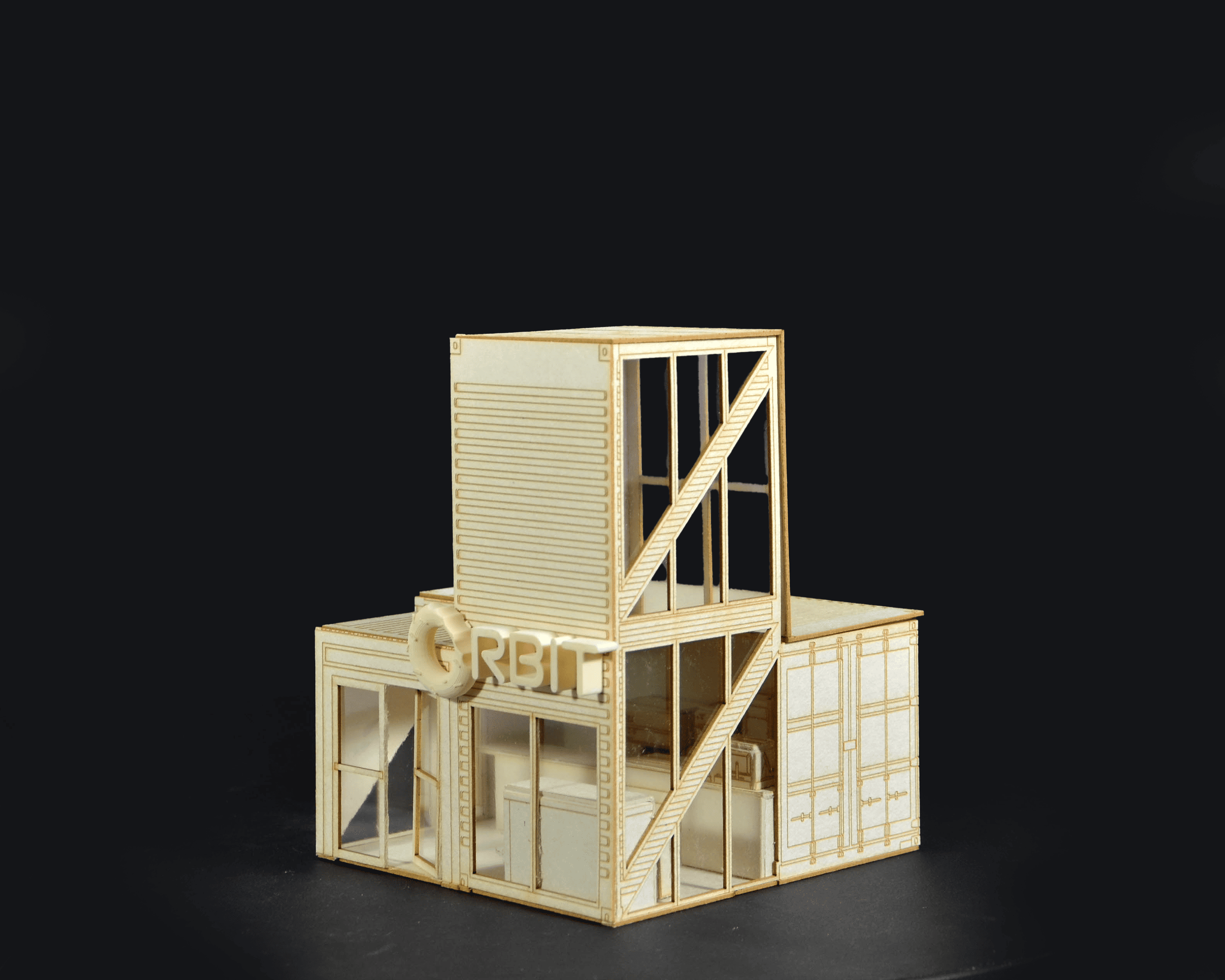
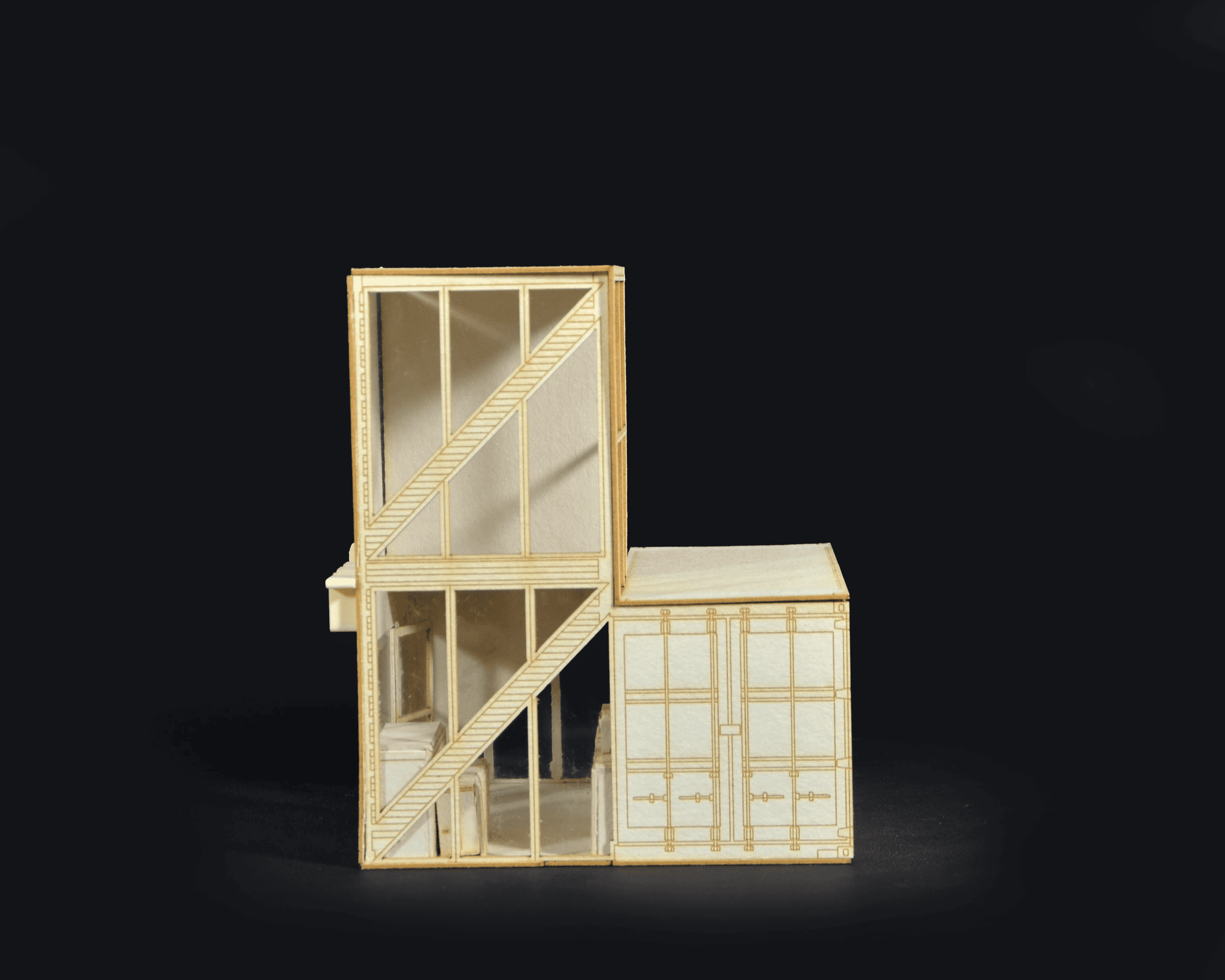
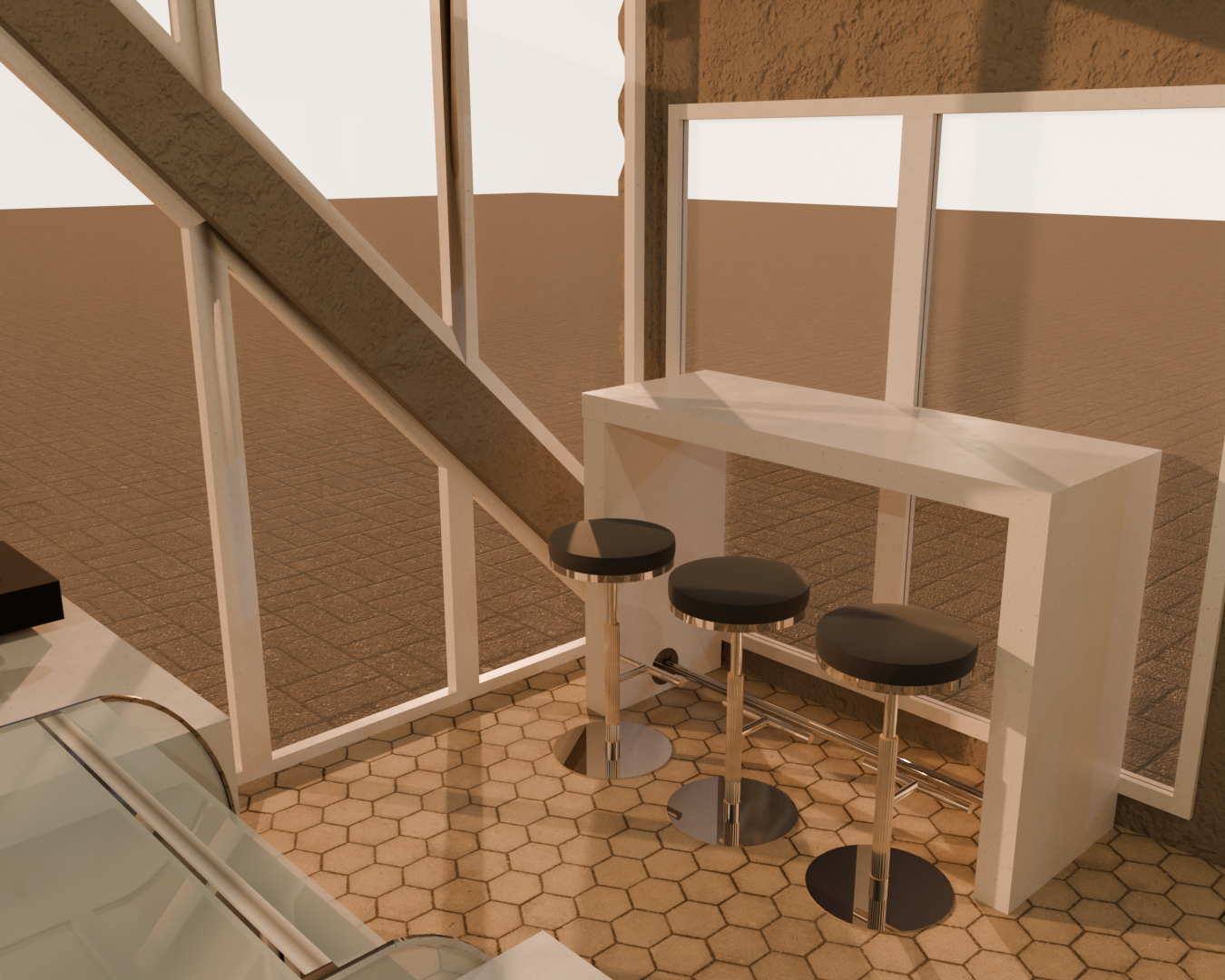
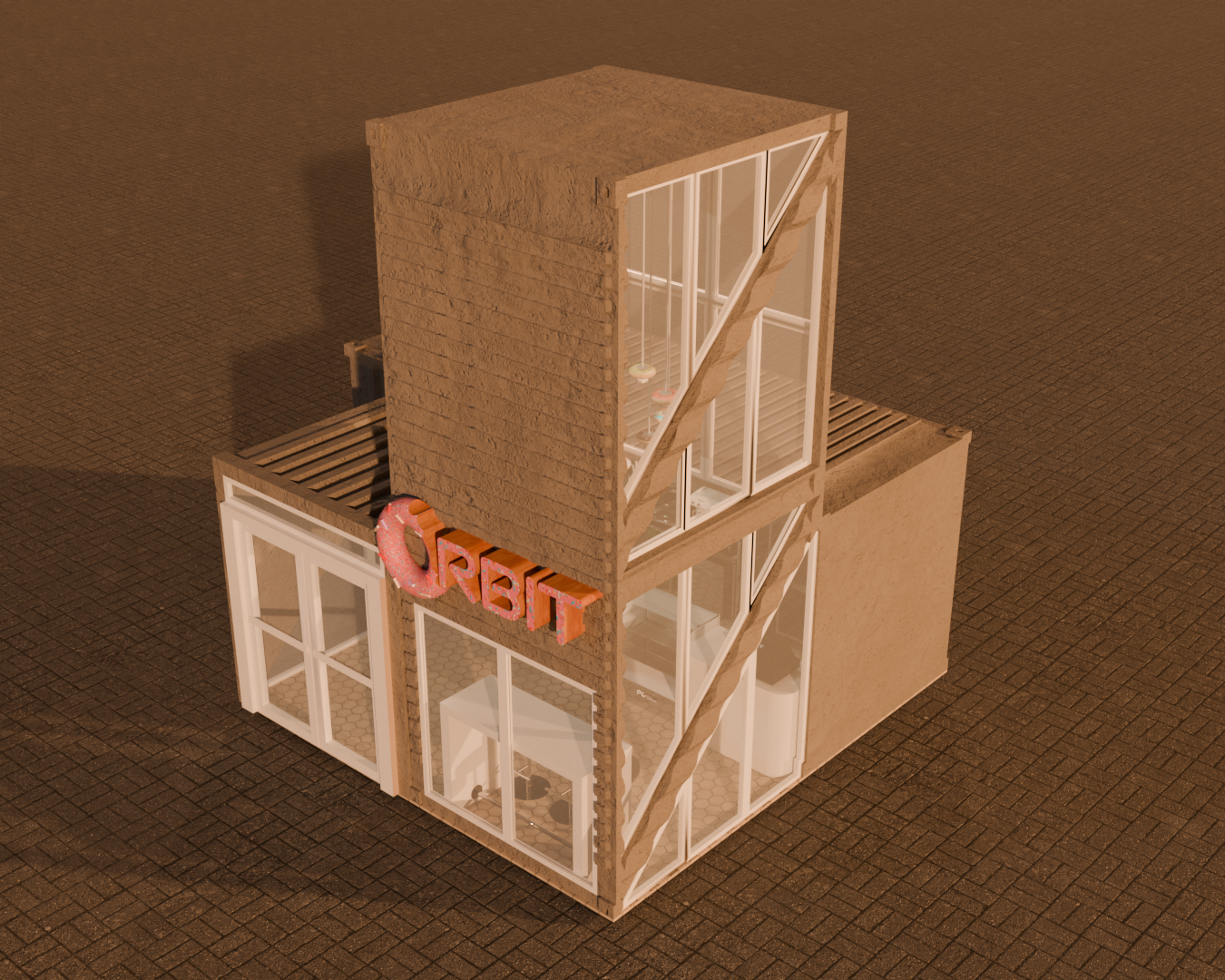
Objective: Design a Donut shop by intersecting two shipping containers. Create floor plans and elevations in CAD, then construct a scale model.
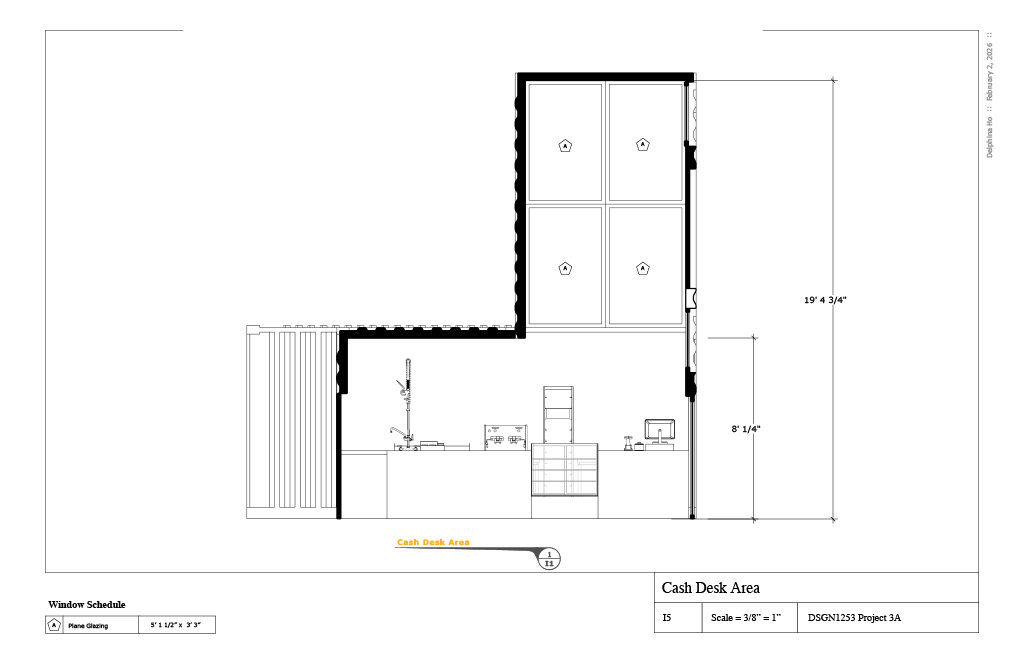
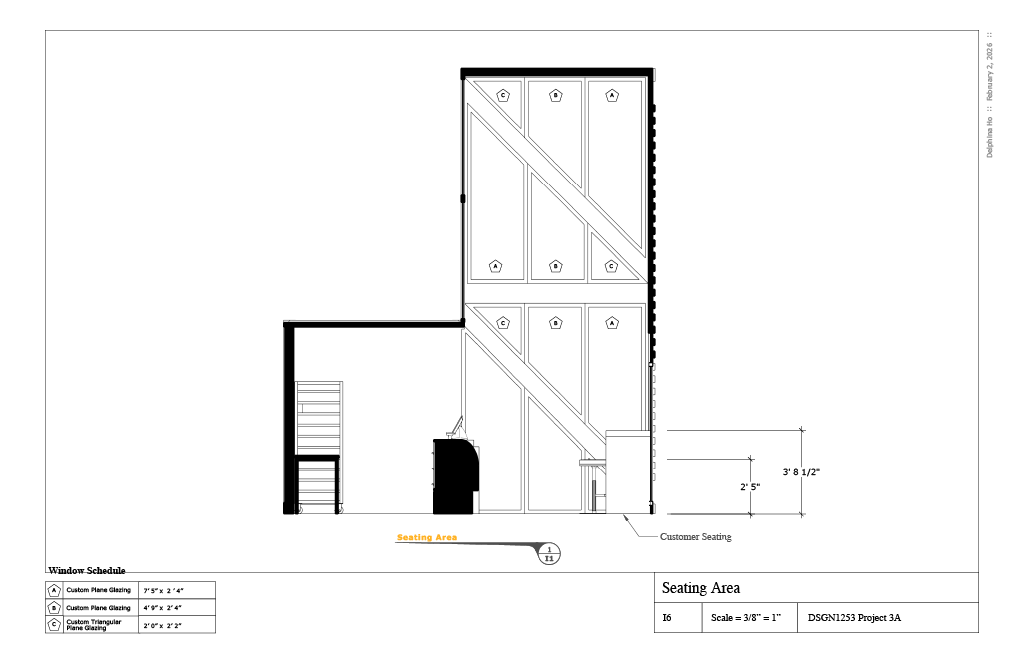
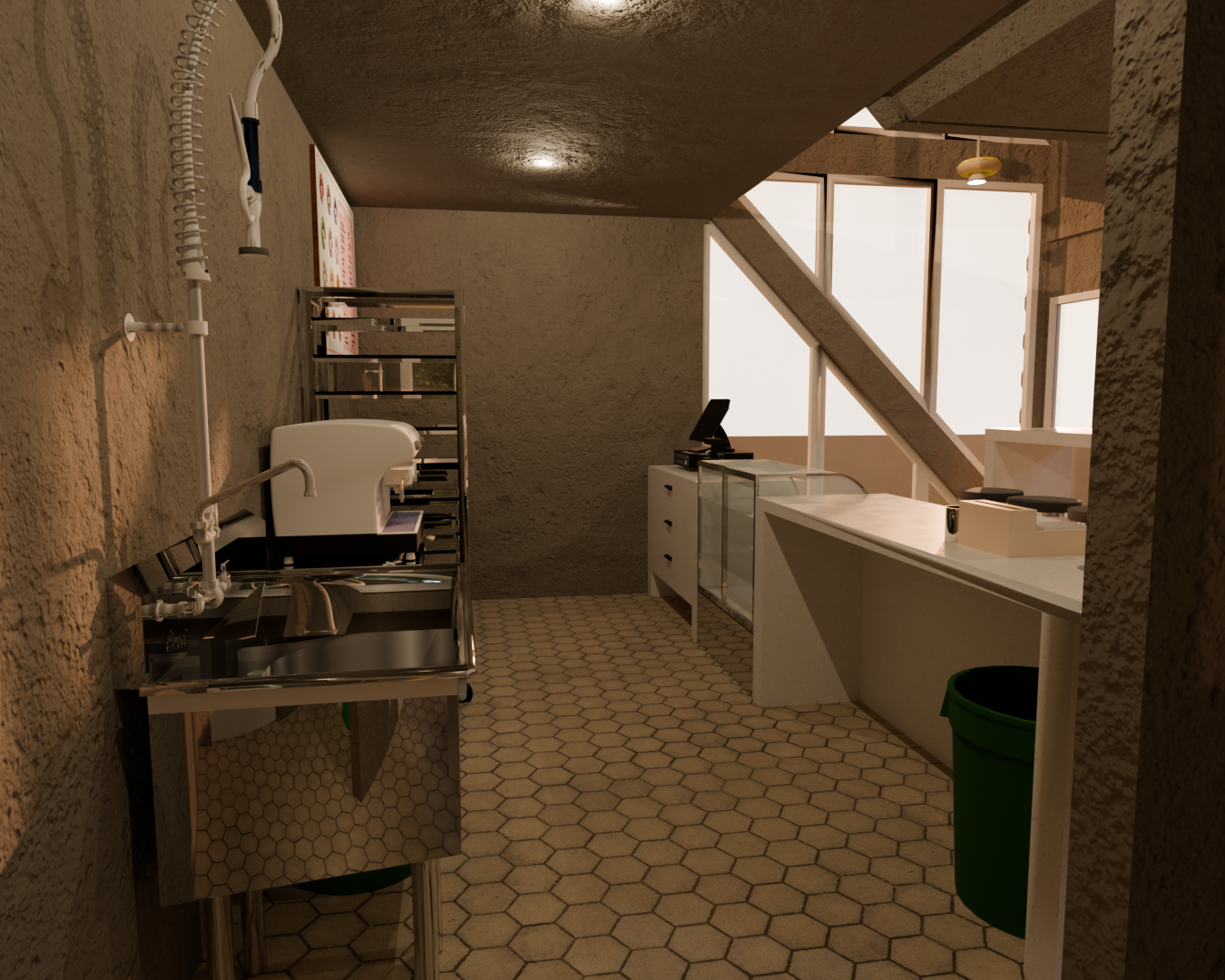
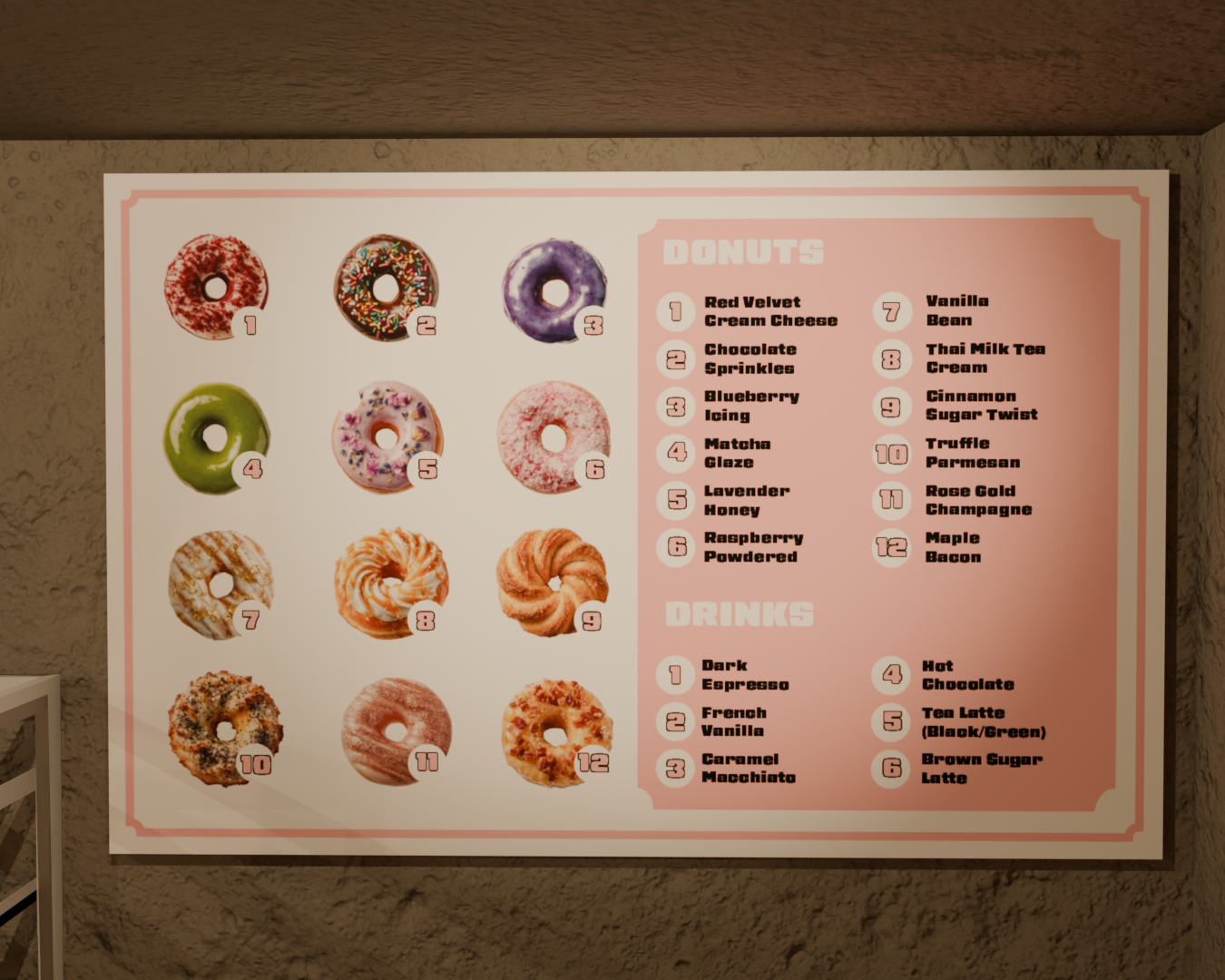
The donut shop focuses on transforming a compact shipping container into a functional, welcoming space. A diagonal cut allows angular glazing, bringing natural light into the interior and creating visual connections that make the small space feel more open. The layout also prioritizes smooth circulation, allowing customers to move easily between ordering, pickup, and seating areas while maintaining an efficient workflow for staff.
Plans
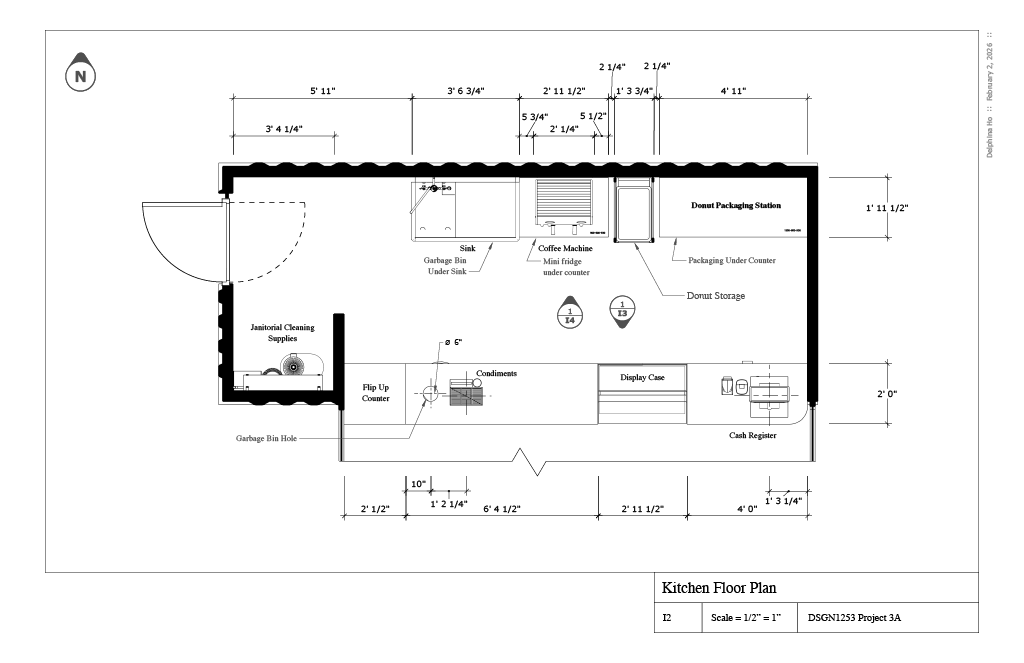
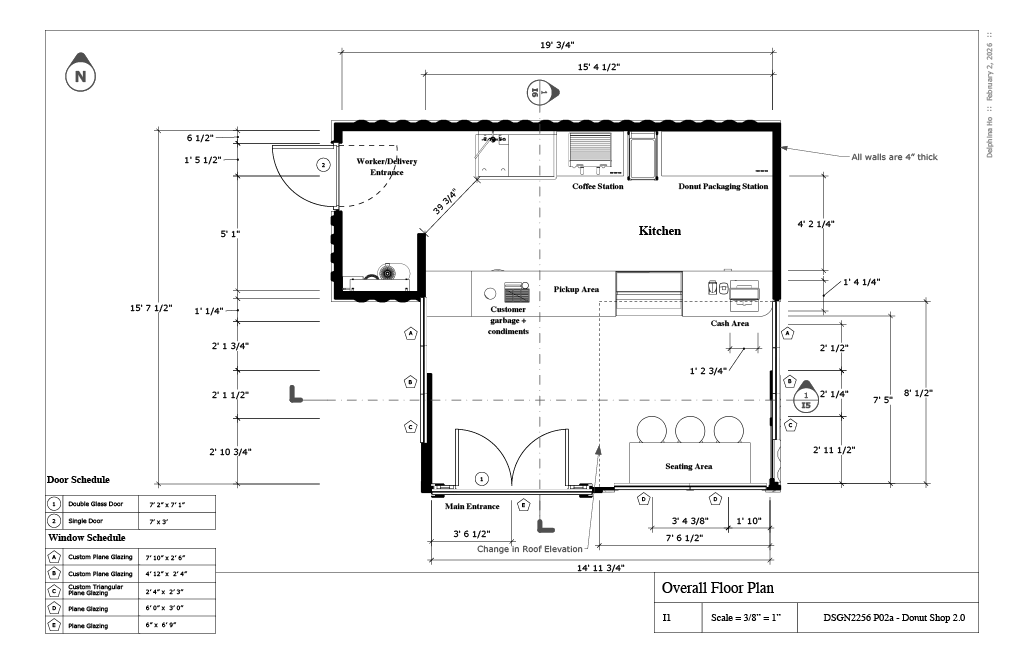
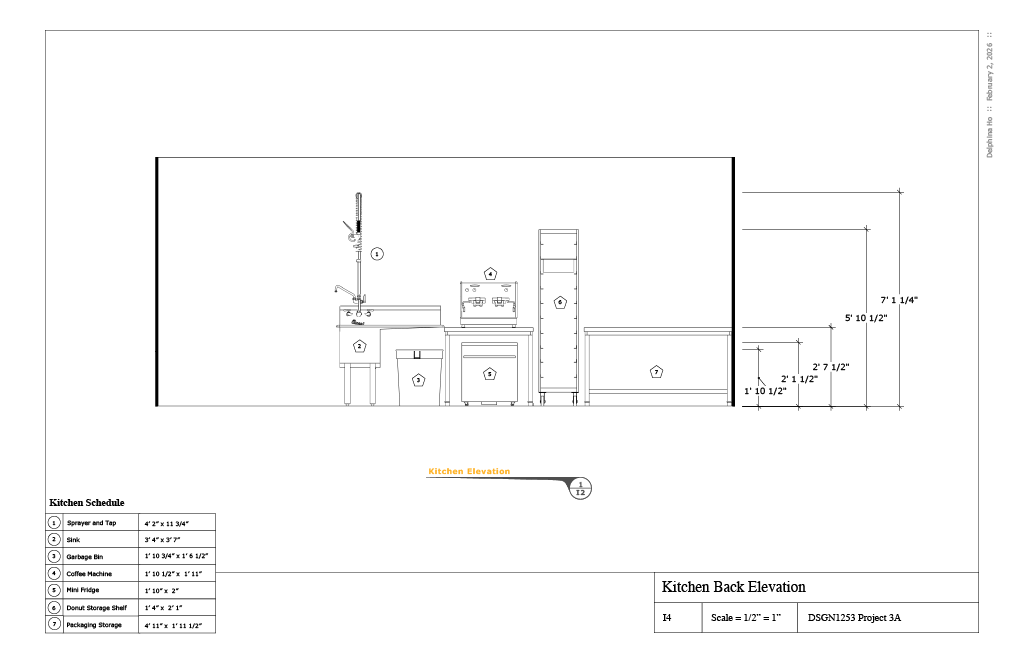
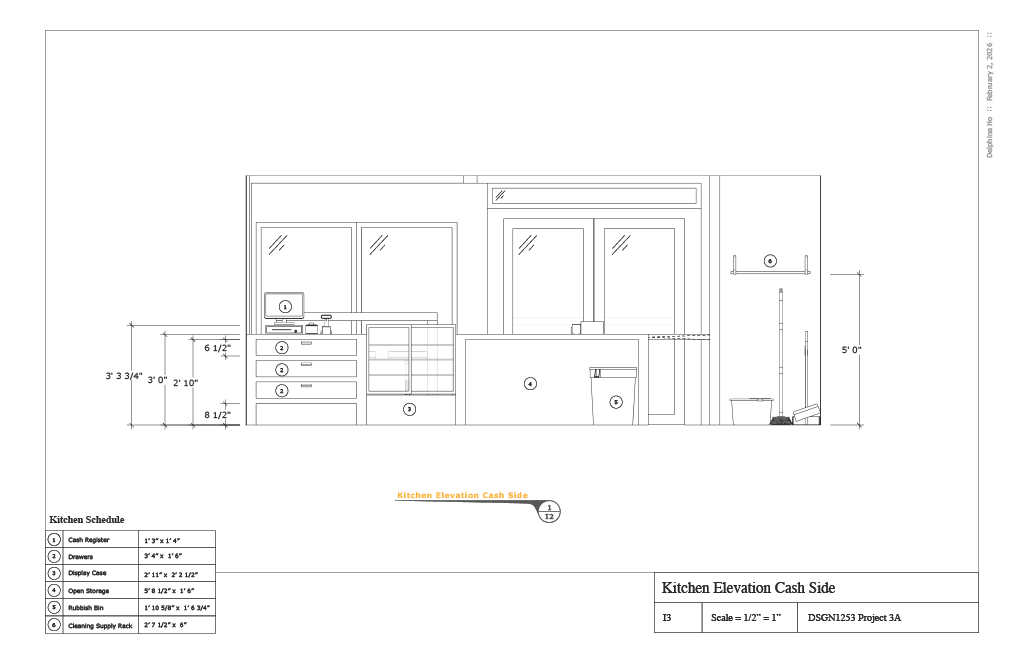
Renders
Mixed-use Laneway House
Architecture | Interior
Objective: Design a laneway house that reimagines the potential of Vancouver’s urban fabric by
integrating nonresidential programs to create dynamic, mixed-use corridors. Explore how these
often overlooked spaces can evolve into vibrant community hubs that balance residential living with broader neighbourhood engagement.
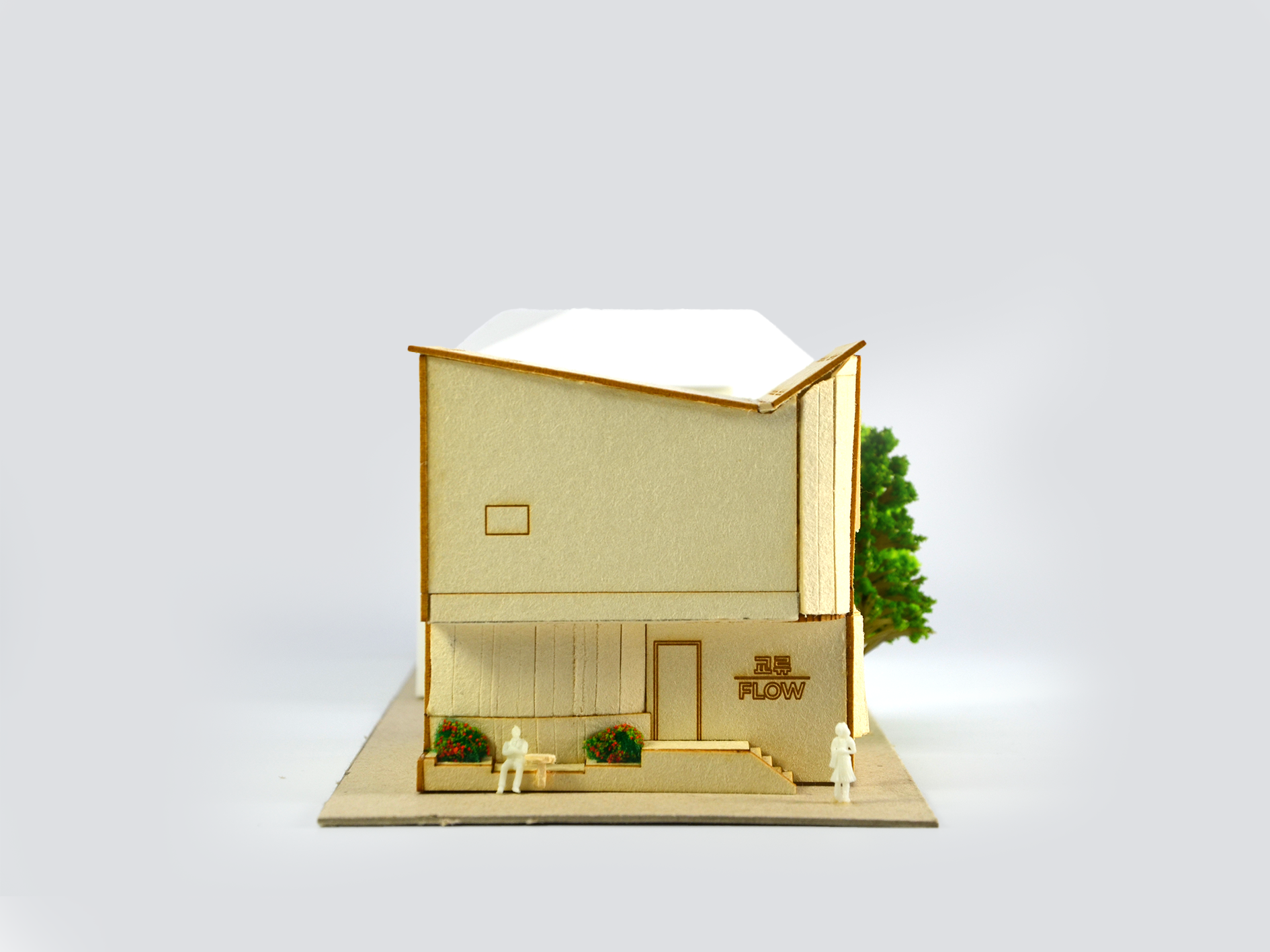
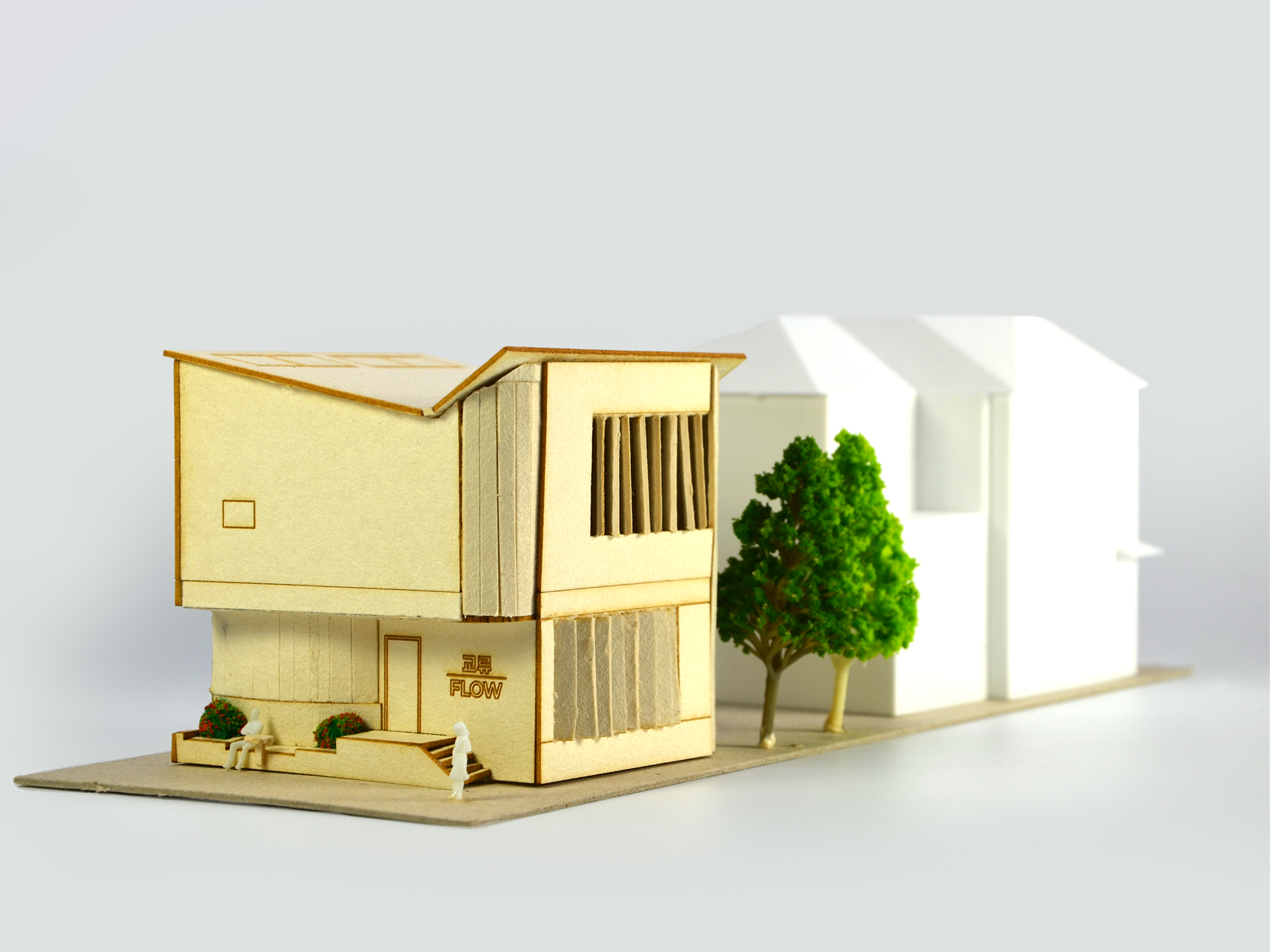
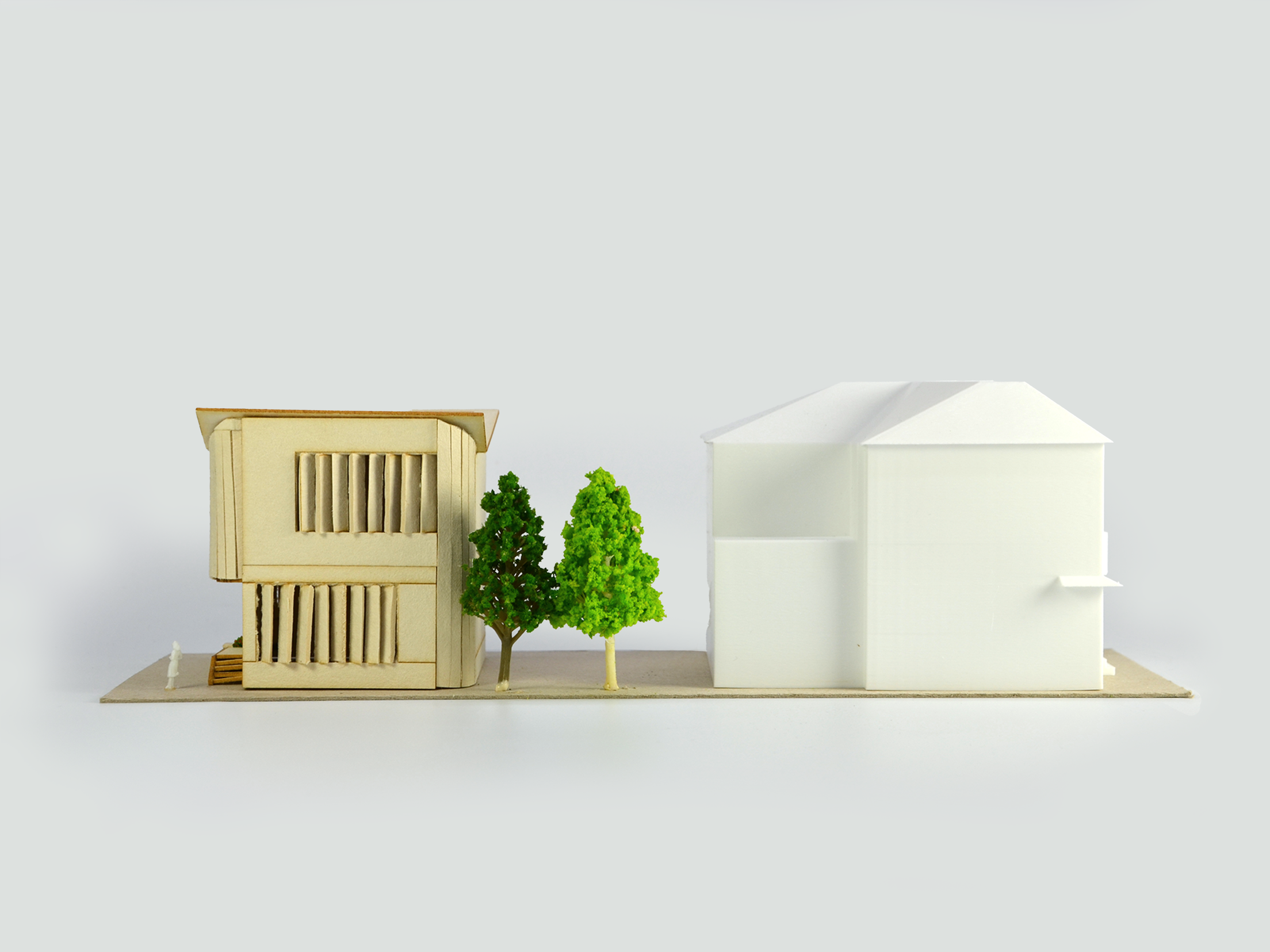
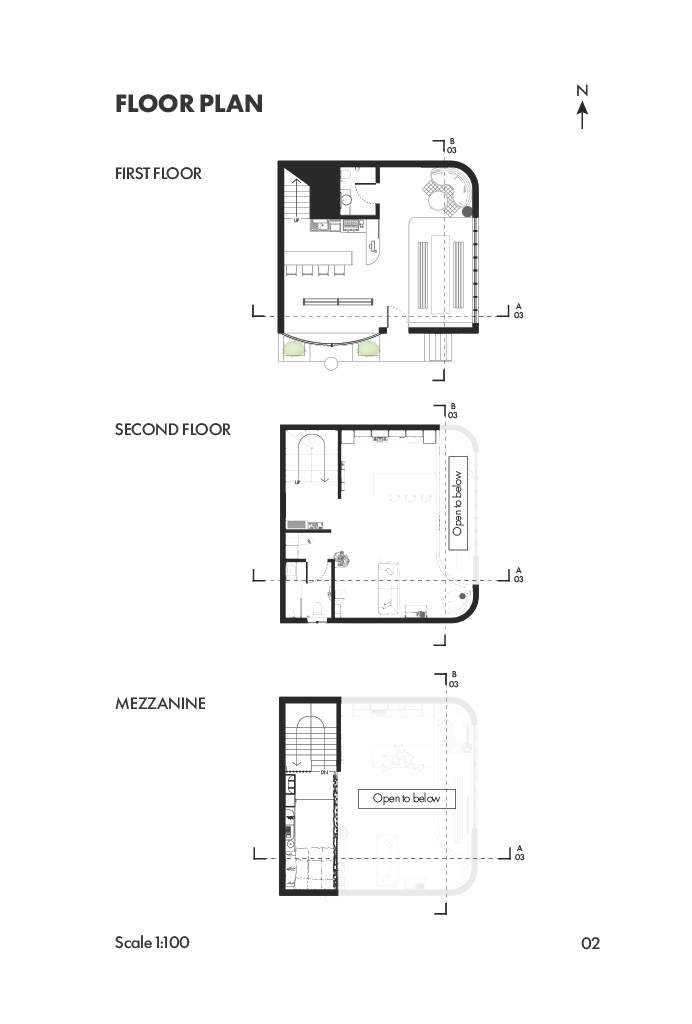
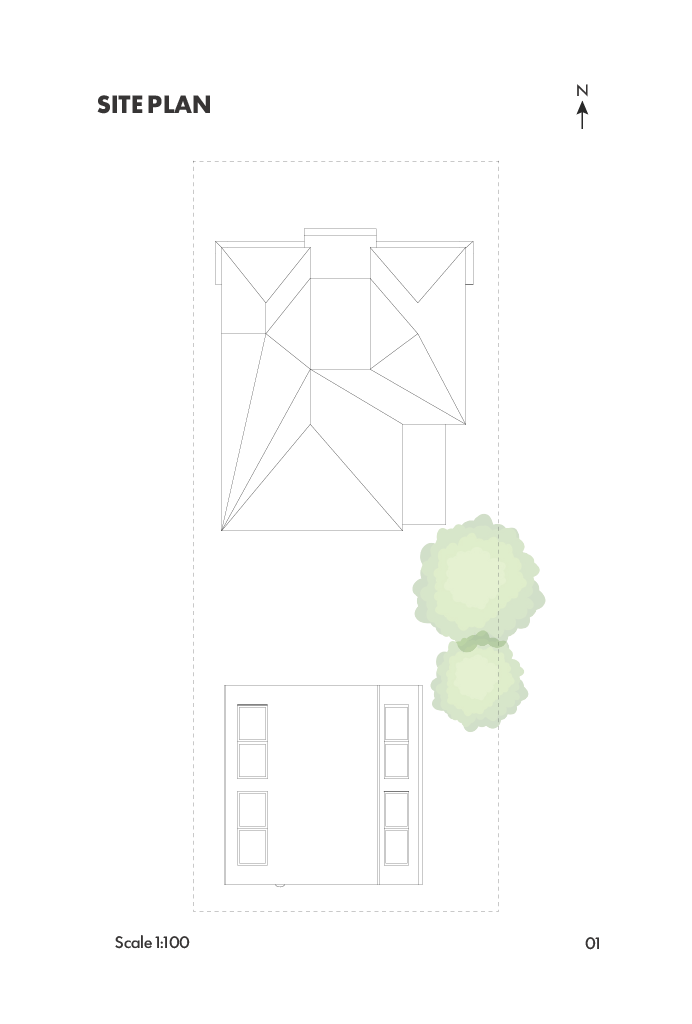
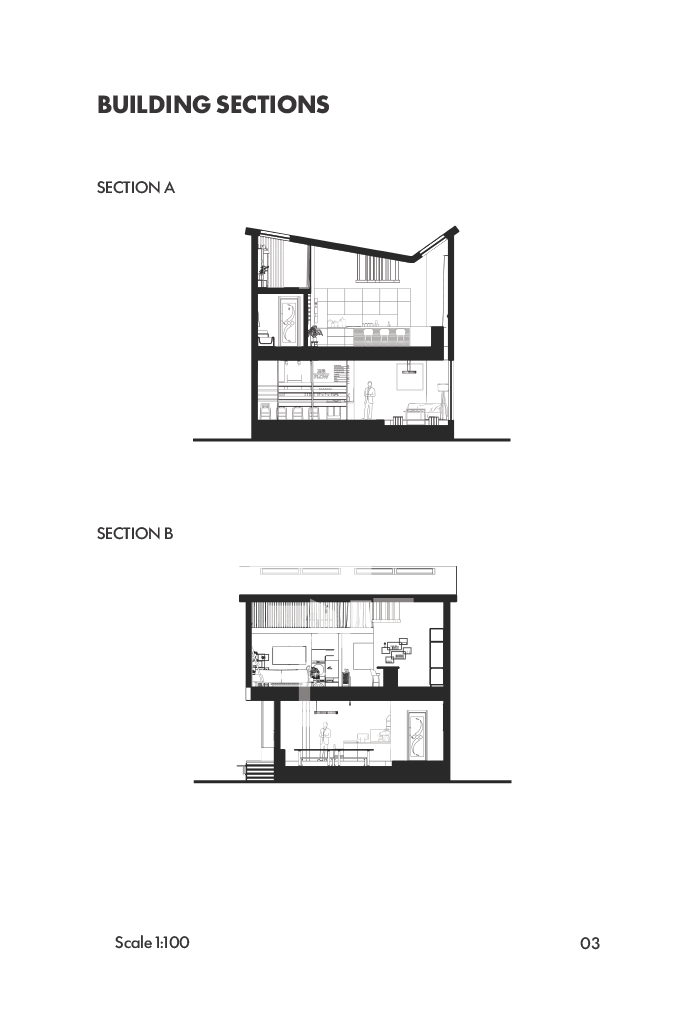
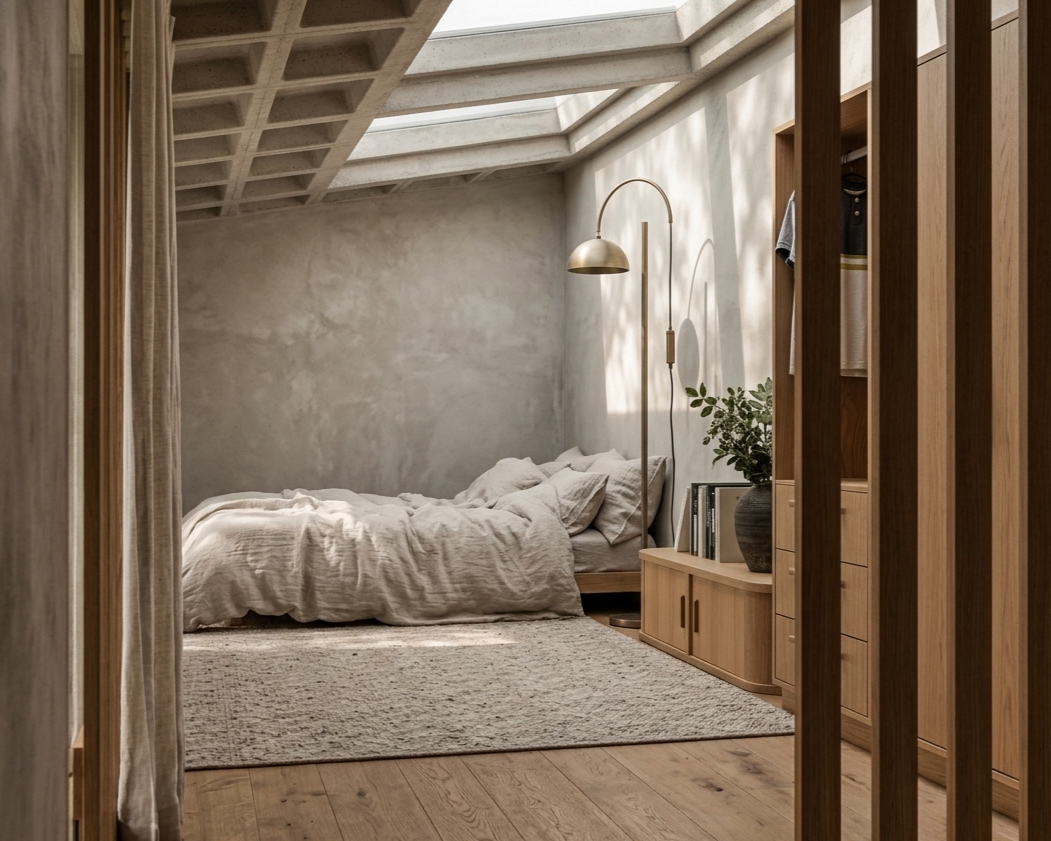
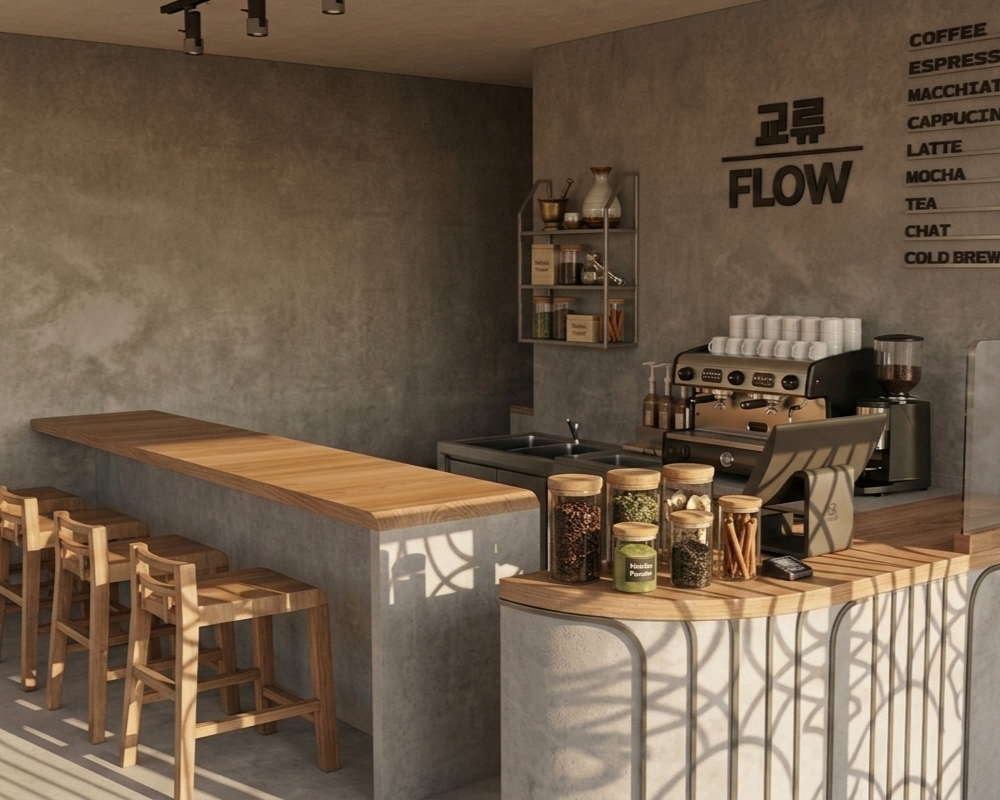
The laneway house integrates residential and commercial programs: a cafe, study, and library. The street-facing cafe serves commuters and students fresh coffee and tea. Visitors can study, read, or relax in the dedicated seating area. The adjacent library, inspired by Vancouver’s Little Free Library, operates a “take a book, share a book” system to foster community exchange. Access to the residential area is strictly limited: the staircase is embedded within the café’s service zone, behind the counter, ensuring only staff and owners may enter. Above, the home offers a lofted living area with high ceilings in the kitchen and living room, creating an open, retreat-like atmosphere. A split level bedroom mezzanine overlooks the main space, maintaining privacy and reinforcing the vertical connection between zones.
Renders
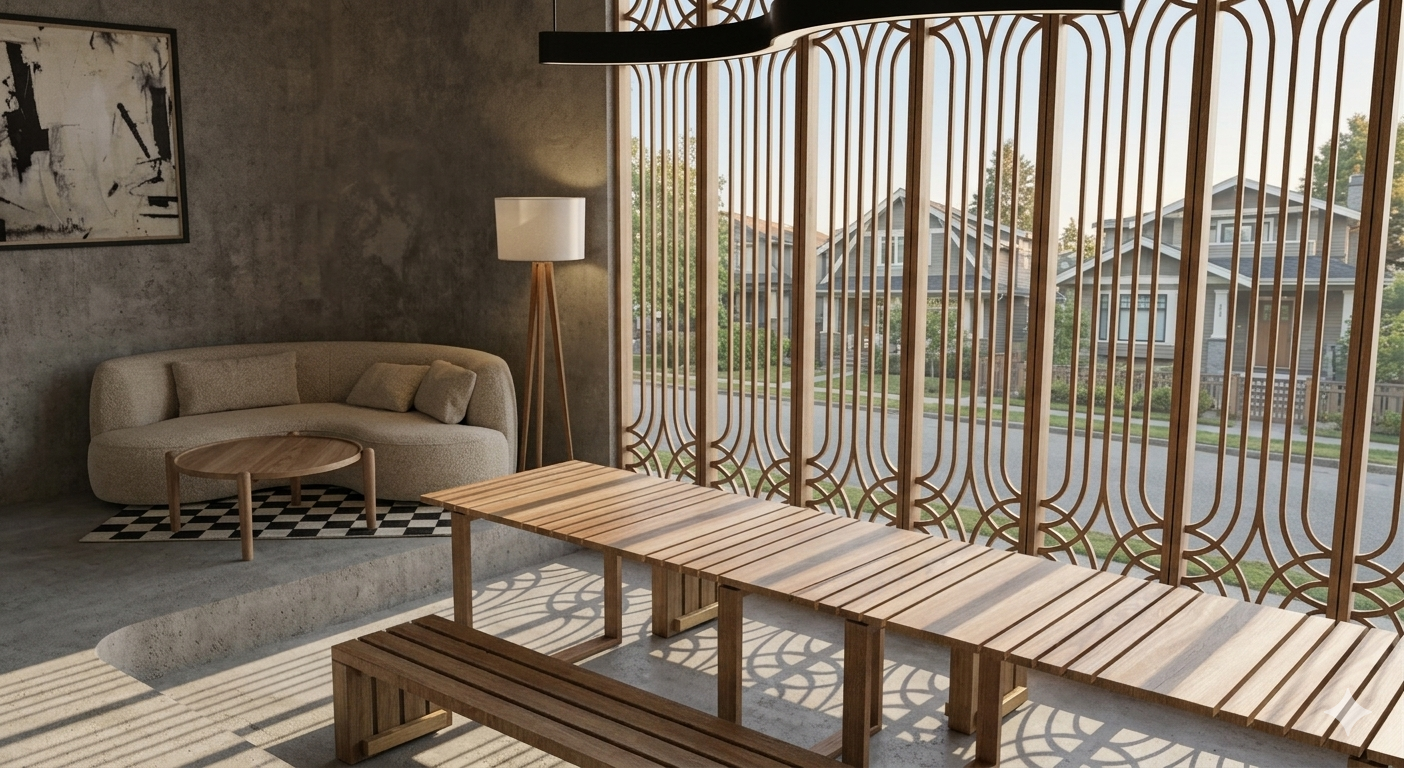
Renders created with Google Gemini
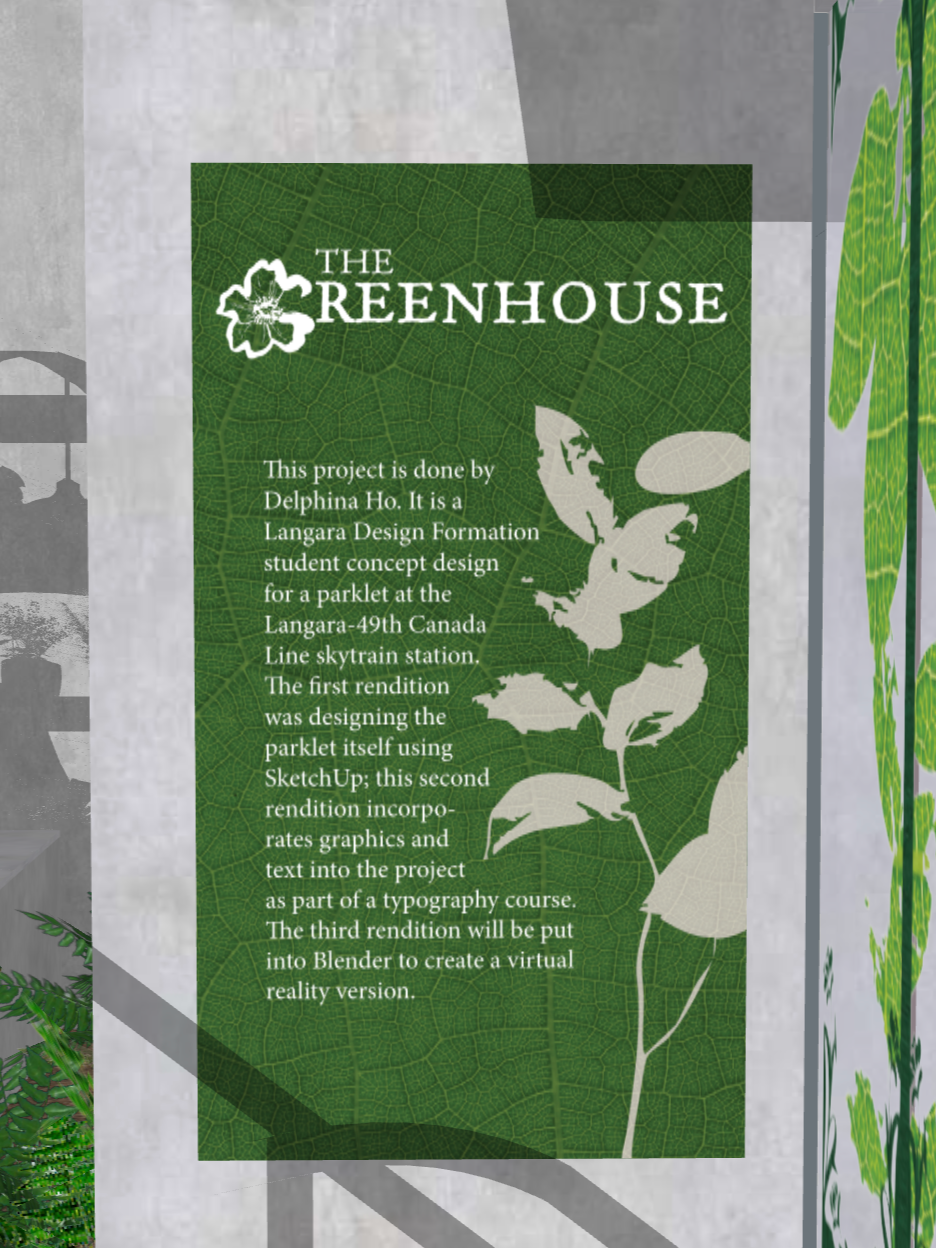
Parklet
Architecture | Graphics
Objective: Design a Donut shop by intersecting two shipping containers. Create floor plans and elevations in CAD, then construct a scale model.
The donut shop focuses on transforming a compact shipping container into a functional, welcoming space. A diagonal cut allows angular glazing, bringing natural light into the interior and creating visual connections that make the small space feel more open. The layout also prioritizes smooth circulation, allowing customers to move easily between ordering, pickup, and seating areas while maintaining an efficient workflow for staff.
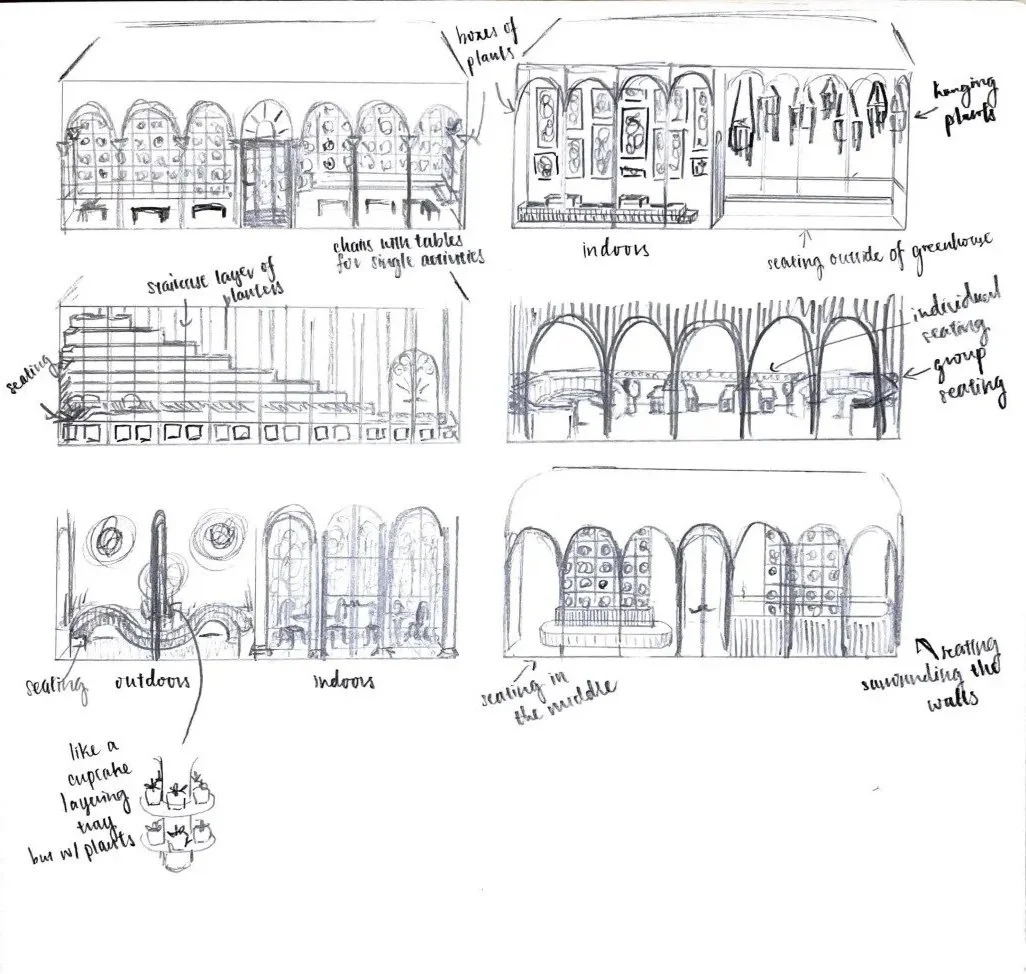
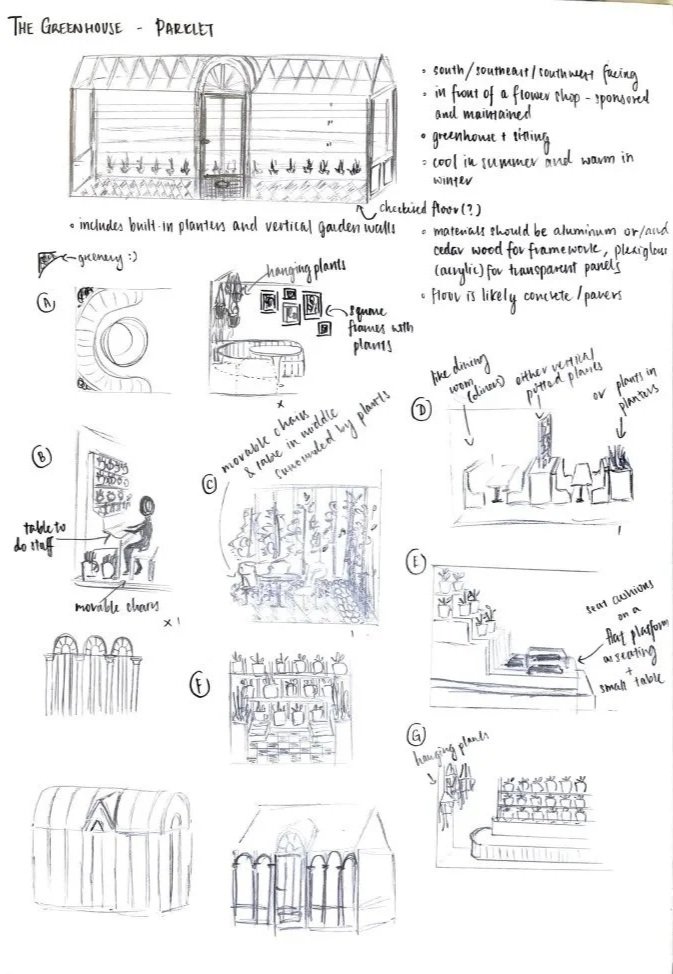
Sketches
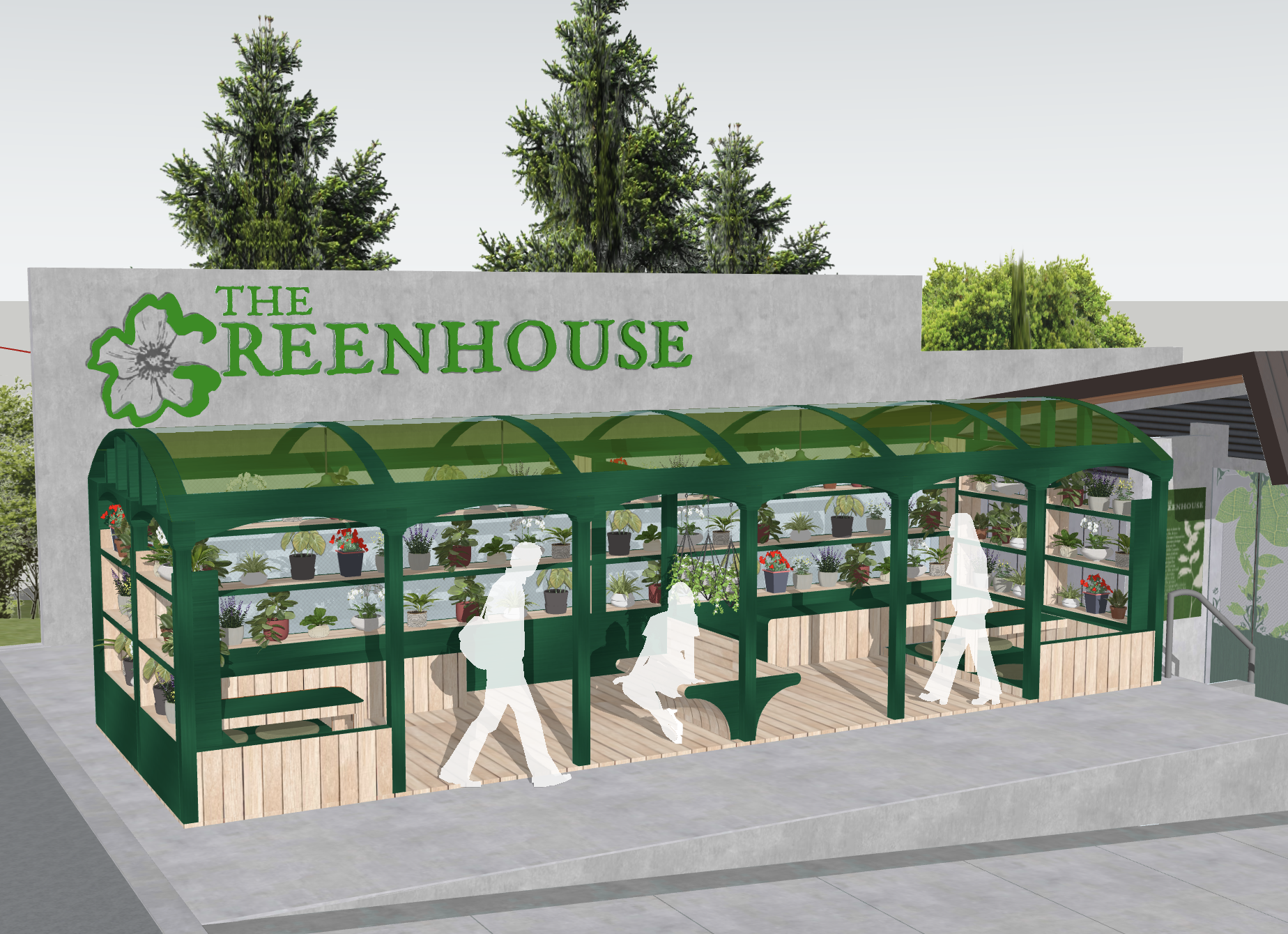
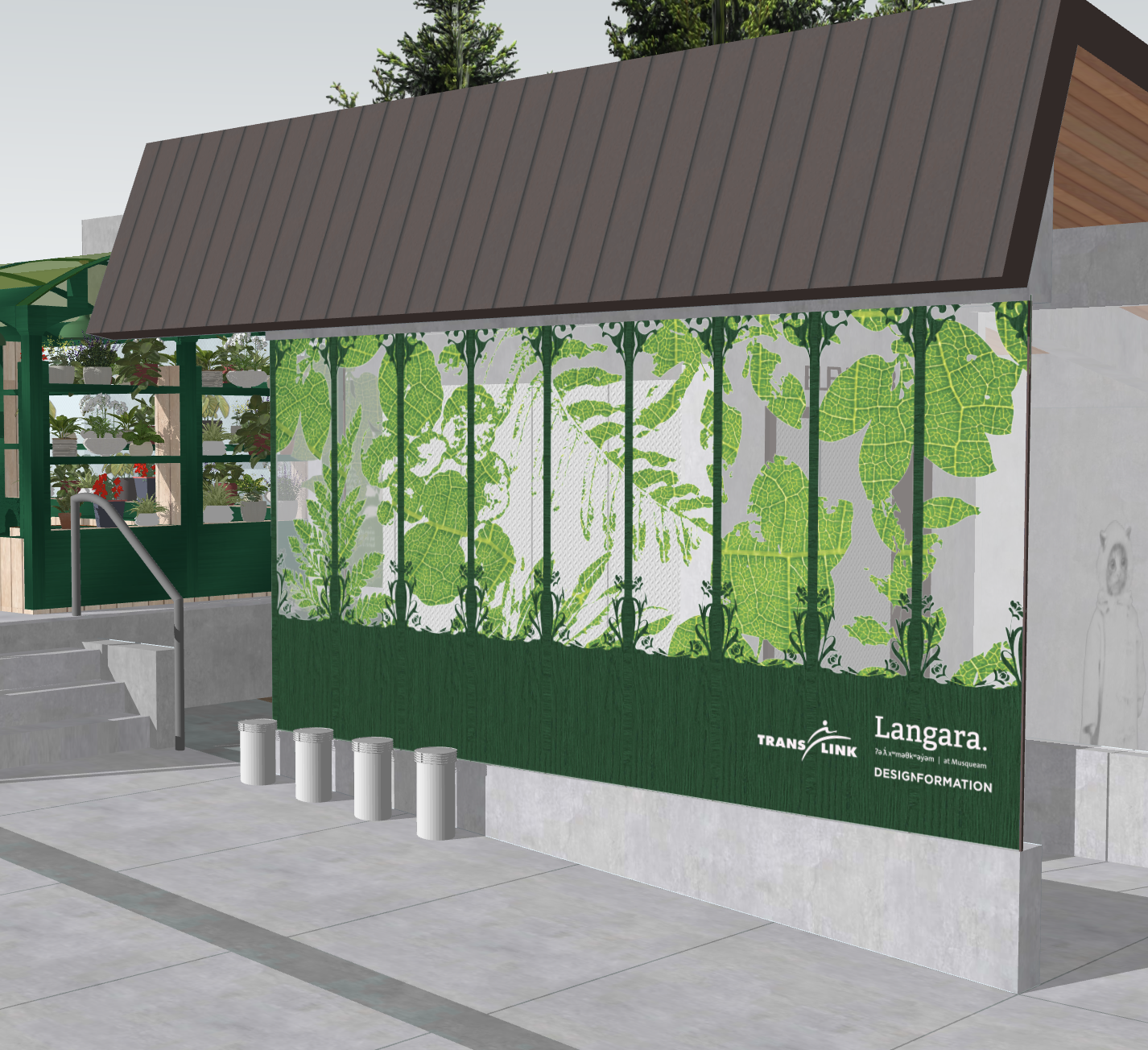
Graphics
Hair Salon
Interiors | Architecture | Furnishing
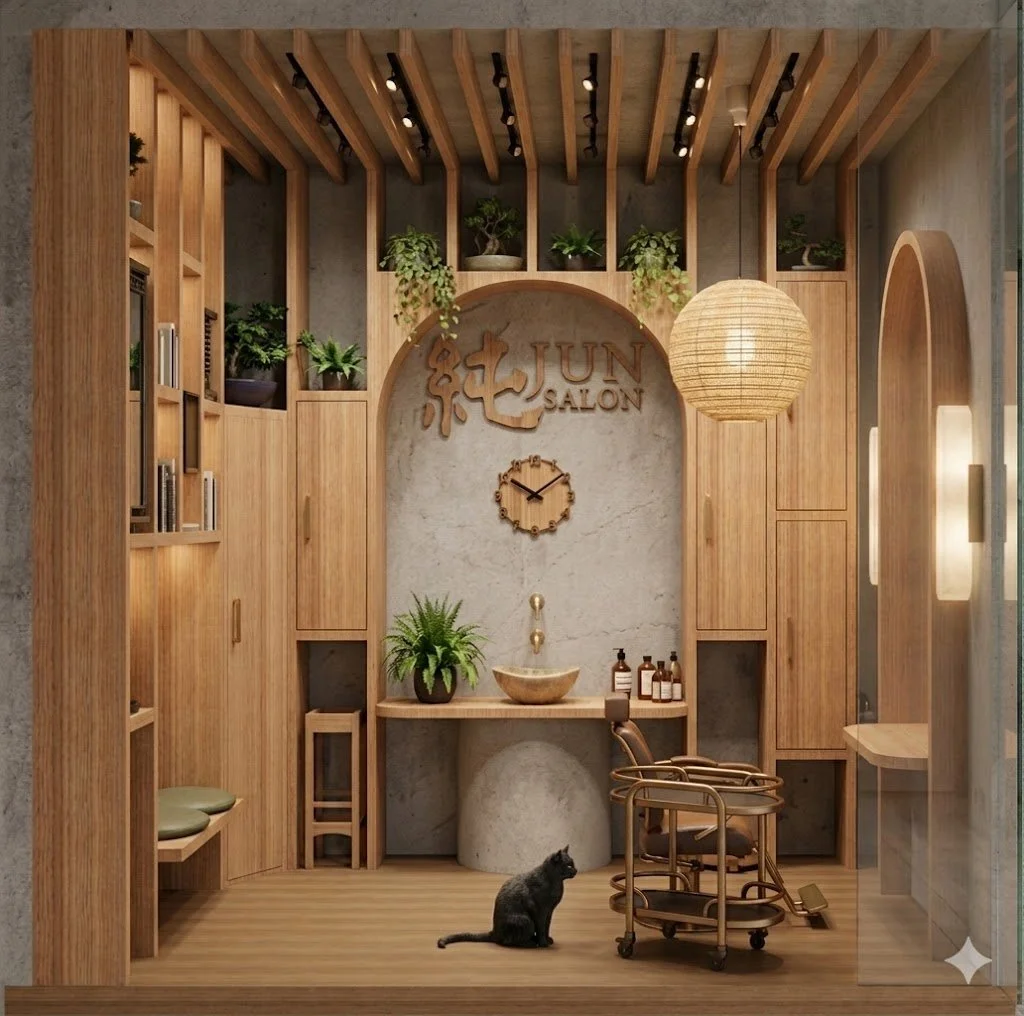
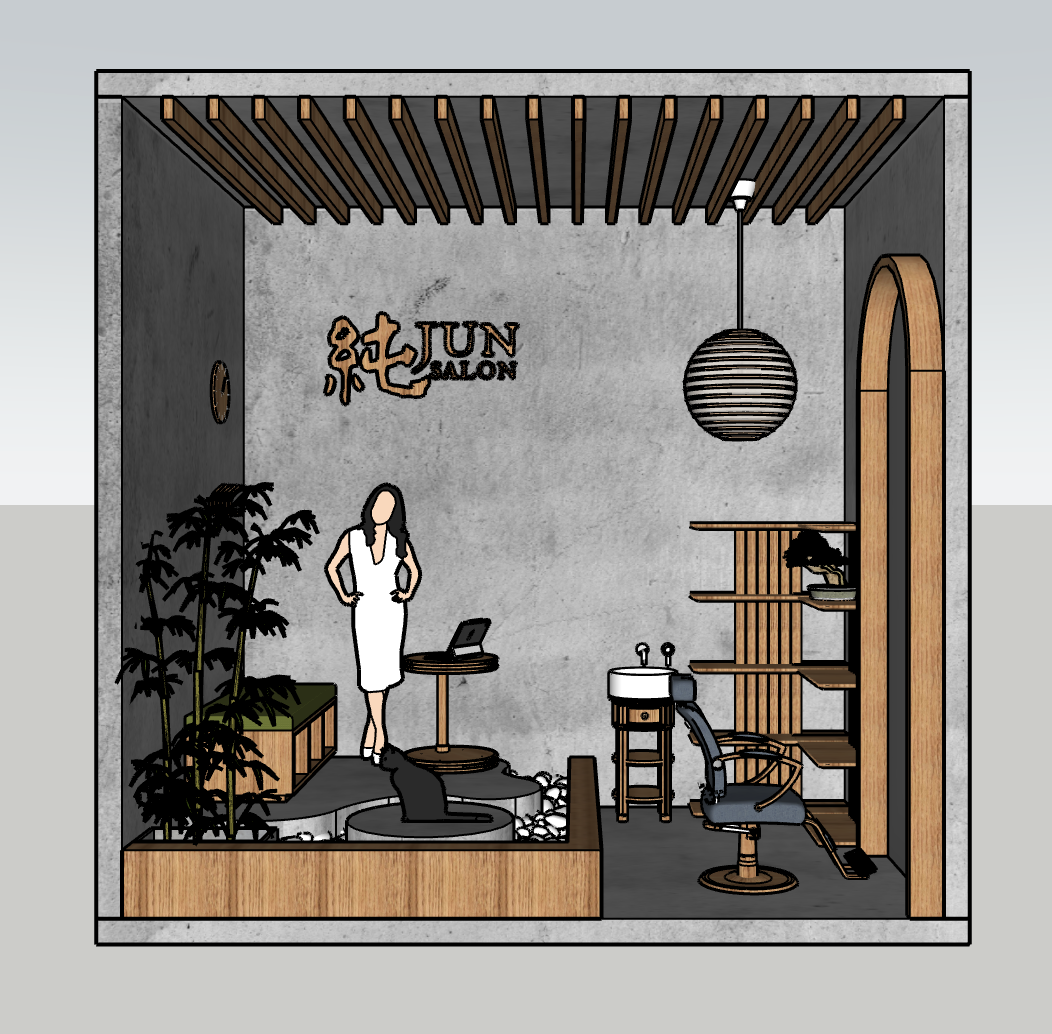
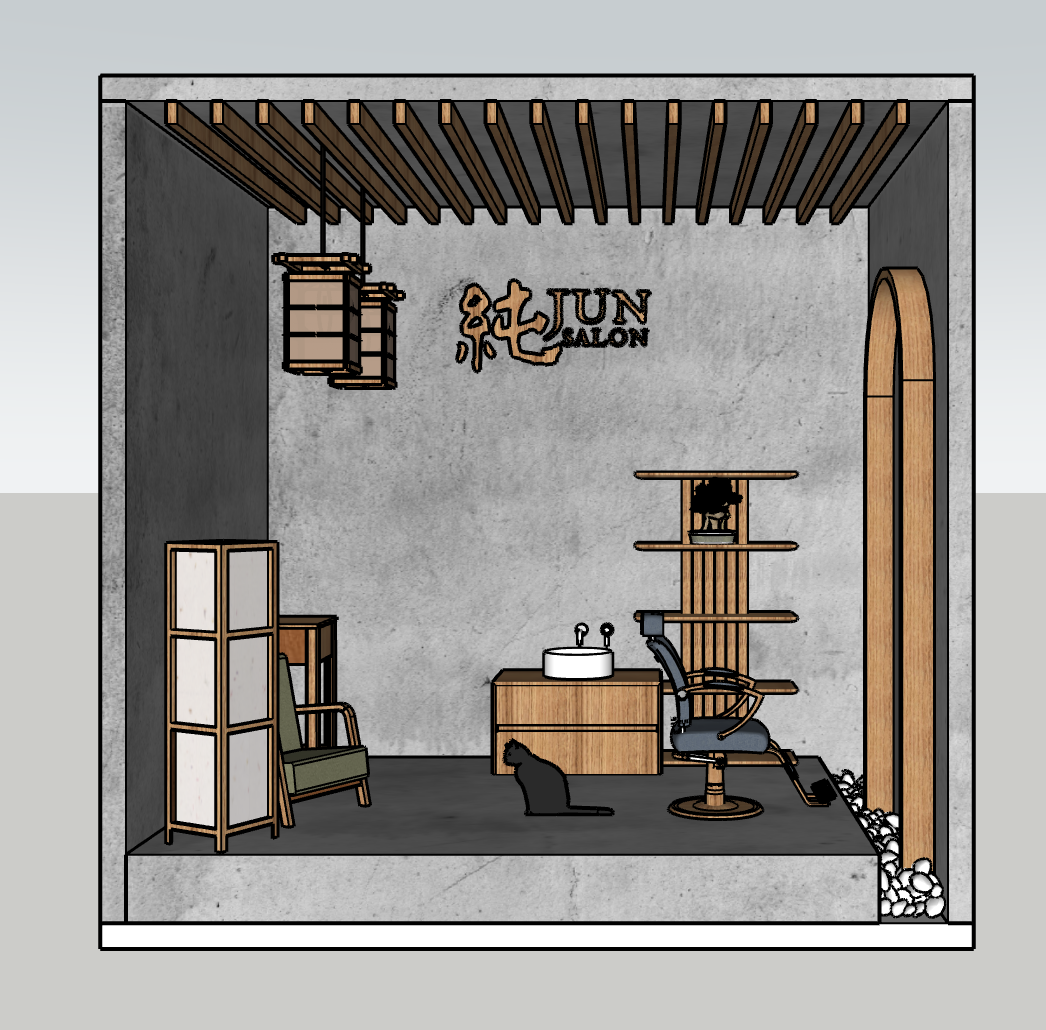
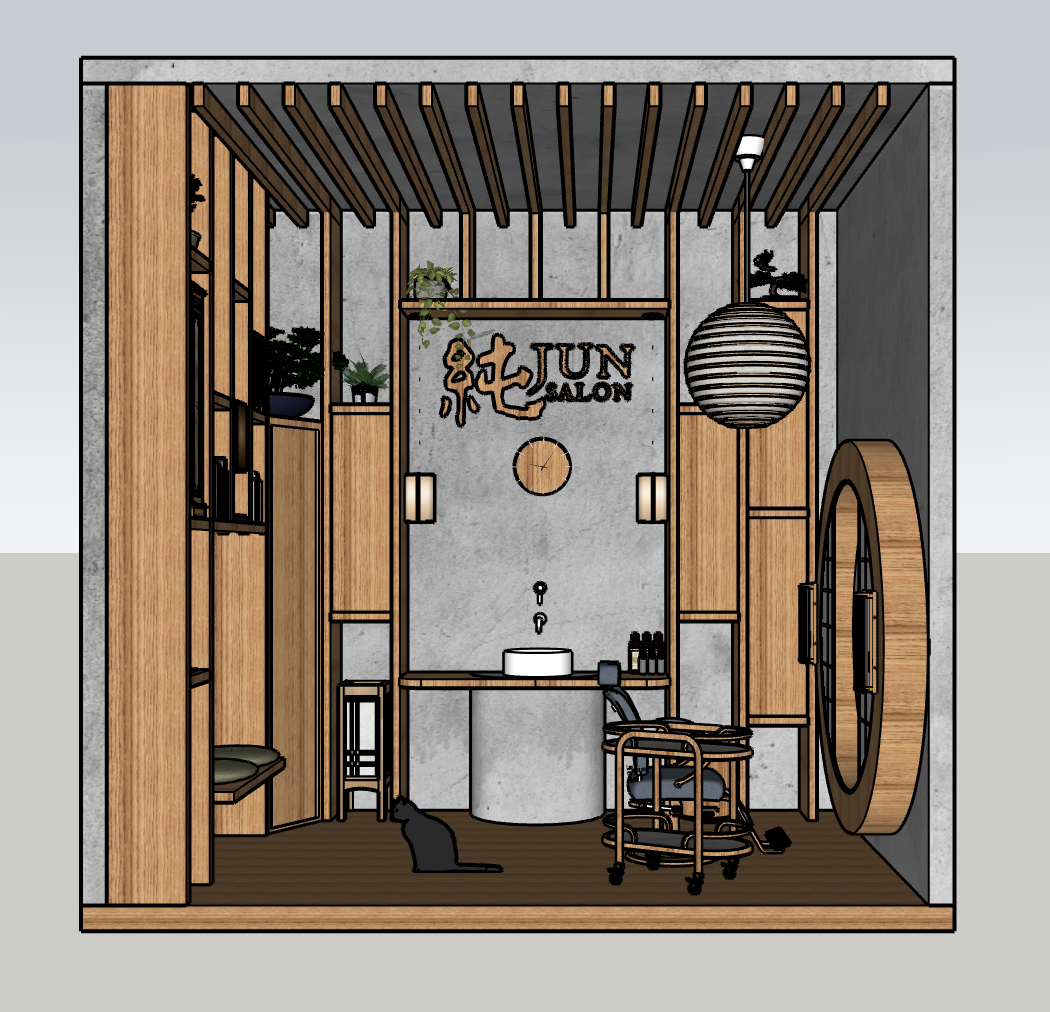
Objective: Create a 3D model of an 8’x12’ floor with 4.5” thick 12’ high walls mini salon/barbershop based on Japanese, Modernist, 50’s Scandinavian, California, Boho or Hipster themes.
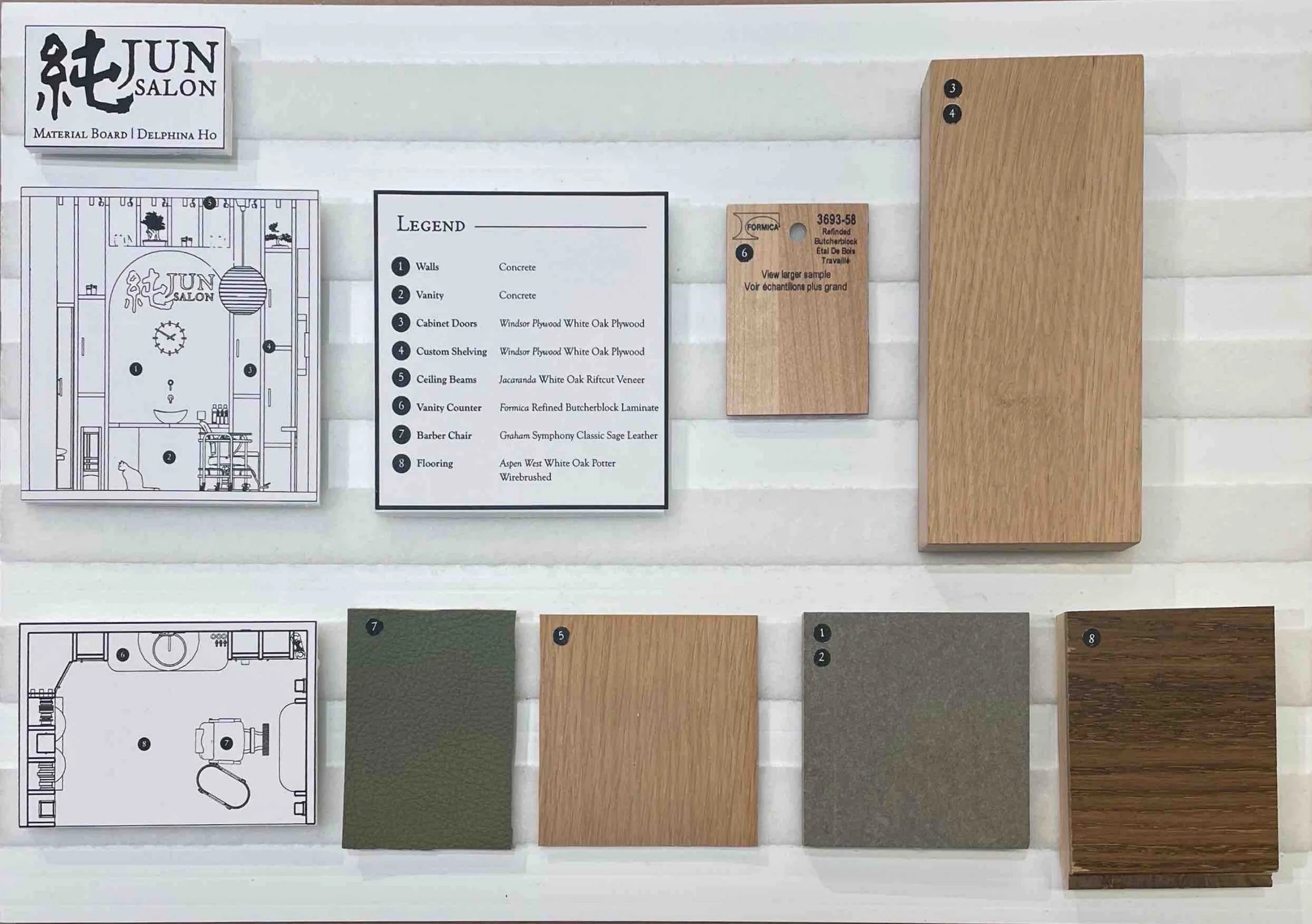
Designed in a Japanese-inspired style, the hair salon features wooden plank wall panels that create a cohesive, rhythmic backdrop, reflecting a natural, minimalist, and functional aesthetic. These panels are integrated into storage, shelving, and seating, maintaining clarity and efficiency throughout the space. Arched openings gently break this rhythm, framing key service areas and creating moments of focus within a calm, continuous environment.
Render created with Google Gemini
Iterations
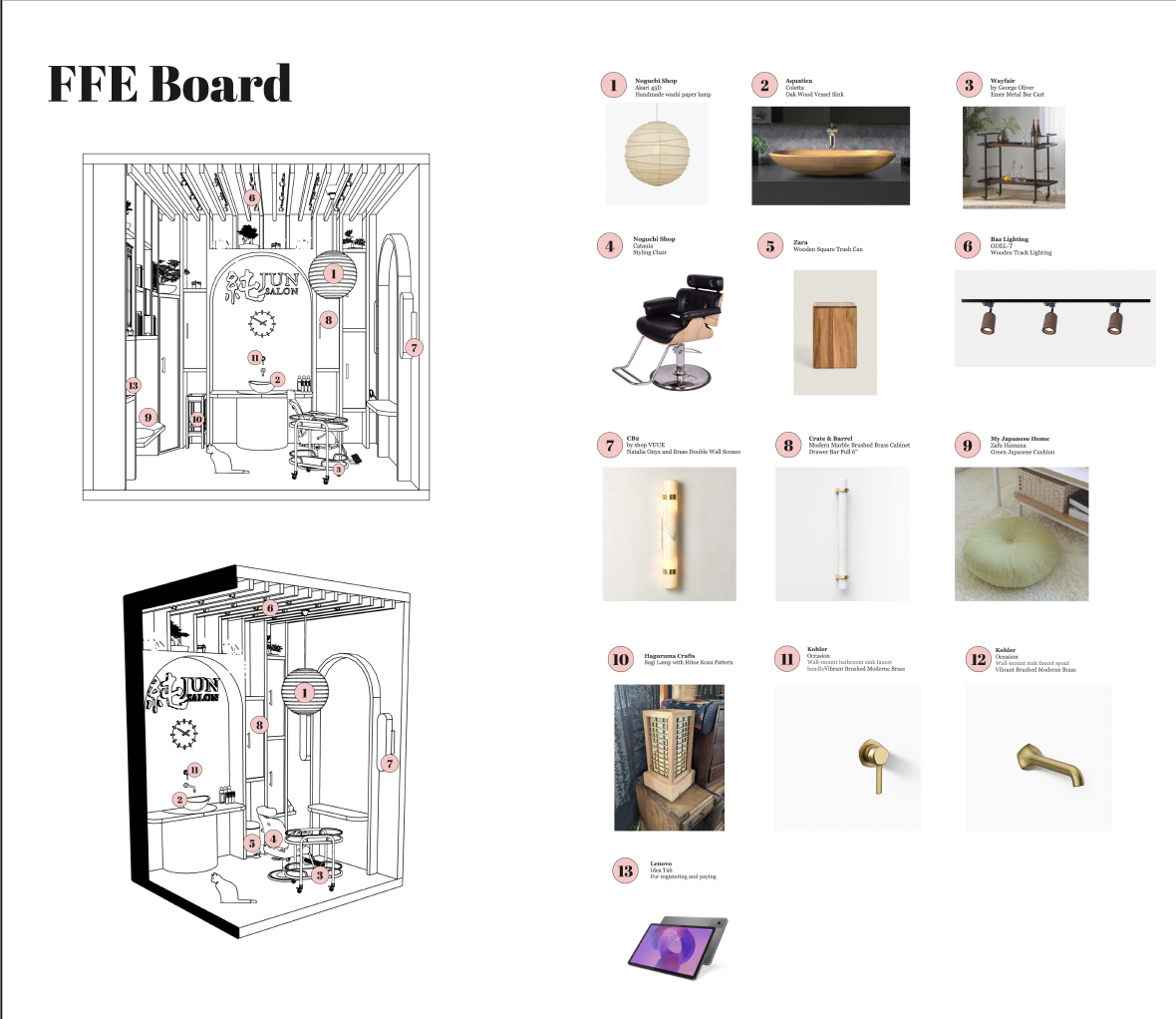
FFE Board & Material Board
Candy Box
Experiential Design | Graphics | Crafting
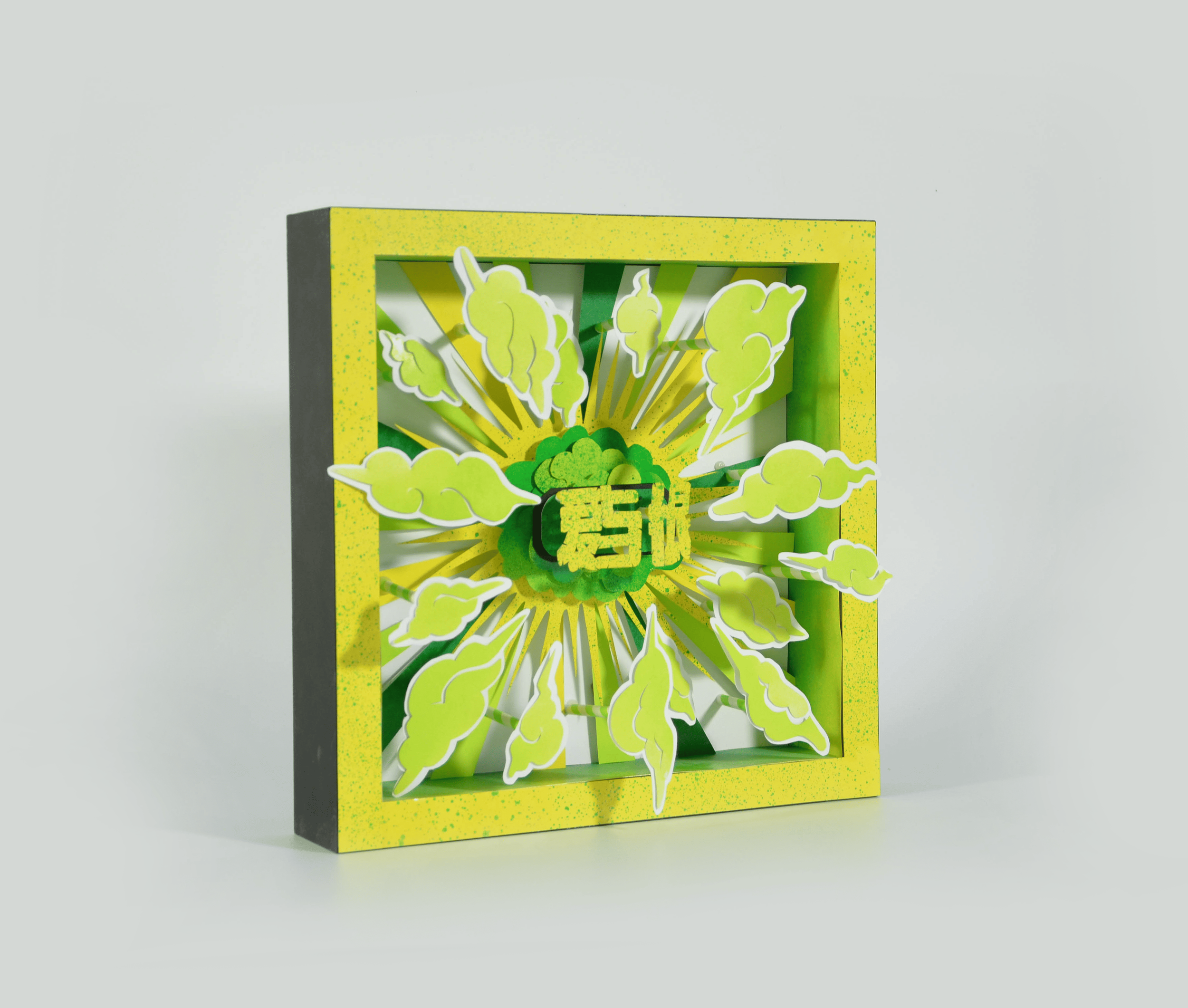
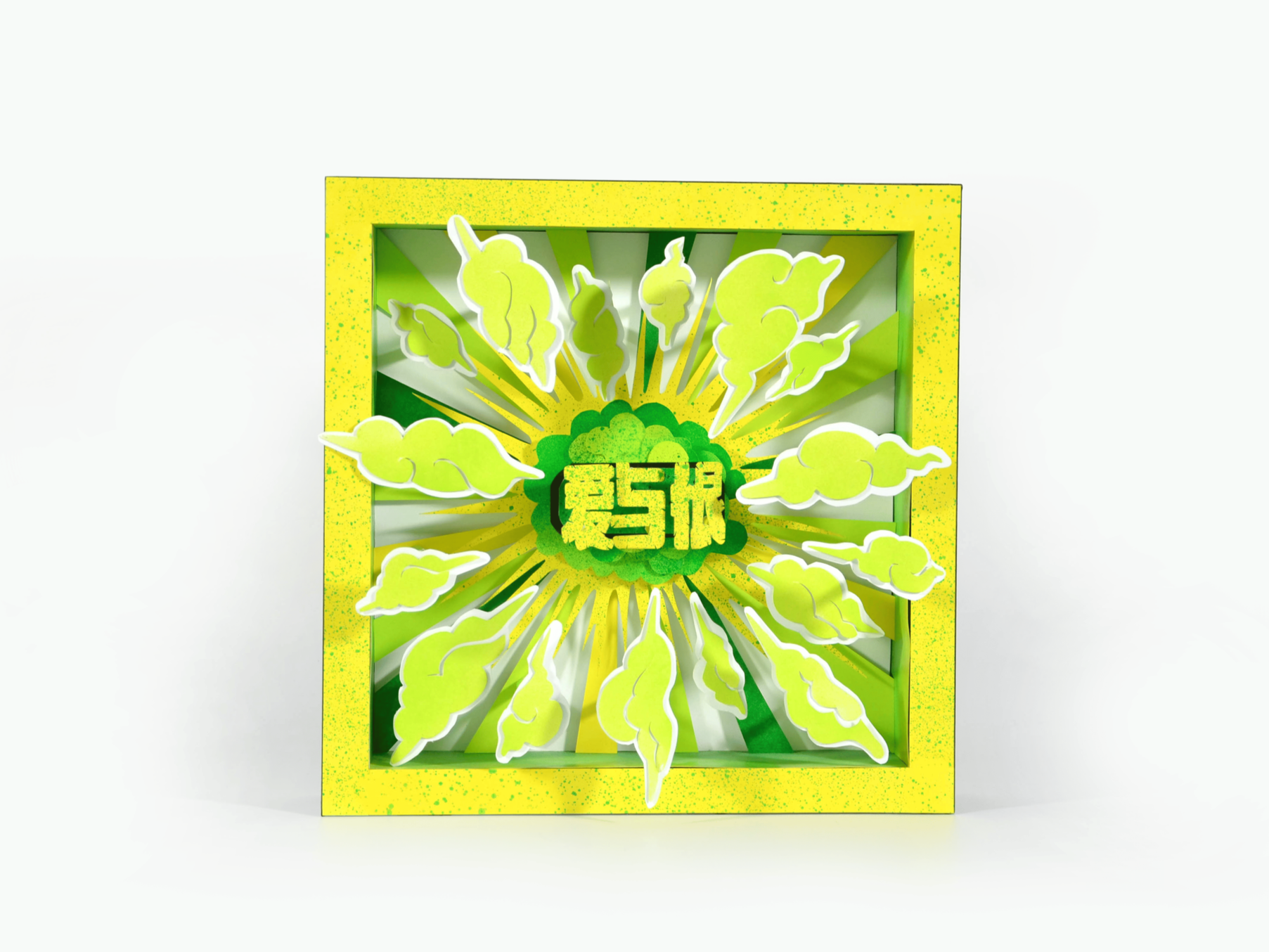
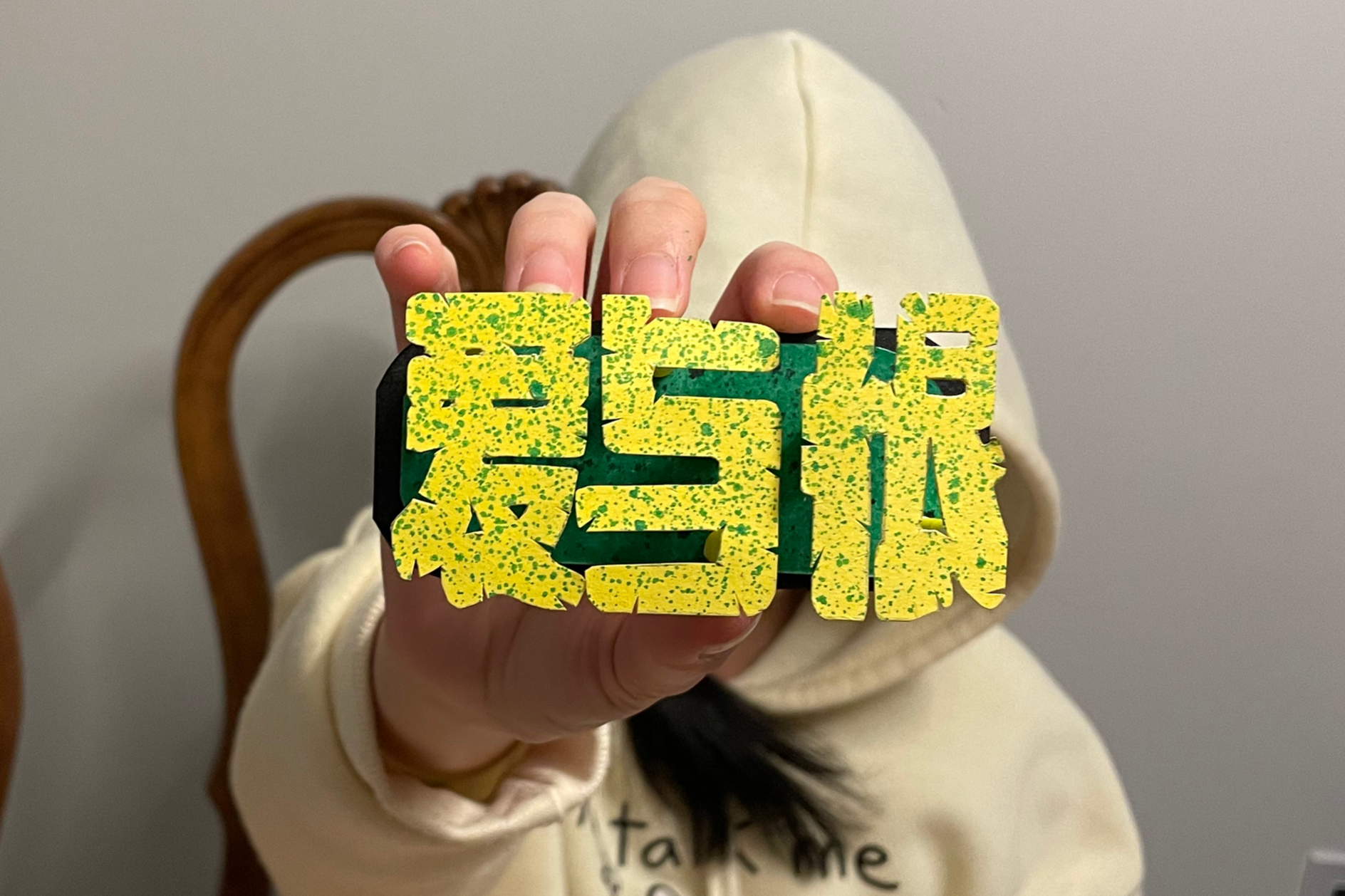
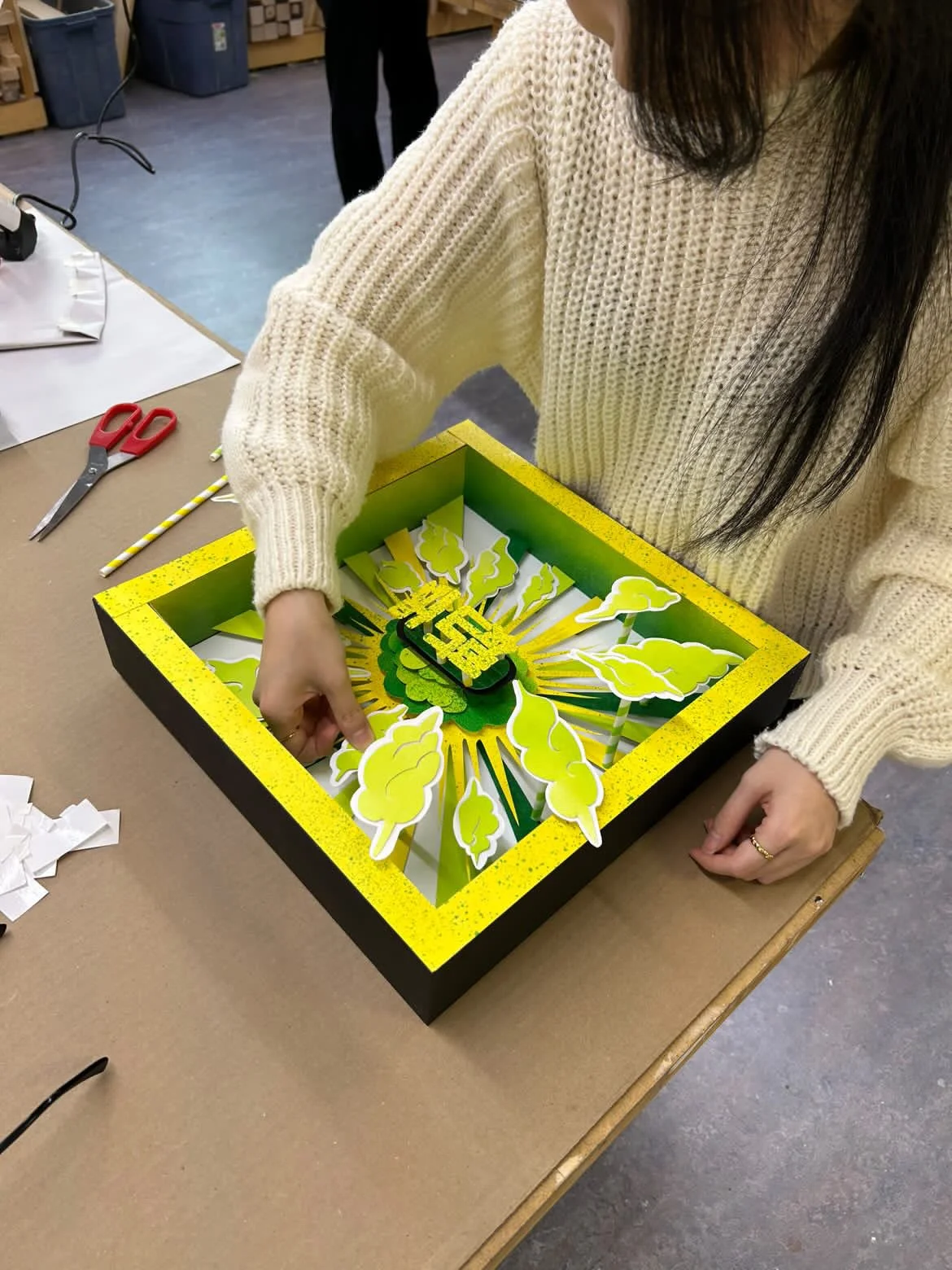
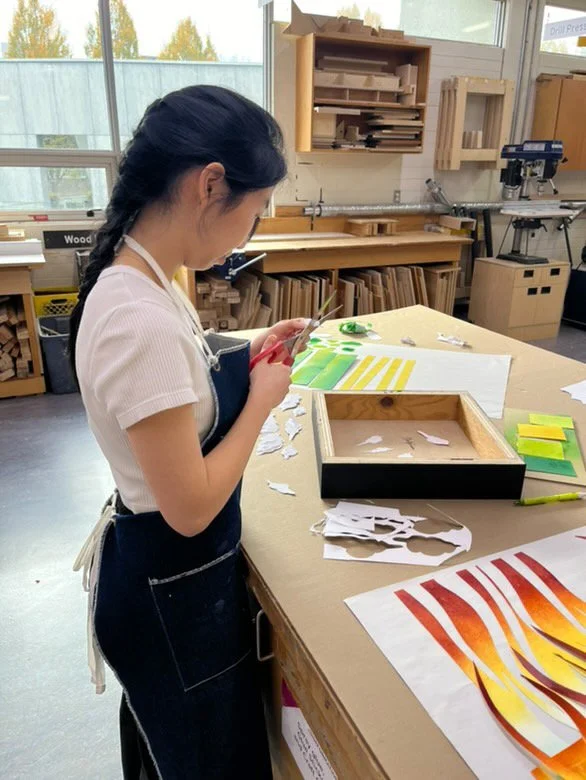
Objective: Randomly select unmarked candy, snacks, or beverages. Analyze the sensory experience, then interpret it using spray paint and paper cutting. Feature a 3-letter adjective in bold, apt typography.
Inspired by the strong, divisive flavour of dill chips, the candy box explores contrasting reactions through the phrase “love and hate”, reflecting how tasters tend to either enjoy or dislike the chips, with little in between. Yellow and green tones reference the chip’s colours, while spiky elements convey its sharp crunch. Cloud-like forms surround the text, suggesting the intensity and spread of its aroma, translating a sensory experience into a visual composition.
Luminous Object
Lighting | Materials | Crafting
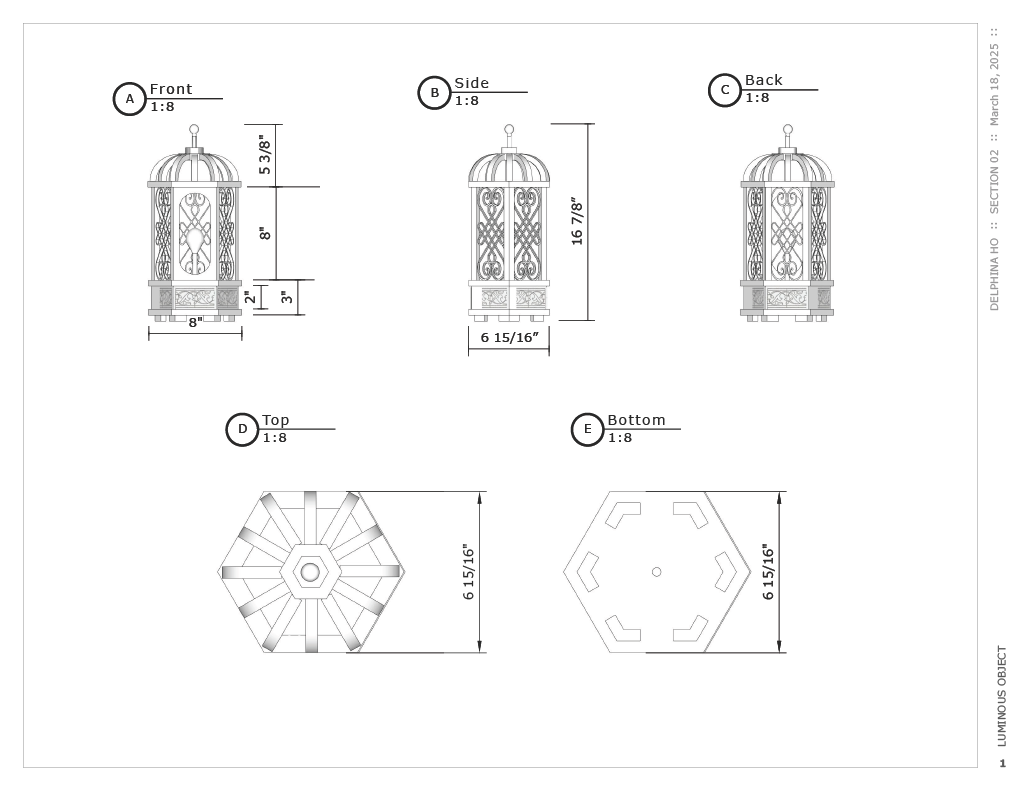
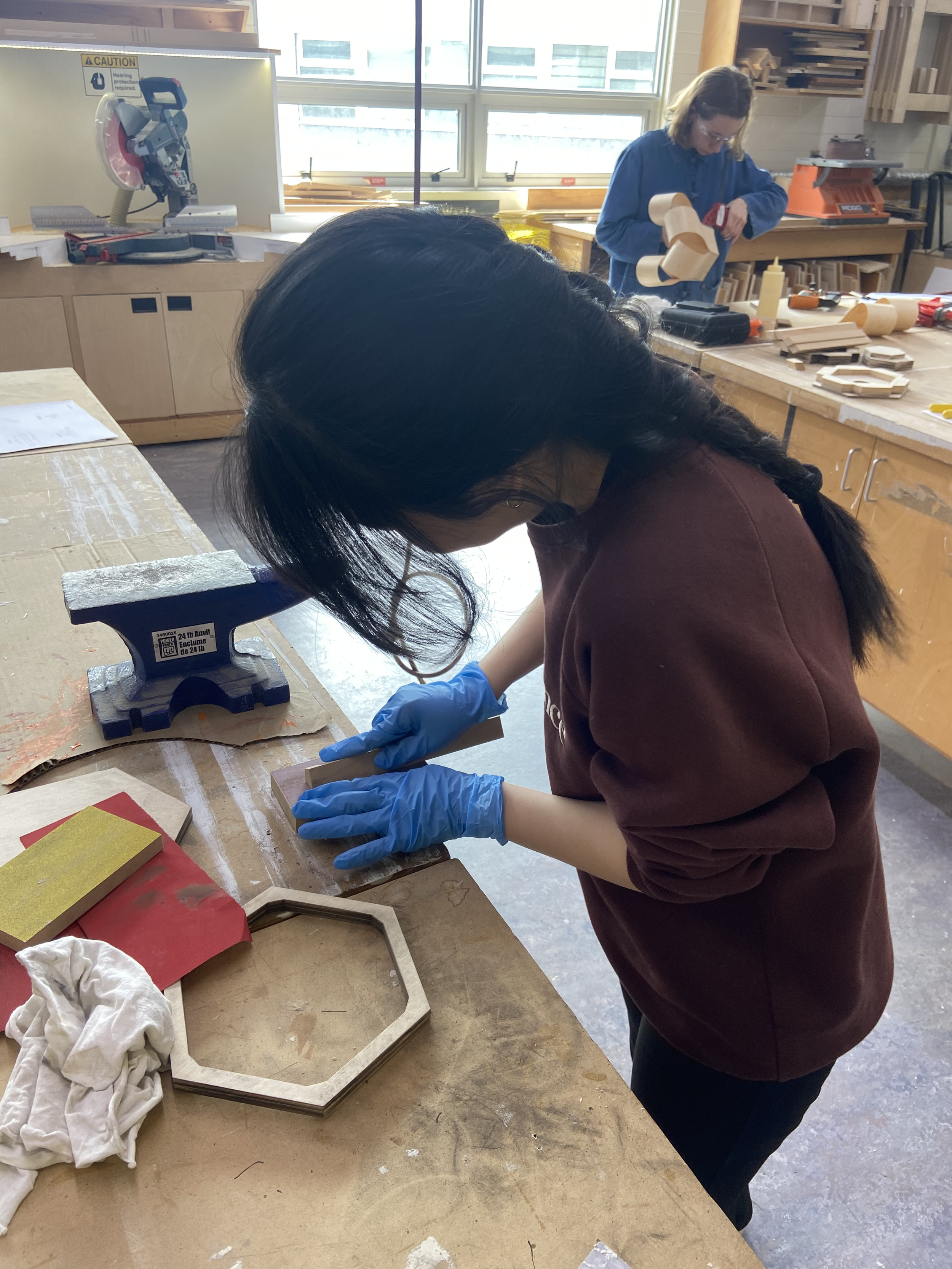
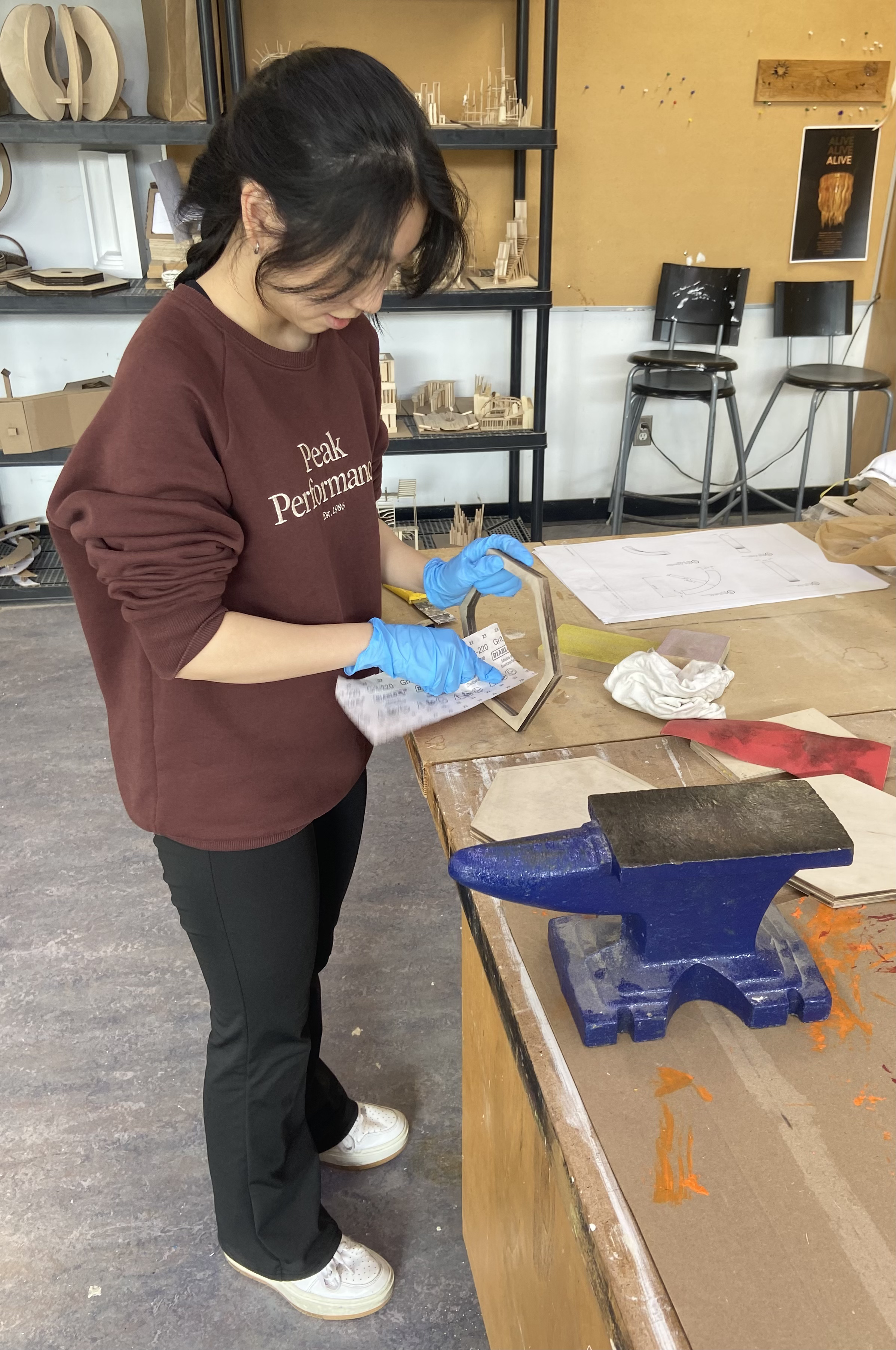
Objective: Design, document, and build a luminous object, examining the narrative, form, materiality, and value from concept to fabrication.
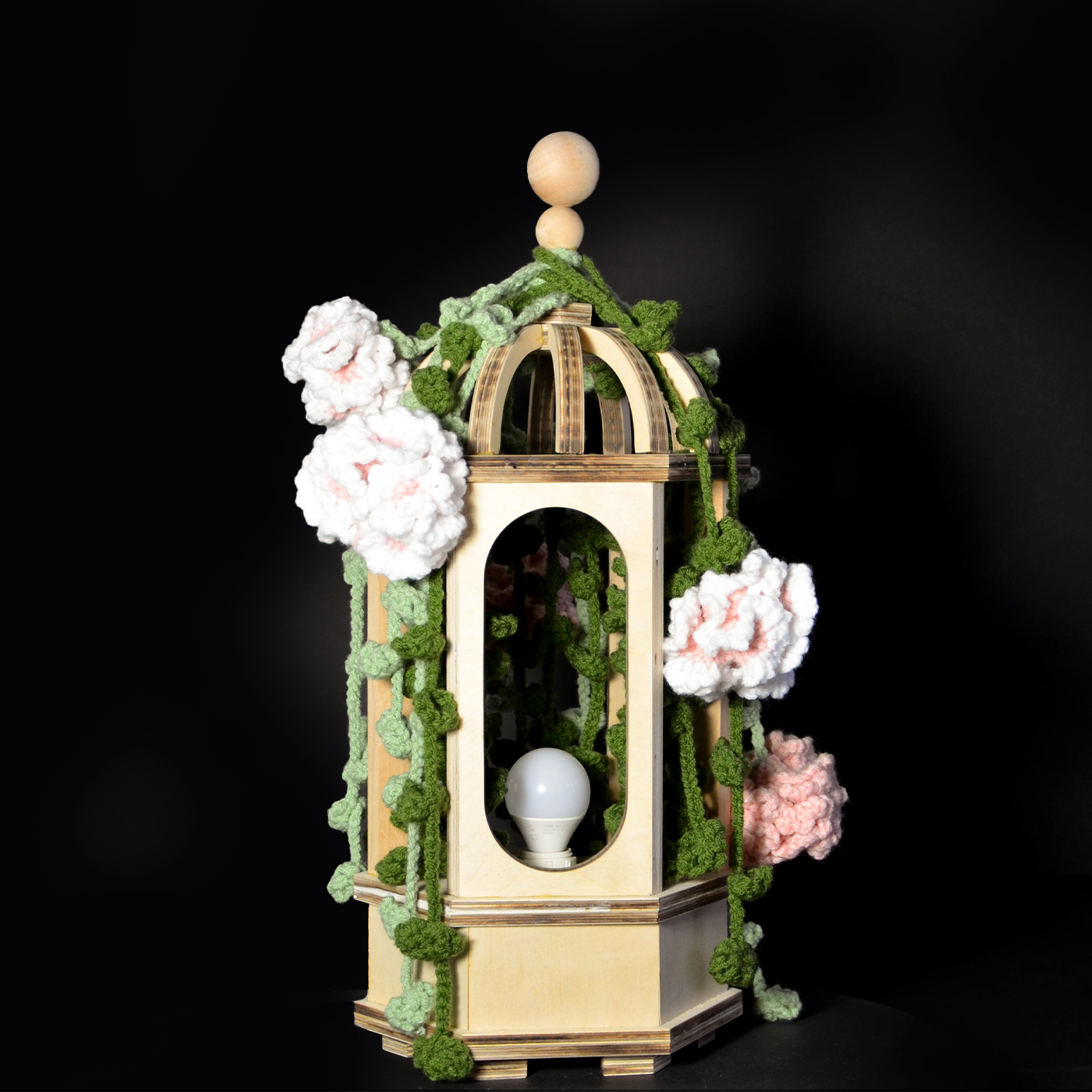
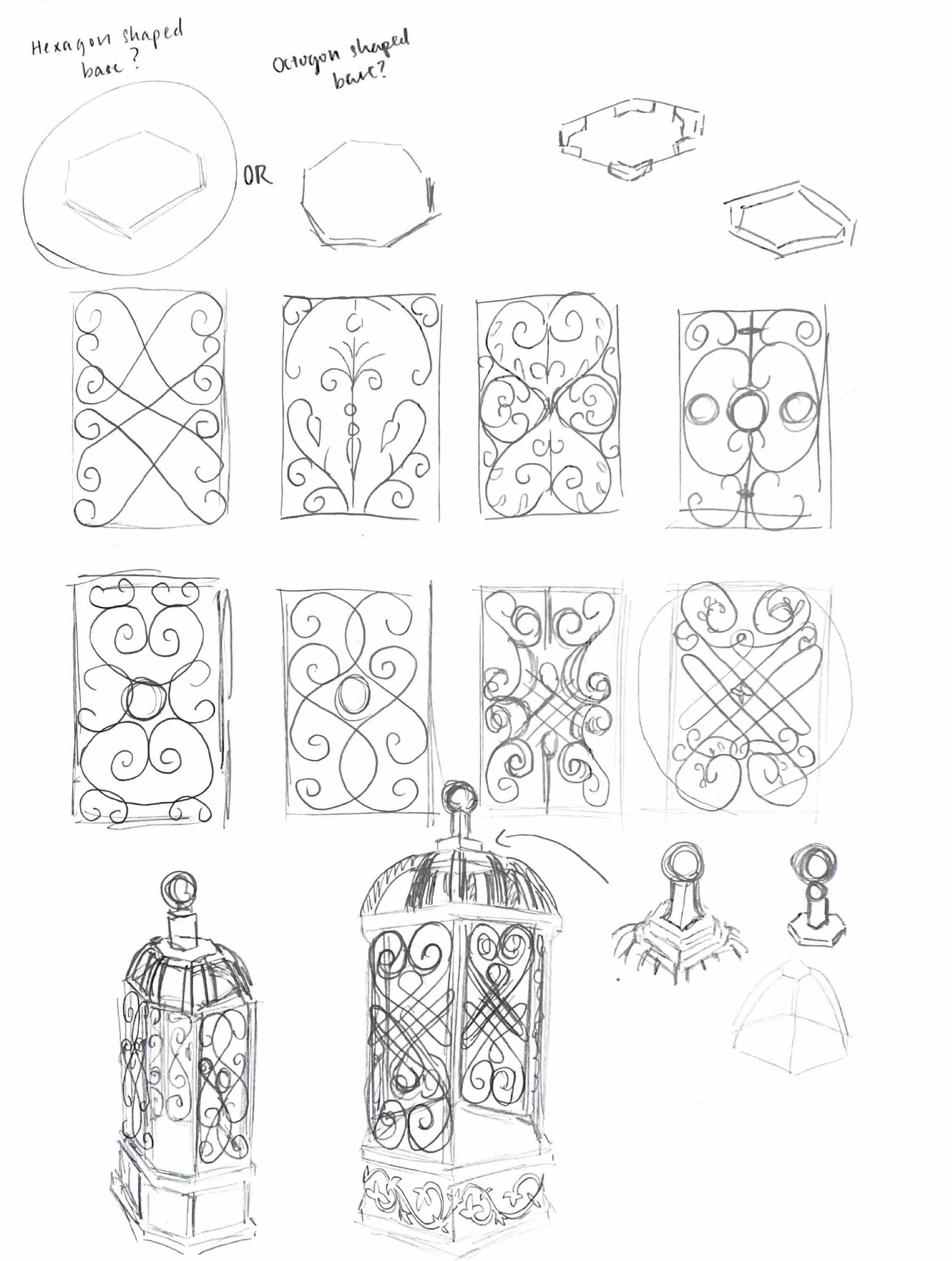
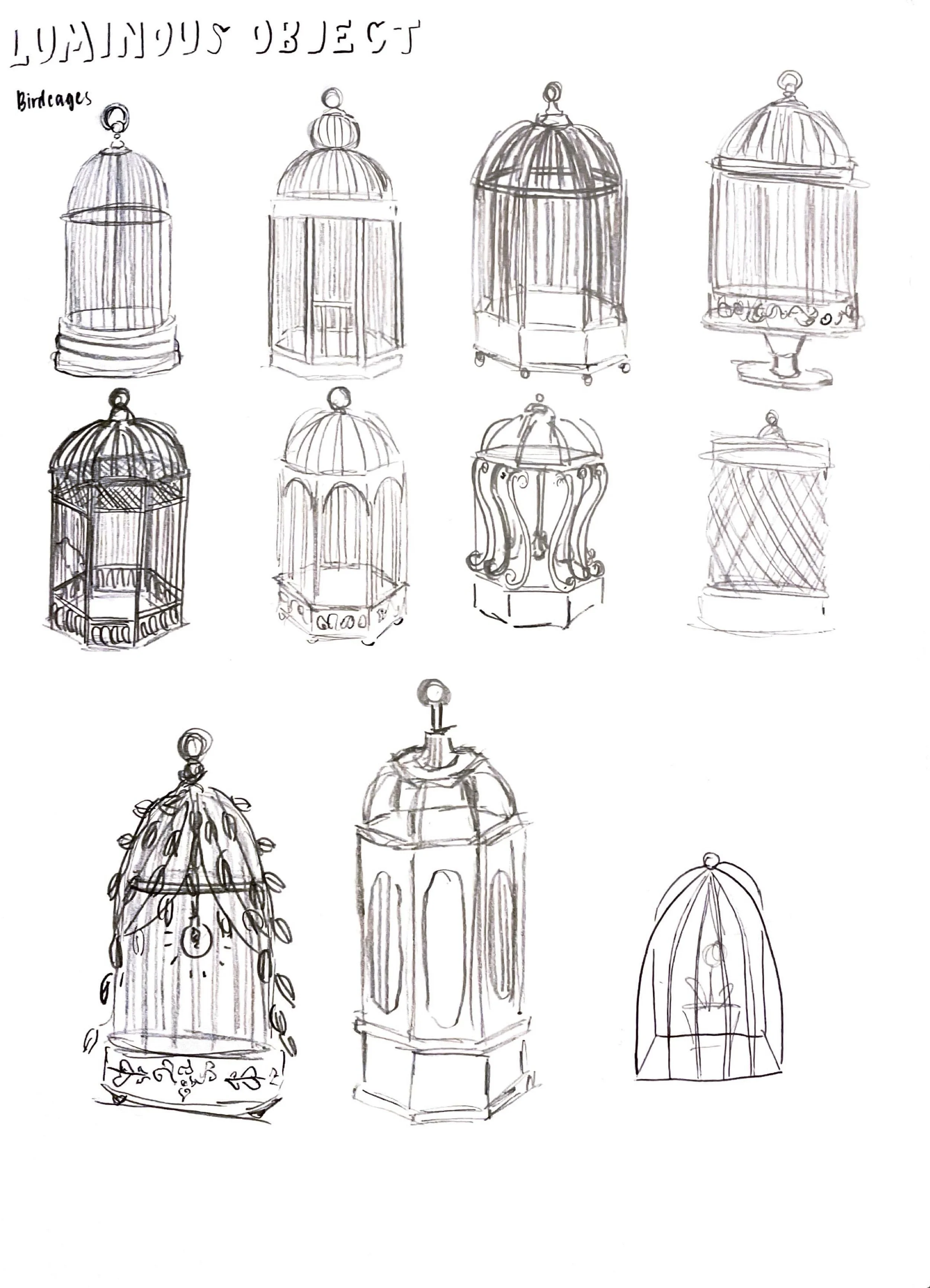
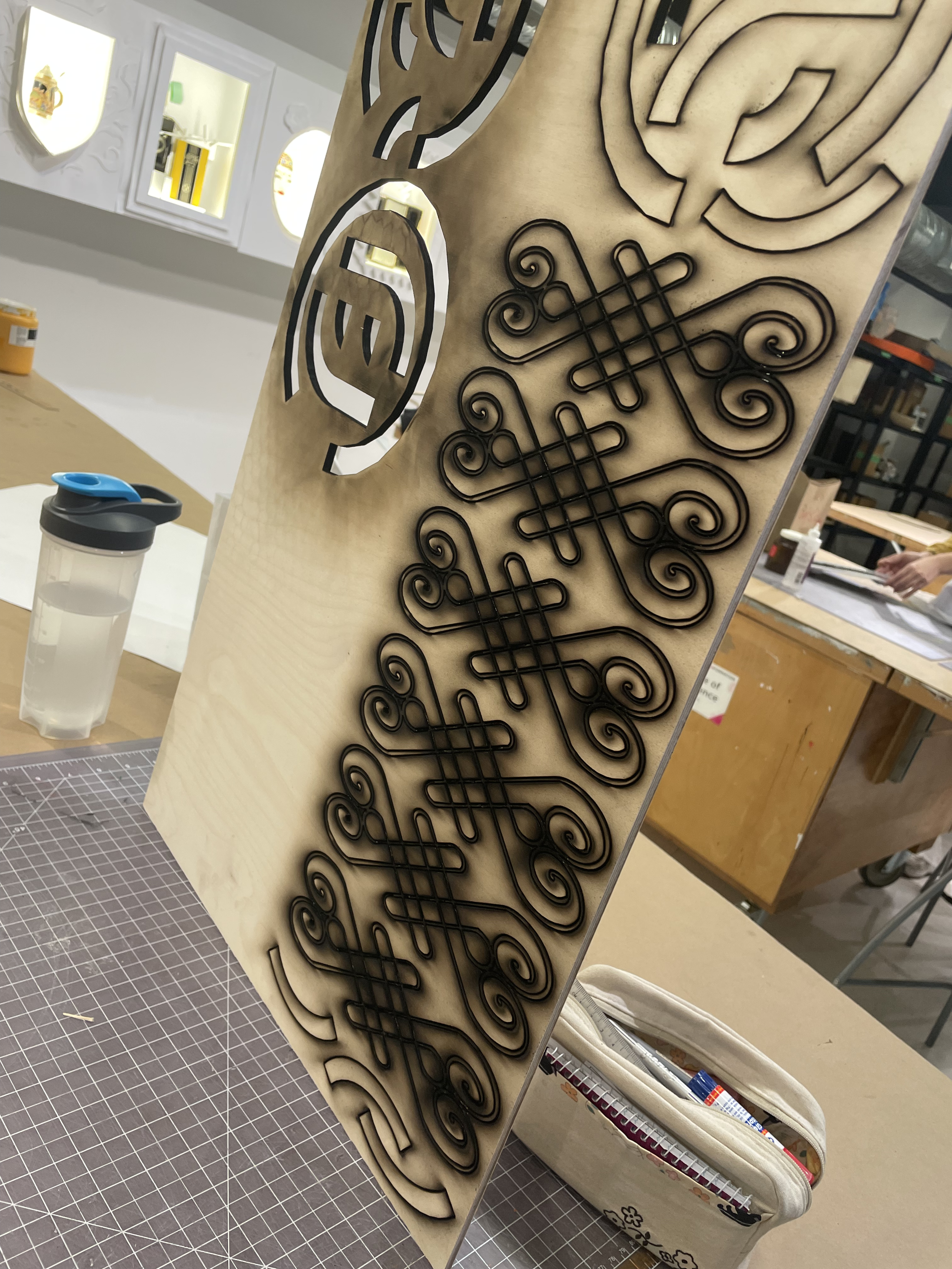
Inspired by a birdcage, the Luminous Object frames light within an enclosure, using structure to both contain and reveal illumination. At its core, the light serves as a central, life-giving element, while the rigid frame establishes a structural system that supports and defines the form. In contrast, interwoven crocheted vines and flowers introduce a soft, organic layer. Together, these elements evoke a body-like composition where structure and fragility coexist, transforming the object into an exploration of light as a living, spatial presence rather than a purely functional source.
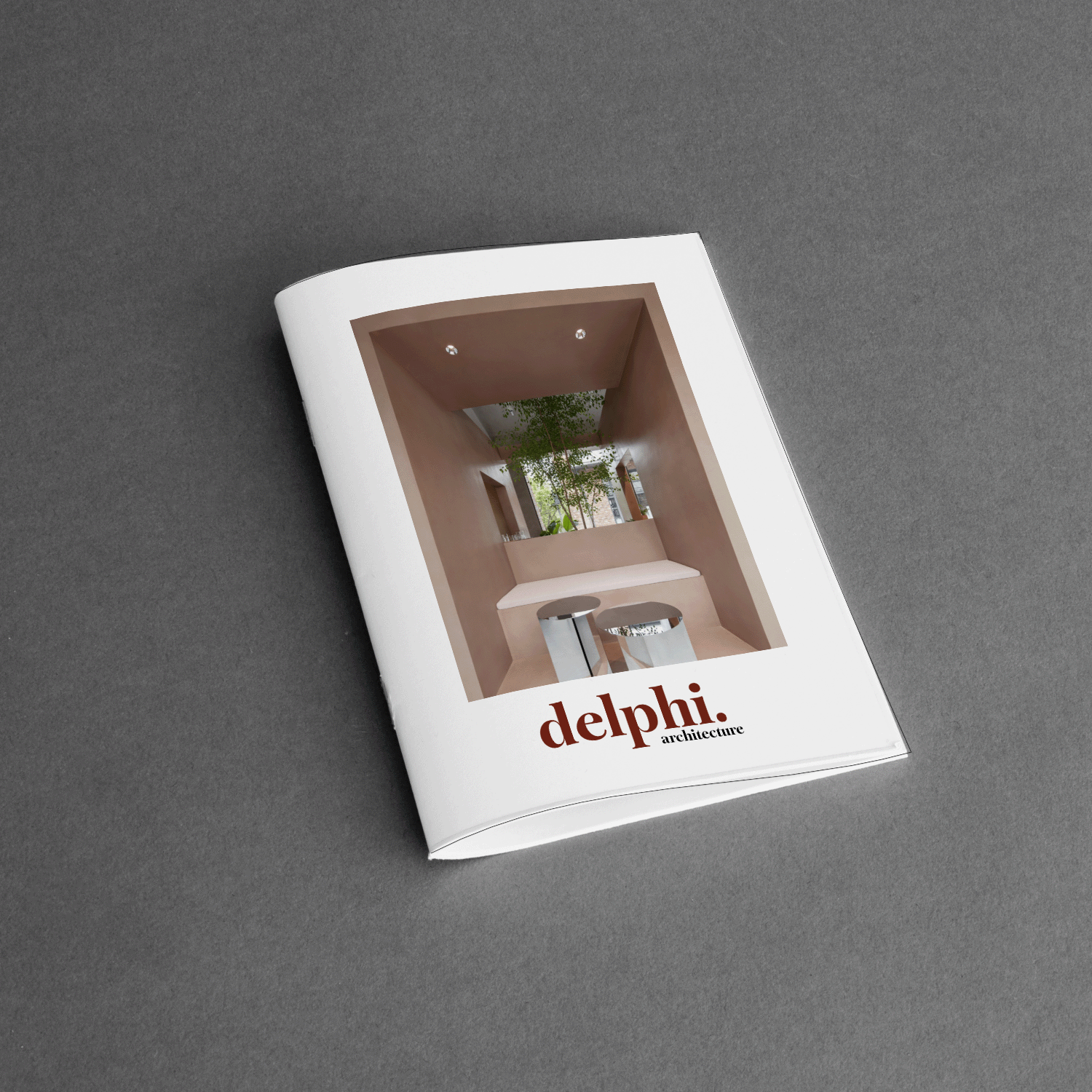
Schematic Booklet
Graphics
Objective: Design a professional architectural proposal that demonstrates layout design and the understanding of architectural communication. Create a comprehensive document that effectively presents architectural project concepts to potential clients.
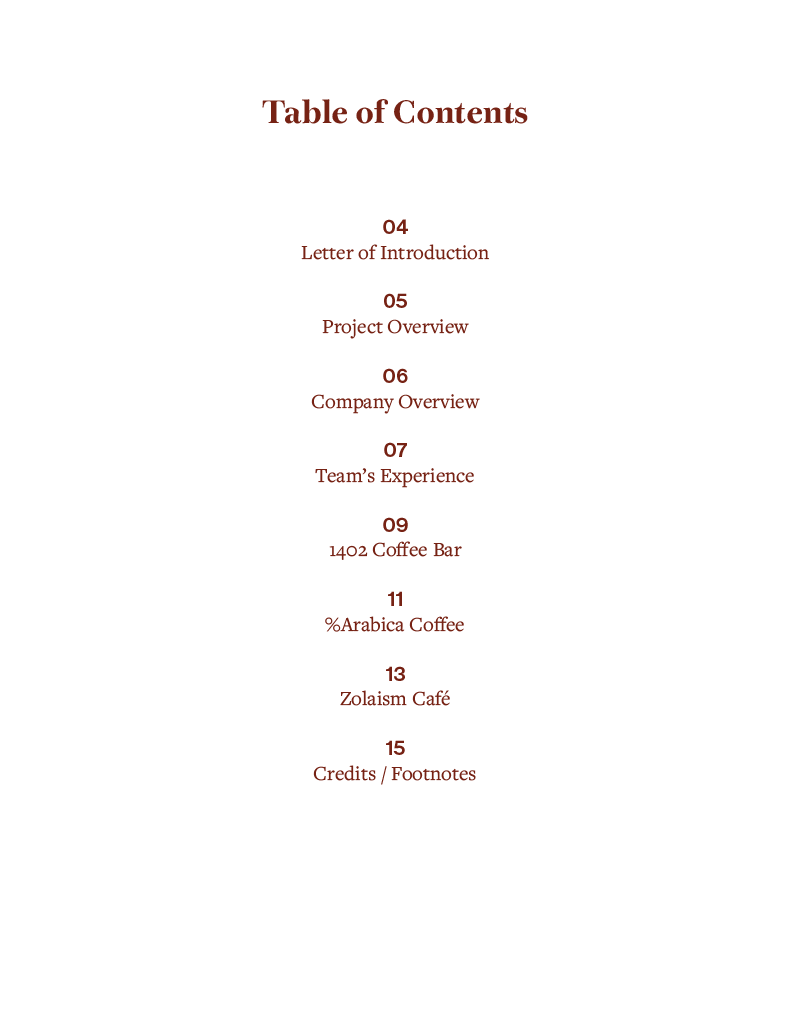
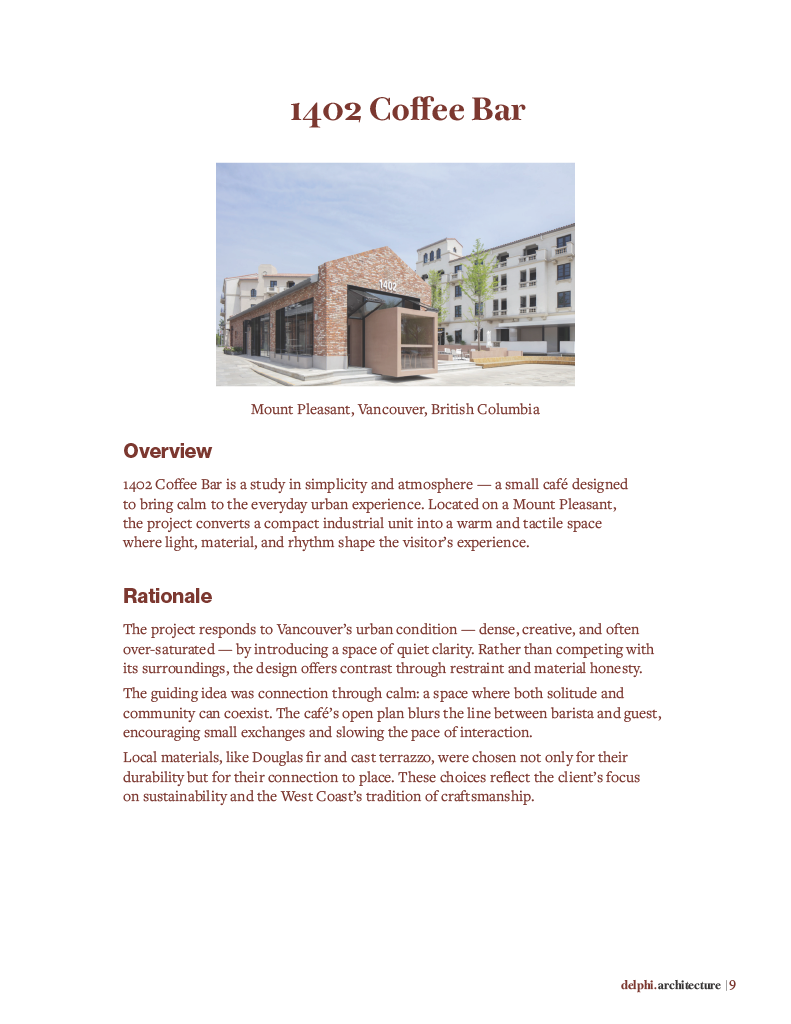
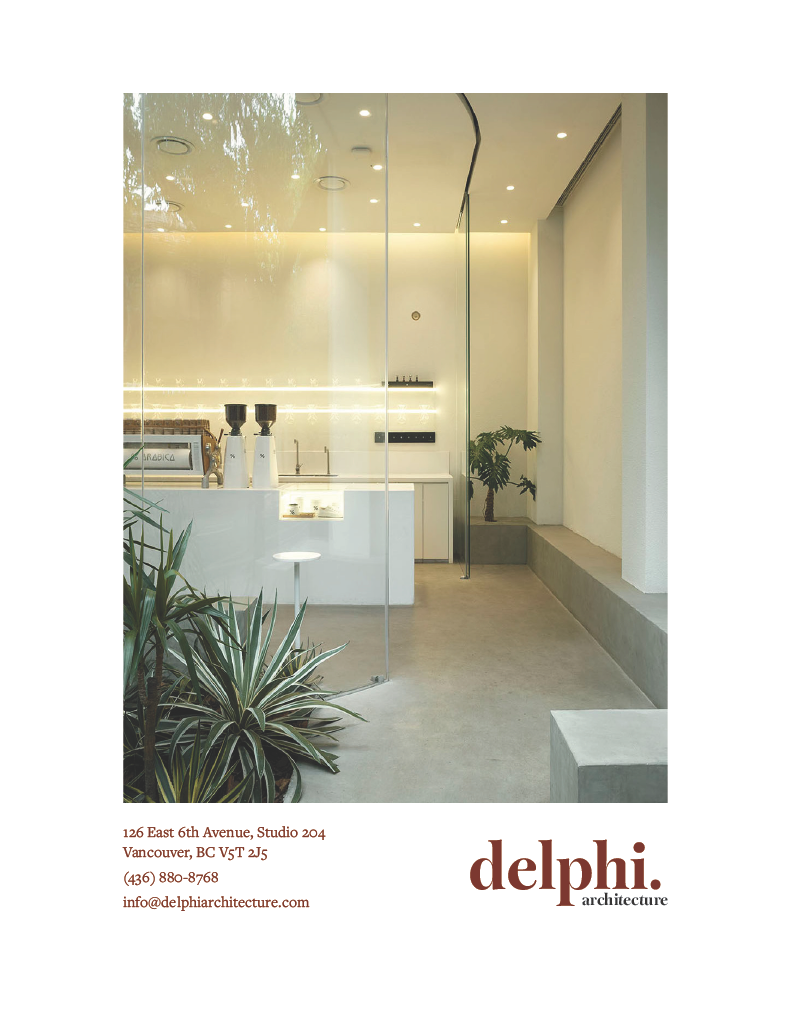
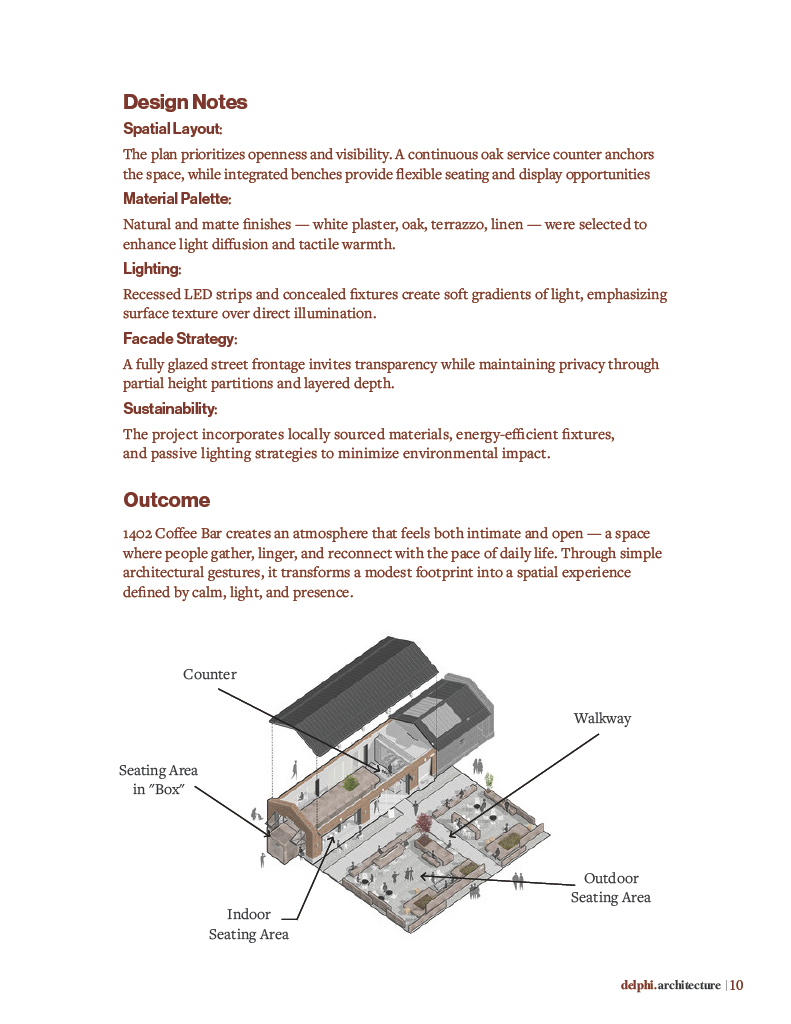
The fictional Delphi Architecture approaches the built environment as a dialogue between history, light, and materiality. Using the existing works of BLUE Architects, this schematic proposal, featuring the 707 Café, 1402 Coffee Bar and Arabica, explores how minimalist interventions can revitalize heritage structures. By treating light as a primary building material and utilizing spatial voids, the designs create a sense of calm within the urban fabric. Each project emphasizes material honesty such as local wood, raw stone, and rippled glass, in order to transform everyday rituals into immersive architectural experiences.